post by Szymon Olejarnick (2023 cohort)
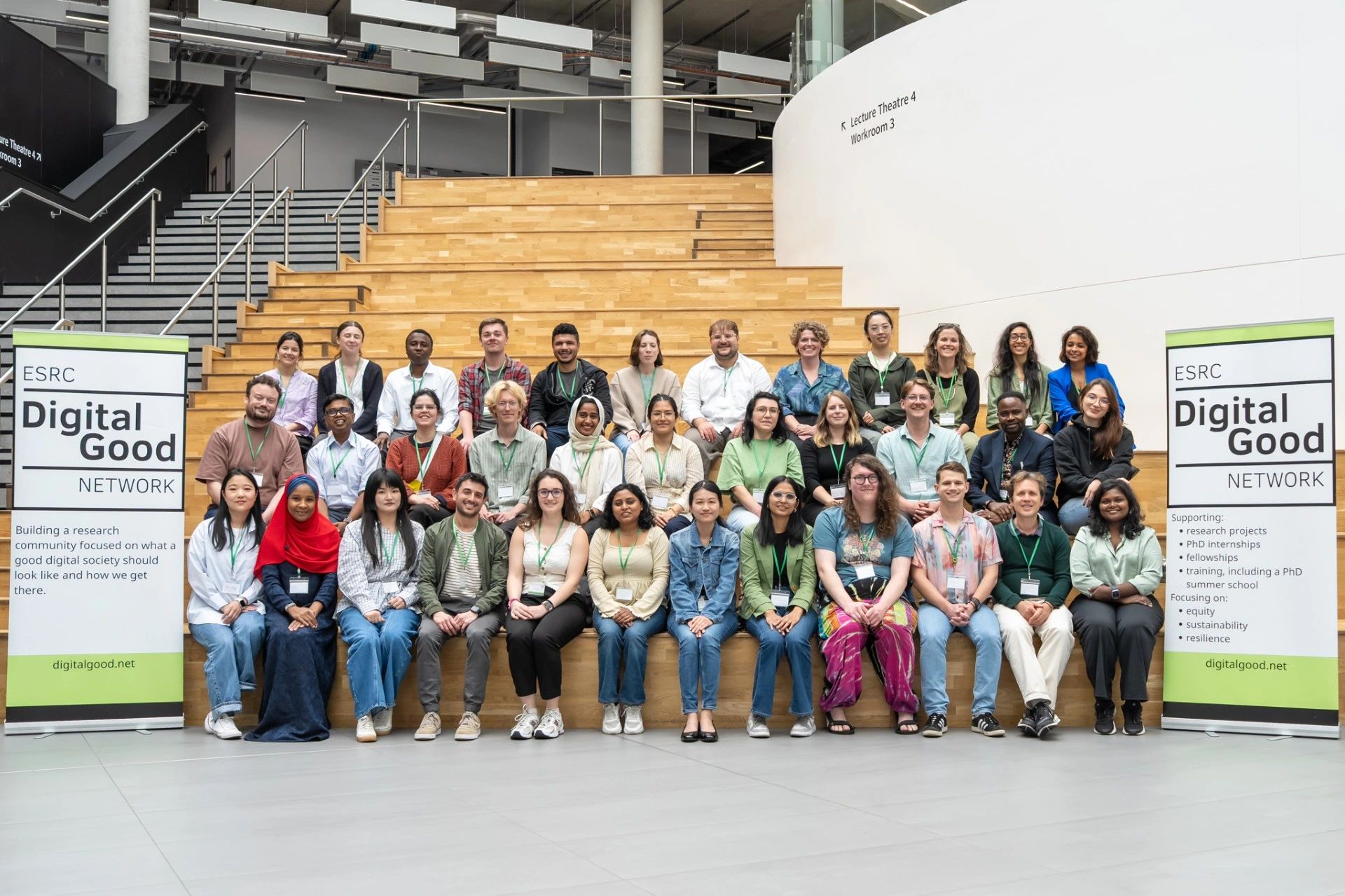
On 23 – 25 June 2025, I took part in the Digital Good Network Summer School (DGNSS) 2025, a summer school funded by the Economic and Social Research Council (ESRC), which took place in Sheffield, alongside my colleagues, Lucy and Jenn (you can read Lucy’s reflection here). I wanted to share my own experience of this summer school to provide an “outsider” quantitative experience of the mixed methods theme of the DGNSS.
The Digital Good Network in itself ties together researchers from across the UK and beyond, who work on one shared topic: what does the “digital good” mean and how do we get there? Over the course of the three days of the DGNSS, I took part in a wide variety of workshops and networking activities, all tied under the theme of developing and fostering digital good. This blog post will briefly describe my experience with the events and networking at the DGNSS 2025.
Two sessions were particularly important for my own research. The first was a workshop on online hate, convened by Dr Danielle Kelly from University of the West of Scotland. We looked at a variety of AI-generated examples of hate discourse shared on social media. We were split into groups to work on one of the examples – in my case, we worked on sexist online discourse. We analysed the motive behind hate speech, probable cause and consequences, and ways of preventing hate speech. As the DGNSS is an interdisciplinary event, I got to analyse this excerpt alongside sociologists, cyberpsychologists and cybersecurity researchers. Pooling our knowledge and experience together, we arrived at a complex explanation of the example from both a macro and micro standpoint, highlighting how online discourse usually revolves around the struggle for power. This exposed me to analysing online behaviours through lenses other than psychological, underlining that online behaviours can also stem from issues in the wider society, rather than from within an individual. This is especially crucial for my PhD, as the player multidimensional wellbeing (PMDWell) framework I have developed draws from psychological, sociological and policy literature to arrive at a comprehensive framework of internal and external player wellbeing.
The other session that was of particular interest was a demonstration on natural language processing, convened by Dr Laszlo Horvath from Birkbeck, University of London. We were provided with a gentle introduction to the concept of natural language processing – parsing dense blocks of text through an algorithm that can then can not only conduct quasi-thematic analysis, but can also classify words and phrases according to their linguistic role, for example, nouns, adjectives or emotive language. This data can then be analysed and presented in a wide variety of ways, particularly as bar graphs, representing the frequency of word usage according to linguistic class. We then got an opportunity to experiment with some of this on our own using Python and Anaconda, using parliamentary minutes as data. This allowed me to learn what the natural language processing workflow looks like and what kind of results it would be able to provide. I am very much looking forward to employing natural language processing later in my PhD, experimenting with how it could be employed in addition to standard thematic analysis of interview transcripts.
Although not immediately relevant to my PhD, the remaining sessions were also just as interesting and provided me with an opportunity to dive into a different range of research methods. During the reading session, we discussed three human-computer interaction papers, selected especially due to their unorthodox format, typically not seen in psychological or STEM literature. This exposed me to the wide variety of ways that a paper can be written and argued about. During the session about data visualisation, we got exposed to the idea of data visualisation as an art, rather than a sheer necessity, underlining how we can better communicate complex scientific ideas by crafting intricate graphics to best showcase our results. The co-design workshop also made us think about a research challenge from a unique standpoint, designing a prototype using the academic and lived expertise of an interdisciplinary group, to arrive at a product that can be used by anyone. There was also enough downtime during the day, which allowed me to incorporate some of the things I’ve learnt into my own research, particularly the data visualisation workshop, after which I was able to improve the graphics for my upcoming paper.
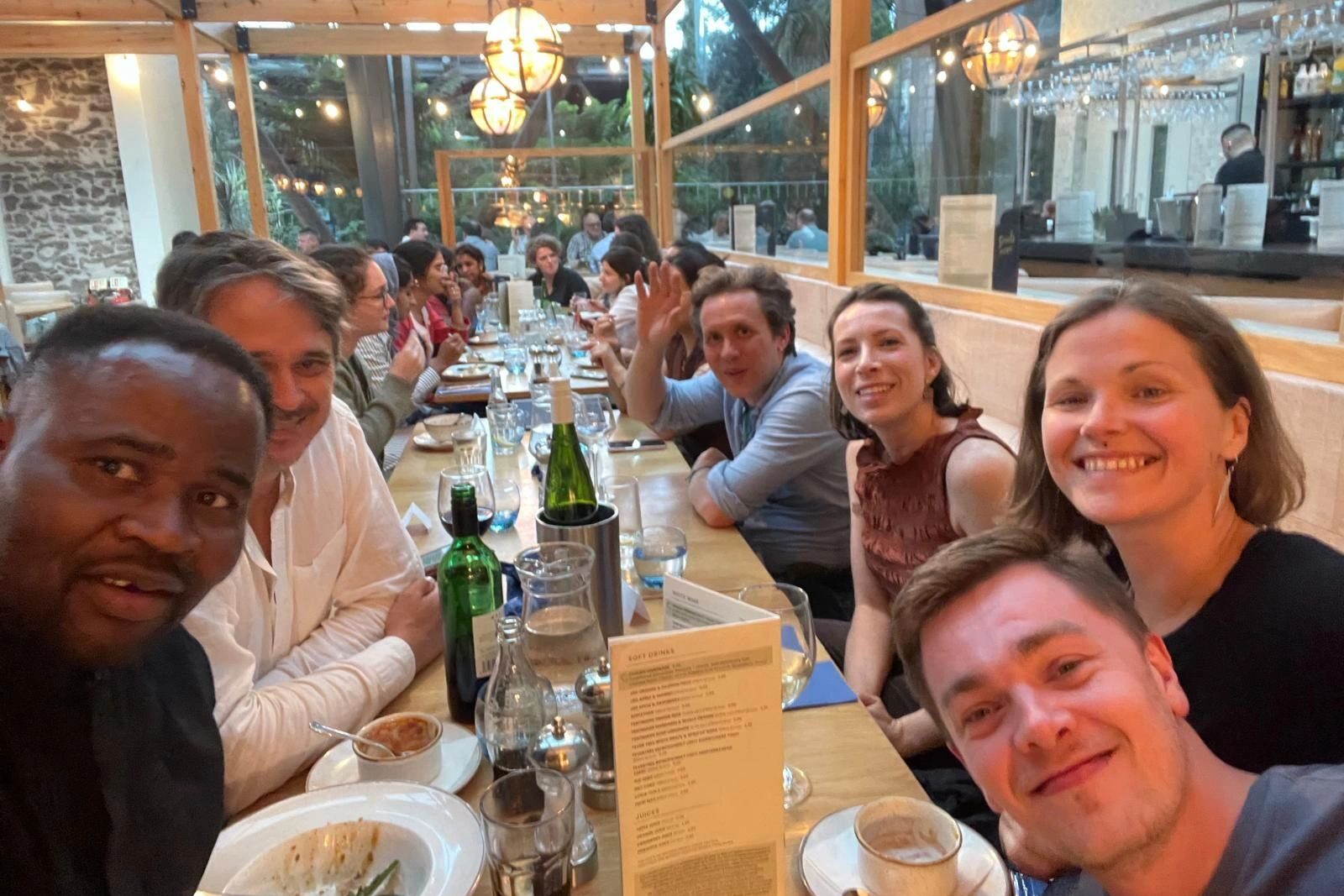
Outside of the sessions, the DGNSS was also an excellent opportunity to network and foster connections for further collaborations. The initial icebreakers were prompted by a “pecha kucha” style presentations – each participant got to present their entire PhD in less than 2 minutes, making us extract the most meaning out of it, at the same time pushing us to make the topic as accessible as possible, considering the interdisciplinary nature of the DGNSS. Thanks to this, informal chats during the event were made significantly easier, instantly recognising people and their topics whilst waiting in the queue during the coffee break. This exposed me to many researchers, who on the surface appear to be working on something completely different to me, but sharing some similarities to my own work. Sheffield was also a great place to host an event like this, with its bustling culture and hospitality. Thanks to the DGN hosting dinners in Sheffield, we got to network in a more informal setting over some great food and drinks.
The DGNSS was an excellent opportunity to learn about methods I would not otherwise consider using, and network with colleagues from fields I would not otherwise consider engaging with. Thanks to this experience, I am now a member of the Digital Good Network, and I look forward to working with them further – in the short term to provide an even wider variety of experiences during the Summer School, as well as in the long term through future grant applications and fostering collaborations. I would recommend the DGNSS to any researcher working on the digital good, especially those who want to step out of their methodological comfort zone and learn about other ways of conducting digital good research.