Analysis of Human Expressive Behaviour – My Placement with BLUESKEYE AI

post by Iris Jestin (2023 cohort)
Introduction

I began my placement with BLUESKEYE AI over the summer of 2024, as a Human Factors Engineering Research Assistant, working as part of their Research and Development Team, guided by my industry supervisor Michel Valstar. Working on the placement felt like a good switch-up of going back into the industry after a year of being in academia and I was excited to return to the familiar fast pace of moving towards business goals and deliverables. Over the course of the placement, I was able to work on several projects to make valuable contributions and further my learning experience.

What The Company Does And Relevance To My PhD

BLUESKEYE AI is a spin-out from the University of Nottingham, based in the Sir Colin Campbell building on Jubilee Campus. They specialise in machine understanding of facial and eye behaviour using machine learning and computer vision technologies, to detect a user’s expressed emotional states. While they have different product offerings in the health and wellbeing space, I had the brilliant opportunity to work on their projects in the automotive space. Their product B-Automotive allowed different automotive customers to integrate their technology into vehicles to help with safe driving by detecting driver expressed emotional states that might be undesirable in a driving context. This felt specifically relevant to my PhD which explores advanced vehicle technologies, including driver state monitoring systems for the ageing population in future vehicles. What I looked forward to the most was perhaps the understanding I would gain regarding the industry application of the area my PhD explores. While it is not possible to get into specific details and findings of the projects I carried out as they are commercially sensitive, I hope to give a brief overview of my placement research activities and learnings in this reflection.

Research Activities

i) Familiarising with the company’s automotive product offering, SDK, and working – The first couple of weeks involved getting to know the company’s ways of working, and getting familiarised with their B-Auto software development kit (SDK) which uses analysis of facial expressions to estimate dynamic expressed emotional states. I soon learnt about the Facial Action Coding System (FACS) which is a comprehensive, anatomically based system for describing all visually understandable facial movement. It breaks down facial expressions into individual components of muscle movement, called Action Units (AUs). Facial Emotional Expressions (FEE) at the most basic level, is a combination of AUs. Each AU is a distinct muscle movement, and combinations of these units represent different expressed emotions. BLUESKEYE worked to accurately understand which AUs tend to co-occur, what the combinations signify, and how to label them accurately. This involves identifying combinations of active AUs that correspond to an expressed emotion which indicates a felt emotion.

ii) Familiarising with already existing data – During the first part of the placement, I had the opportunity to play around with their existing video data of drivers inside a car that captures facial behaviour, eye gaze behaviour, head movement and yawns. Each of the drivers had a driving video in the morning and in the evening after work. This involved me doing some early analysis using Python to explore trends in the behavioural data that may indicate fatigue, in the morning versus the evening. The behavioural data included eye blink rate, eye blink velocity, eye saccade velocity which is the speed with which the eye moves between different fixed points, head movement angle and head movement velocity. This phase mostly prompted me to get stuck back into Python after not having used it in a while, and helped me familiarise myself with the type of data that the company worked with. The analysis further helped me understand the importance of accounting for individualistic differences before coming to conclusions when working with behavioural data.

iii) Driving fatigue study – As part of a study that evaluates the BLUESKEYE technology which detects driving fatigue, I created the information sheet and consent form that was used for it. Further, I conducted a literature review that worked to define sleepiness and fatigue. This involved trying to identify from literature facial and eye behavioural and physiological indicators that indicate fatigue that may not have been explored by BLUESKEYE. This also included documenting the ways in which these indicators have been measured in literature and the average rate of these indicators when a person is fatigued. Keeping in line with my PhD’s area of focus, I was able to find literature that explored how some of these indicators of fatigue varied for an older versus a younger driver.

iv) Data analysis of in-house data – The last phase of the placement involved data analysis using Python on in-house data, to find trends within a specific parameter – the driver’s head turn, that indicates fatigue while driving. These were checked against a questionnaire that the driver filled to self-report their fatigue. Different types of head turn were identified from the video data. Then the speed and angle of the head turn were compared against the types of head turn for low versus high self-reported fatigue. This was used to identify patterns in the head turn data that would correspond to high or low fatigue that could potentially be built in for detection by the technology.

Conclusion And Next Steps For Continued Collaboration

This placement has been an invaluable experience as it gave me a snapshot of what working in the industry in the area of my PhD research would entail. It was decided due to the close alignment of the PhD with some of the company’s projects, to have meetings with the R&D team every couple months to identify any opportunity for continued collaboration. Further, it is expected that the experimental study of the PhD may potentially use BLUESKEYE’s technology in some capacity. I close with a special thank you to Mani and Adrian from BLUESKEYE’s R&D team without whom much of my learning would not have been possible.
Digital Inclusion Development: My Placement Experience as Visiting Fellow at the University of Technology Sarawak (UTS)

post by Yang Bong (2021 cohort)

Introduction: Placement Overview

In the summer of 2023, I had the privilege of working as a Visiting Fellow at the University of Technology Sarawak (UTS) in Sibu, Malaysia. This three-month placement, hosted by Dr. Tariq Zaman at the Advanced Centre for Sustainable Socio-Economic and Technological Development (ASSET), aligned directly with my PhD research on digital inclusion with Indigenous communities, which was a core research interest of ASSET.

ASSET’s focus on ICT for development (ICT4D) in Sarawak provided a unique context to apply my research on human-computer interaction (HCI) and digital marketplaces for rural microenterprises in real-world settings. As part of the optional placement module under my doctoral training, the placement was generously supported by the Horizon Centre for Doctoral Training (CDT).

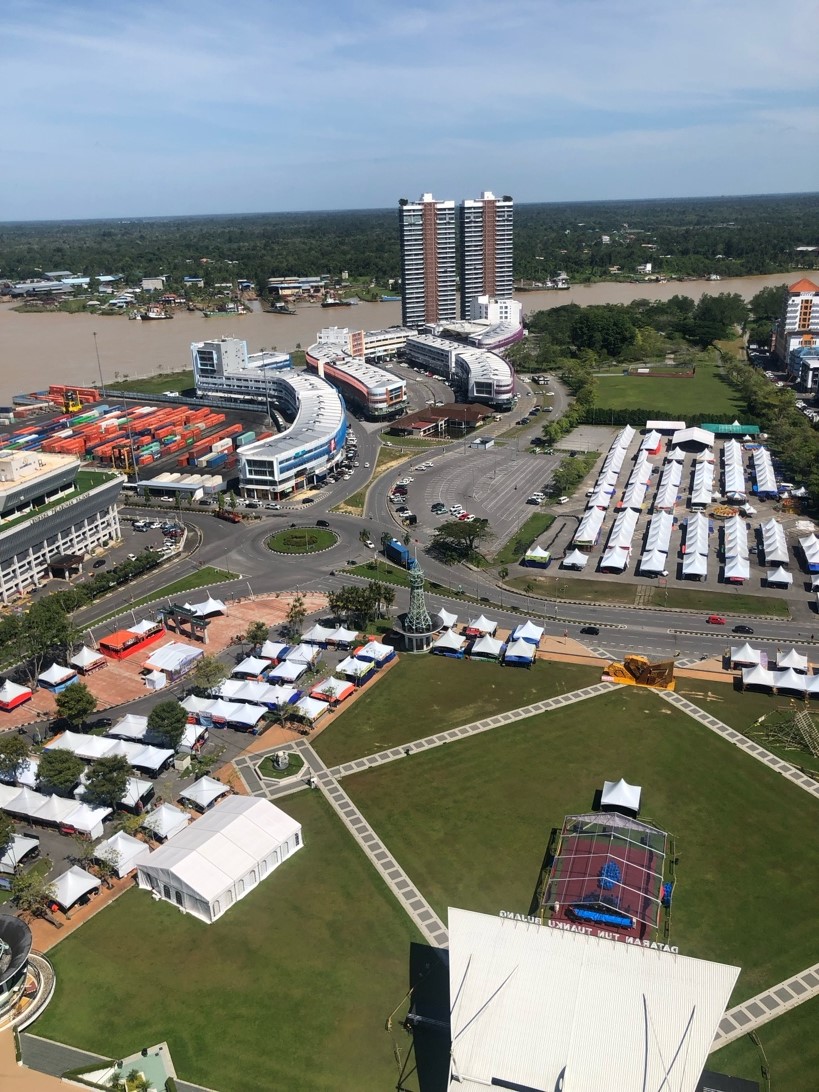
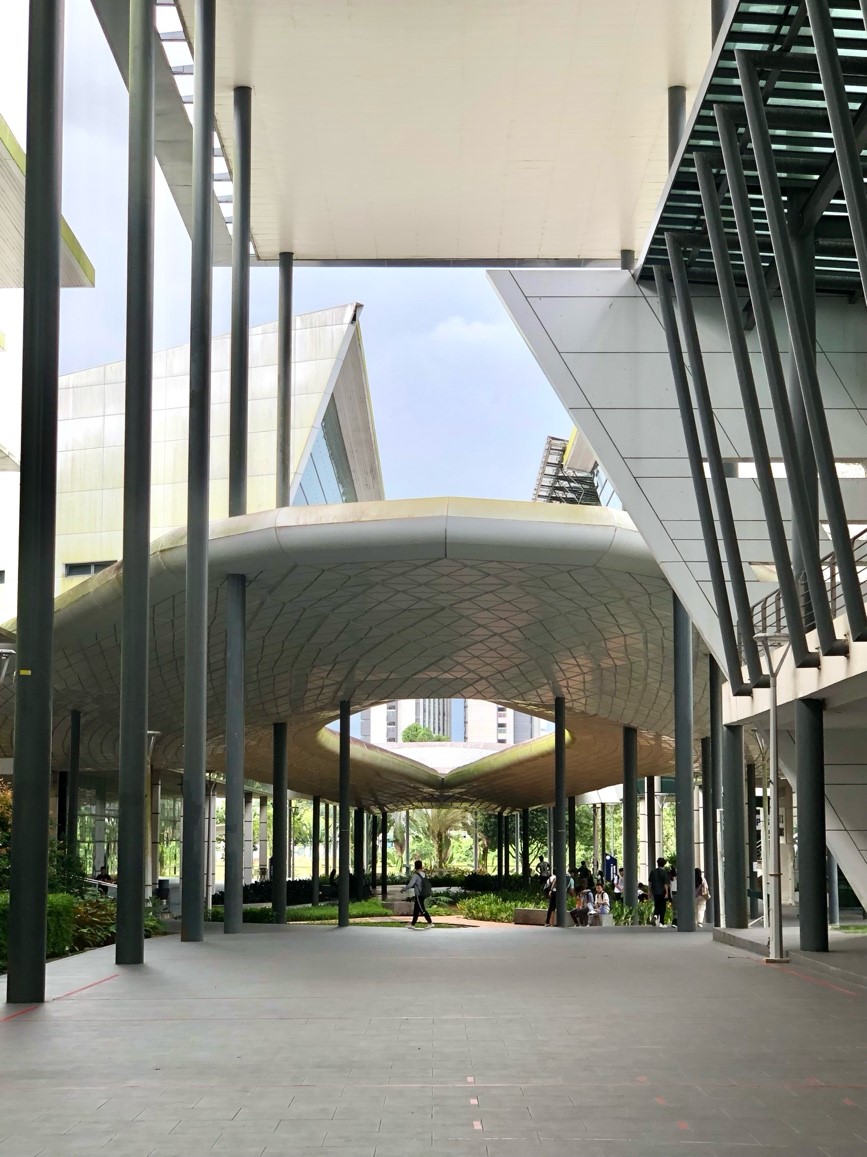
Image: University Technology Sarawak, Sibu, a state-funded university that aims to offer free education by 2026.

Initial Expectations and Goals

As a PhD candidate with a research interest in digital inclusivity in developing economies, my initial anticipation of this placement was that it would provide access to local stakeholders and communities. The hope was that interacting with local communities would enhance my understanding of how local cultures interact with digital technologies.

ASSET’s work in ICT4D and HCI within Indigenous communities aligned very well with my PhD in creating inclusive digital platforms for rural microenterprises. Through the placement, I aimed to gain insights into designing technology that respects and reflects the values, needs, and infrastructure of Sarawak’s rural communities. My goals included learning from established academics in the field, expanding my local network for data collection, and exploring community-based research models. I also approached the placement with an open mind, knowing that some aspects of the experience, such as connections with specific stakeholders, would unfold organically.

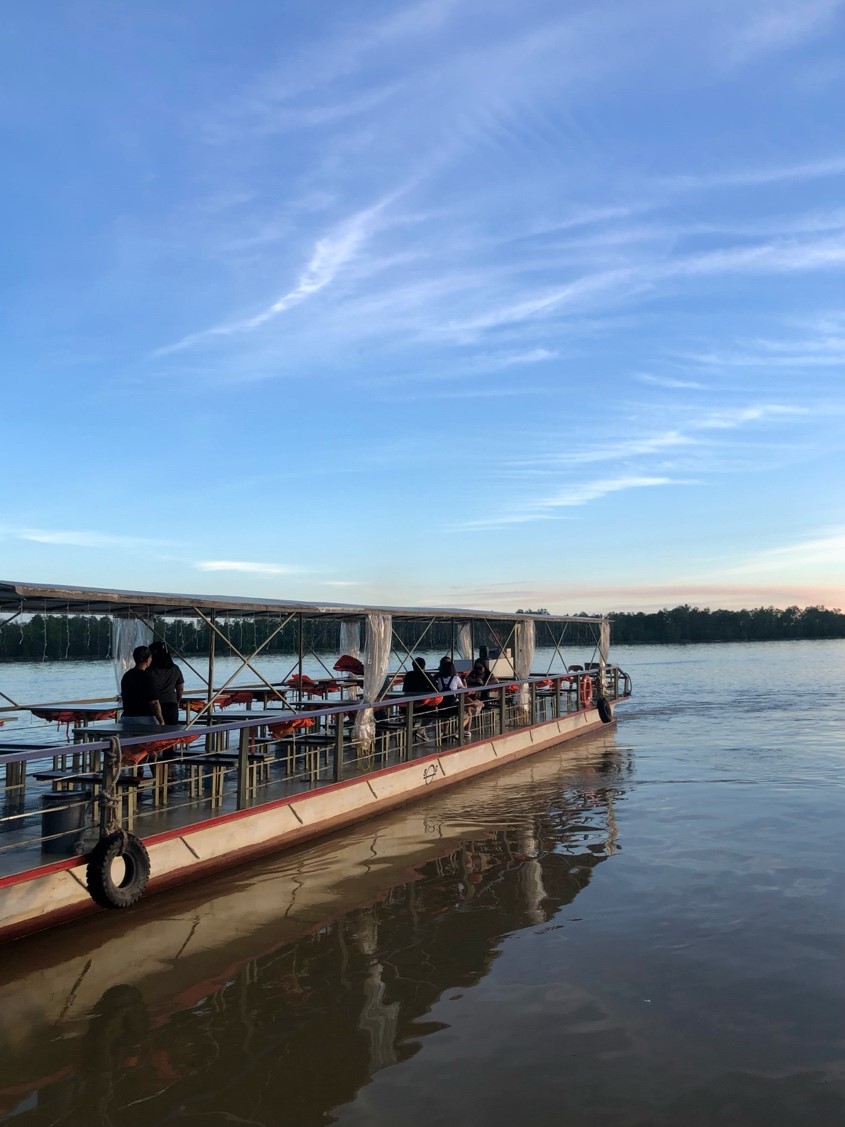
Image captured at the river cruise by Rajang River, Sibu, the longest river in Sarawak and once the only means of transport between Sibu and remote areas of middle Sarawak.

Core Activities and Responsibilities

During my time at UTS, I led a short-term project as a Visiting Fellow at UTS, in partnership with the Sarawak Development Institute (SDI). The project focused on mapping the digital entrepreneurship ecosystem in Sarawak. The aim was to map out the then multi-fold, often seemingly repetitive efforts in digitalising entrepreneurship across different stakeholders in Sarawak. The work involved leading a team of researchers through a desk study, followed by the conducting of interviews with key stakeholders across the region. This research, which has since been submitted to a journal, gave me invaluable insights into the local digital entrepreneurship landscape.

Alongside this project, I was also the internal communication chair for the ACM conference: Participatory Design Conference, held in Sarawak. Responsibilities included organising meetings, finalising conference schedules, and scouting suitable venues with the organising committee in and around Sibu. Through these activities, I had the opportunity to engage with a broad network of stakeholders: including local councils, government agencies, research institutions, and local entrepreneurs, all of which significantly expanded my understanding of Sarawak’s digital entrepreneurship scene.

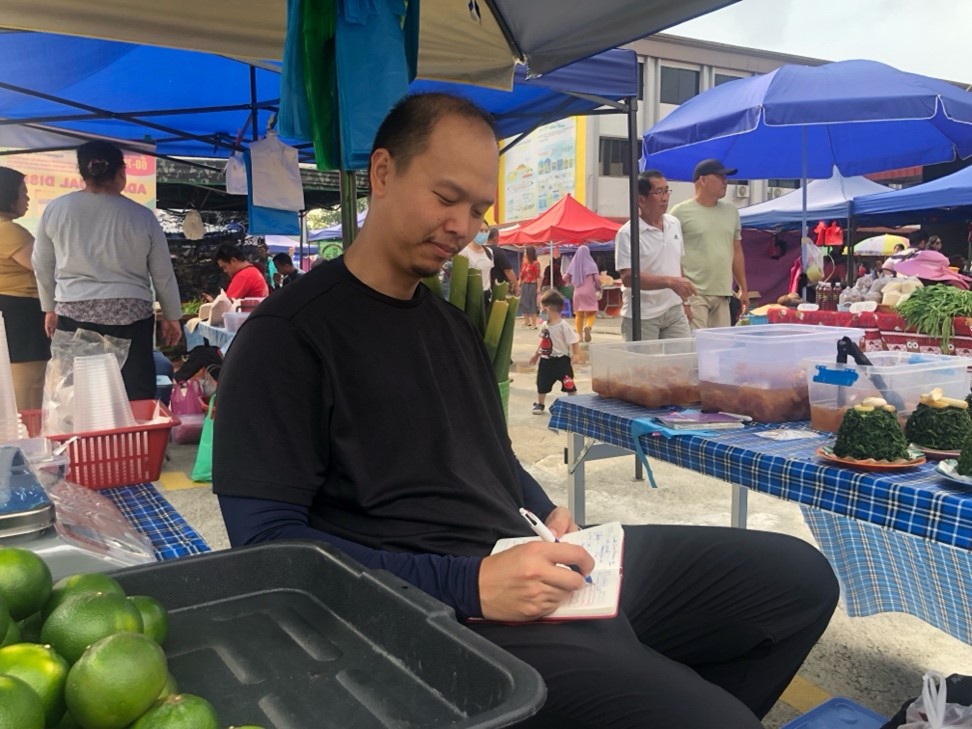
Image taken while conducting ethnographic observations at the weekend ‘Tamu’, or marketplace, where Indigenous micro-entrepreneurs across surrounding rural regions gather to sell various forest produce and rural products.

Adapting My Skills to the Placement Environment

The placement provided a platform to enhance and re-orient several of my academic and professional skills. First, my communication skills were improved, particularly in engaging with stakeholders from varied backgrounds, from city council officials to rural entrepreneurs. It also helped me refine my Malay language skills, essential for rapport building and further fieldwork. Additionally, leading a multi-stakeholder project honed my project management skills, where I have gained confidence in both leading and coordinating research with senior academics and research institutions: from proposal writing to weekly catch-ups and finally, publication. Lastly, my academic writing skills were also strengthened. As I took the lead on writing the research paper, the experience not only built my confidence for my PhD thesis writing but also better prepared me to undertake similar projects in the future.

Image of Sibu taken at the Chairman of the Sibu Municipal Council, one of the meetings I have attended as part of the committee of the Participatory Design Conference 2024.

Key Lessons and Future Impact

Spending three months in Sibu immersed me in Sarawak’s local culture and work environment, offering firsthand insights into local perceptions of digitalisation, digital platforms and digital entrepreneurship, all instrumental to the findings of my PhD.

This experience has improved my understanding of not just the local perspectives of digital platforms, it has also expanded my vision for both research and professional possibilities within the region in the future. Beyond professional skills, this placement taught me to embrace new opportunities and approach uncertainties with courage. From an initial blind email to Dr. Tariq Zaman via Google Scholar, to signing a Memorandum of Understanding between our respective institutions, this experience has taught me the value of taking bold steps and trusting the process, even when the present path may seem uncertain.

Acknowledgements

I would like to thank Dr Tariq Zaman for his generosity and support throughout the attachment, and for his wisdom and guidance in the many conversations we have had the pleasure of. My gratitude also goes to Dr Gary Loh, Dr Ghazalam Tabussum of ASSET, Dr Kok Leong Yuen and the wider team at the Sarawak Development Institute, who worked on the mapping research project together. To the community partners in Bawang Assan, especially Marcathy Gindau and Stanley Marcathy, thank you for partnering and supporting the various research projects conducted in the community.

Lastly, a huge thank you to the Horizon CDT for financially supporting the whole of my placement in Sarawak.

Demystifying the PhD Viva: Insights from Cambridge’s Forum for AI Research Students

post by Nasser Alkhulaifi (2021 cohort)

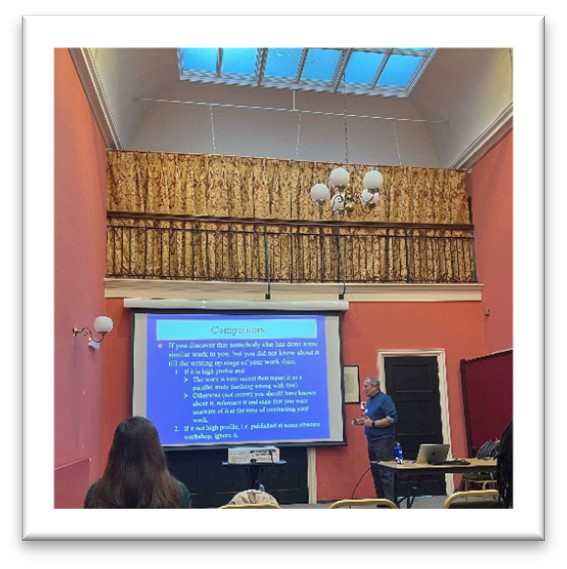
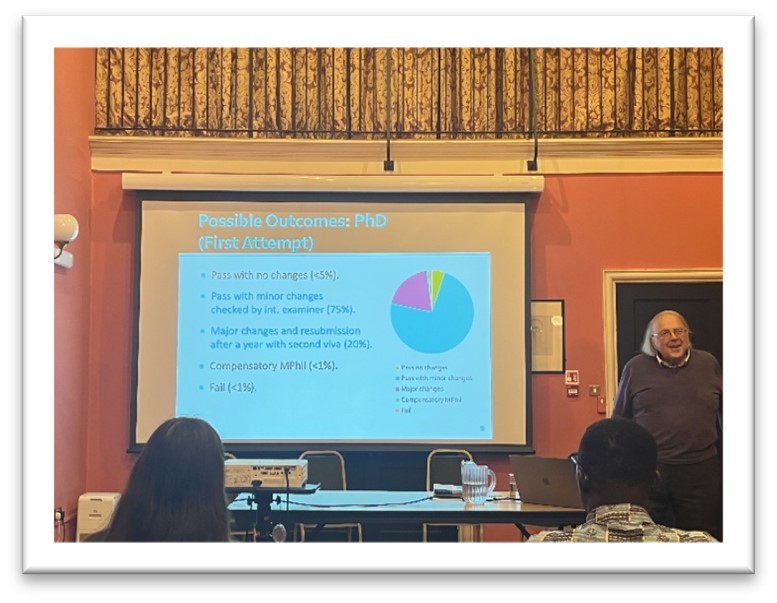
As an AI researcher deep into my PhD journey, I recently had the opportunity to attend the Forum for AI Research Students (FAIRS) at the University of Cambridge. This preliminary event to the AI-2024 SGAI International Conference offered invaluable insights into “How to be an effective AI researcher” and navigating the final stages of doctoral research. The FAIRS event was not just about preparing for a PhD viva – it was about understanding what it means to be an effective researcher in the dynamic field of AI. For fellow AI researchers, whether preparing for their viva or earlier in their journey, the key message is clear: success in research is not just about technical brilliance – it’s about effective communication, professional maturity, and the ability to place our work within the broader context of scientific advancement. Among the many inspiring sessions, Professor Max Bramer’s talk stood out for its depth and practical relevance, especially on navigating the often-daunting PhD thesis writing and viva preparation, which I will be reflecting on in this blog.

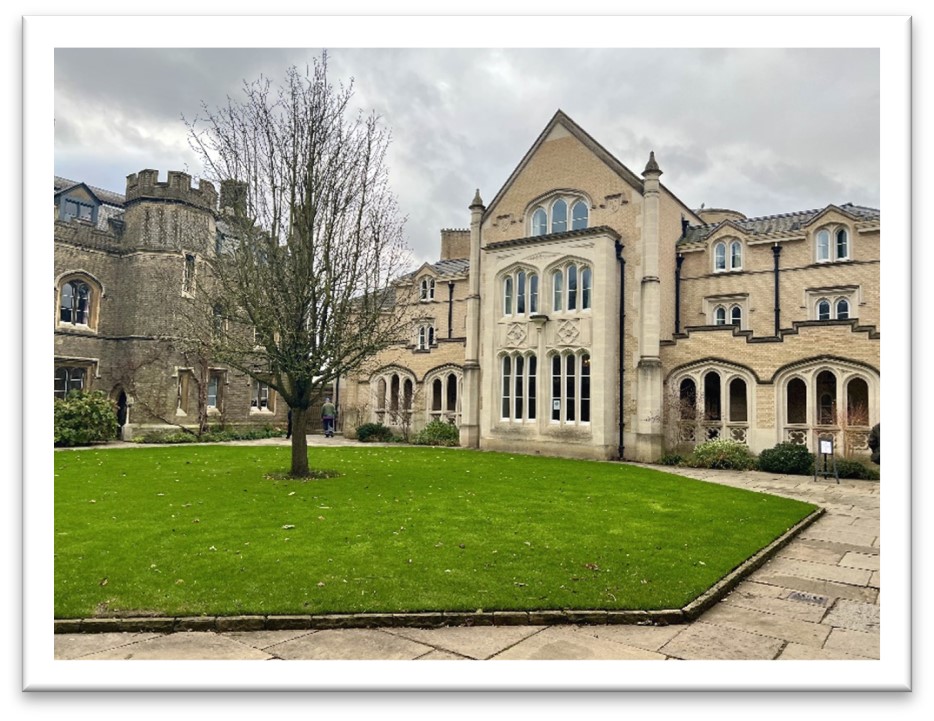
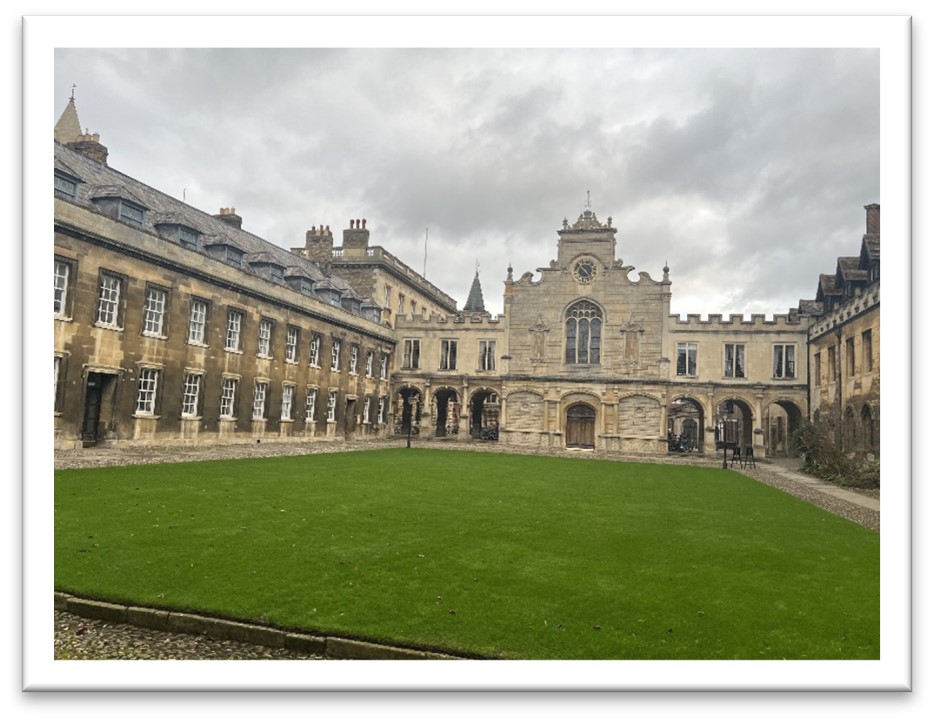
Figure 1: FARIS24 took place at Peterhouse, the oldest constituent college of the University of Cambridge, founded in 1284 by Hugh de Balsham, Bishop of Ely.

The Art of Choosing Your Examiner

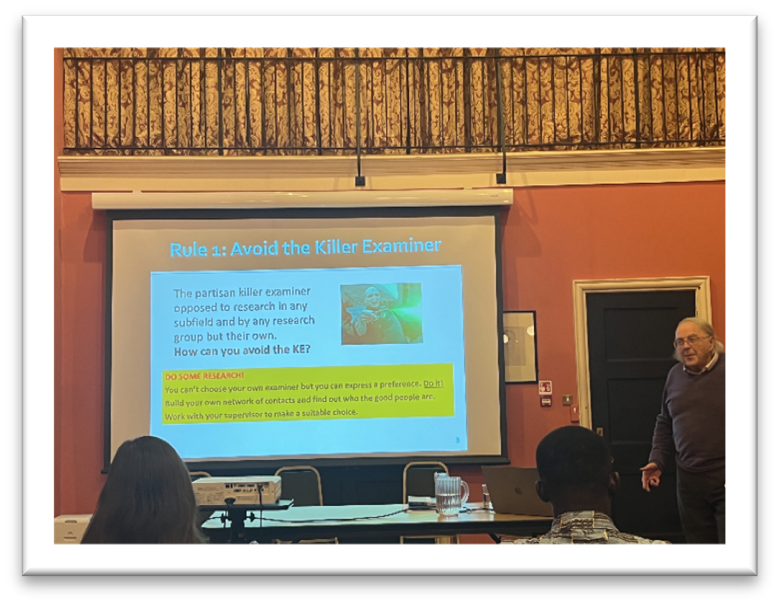
Professor Bramer introduced Rule 1: “Avoid the Killer Examiner” – a partisan examiner who might be overly critical or biased against research outside their niche. While we can’t choose our examiners directly, we can express preferences. The key is building networks and working with supervisors to make suitable choices. The external examiner should be an expert in areas relating to yours, but not necessarily precisely your area, with good general knowledge potentially being more valuable than narrow expertise. Building a network of contacts to identify fair and constructive examiners is crucial. As he explained, “You are the leading expert in your area (temporarily)” and ensuring examiners respect diverse methodologies is key to a fair evaluation. This advice underscored the collaborative nature of academia and the importance of proactive preparation. As researchers, it is our responsibility to not only produce rigorous work but also anticipate the context in which it will be evaluated.

    • The Examiner’s View: remember that the external examiners are usually busy academics fitting the viva into an already packed schedule. They have a short period to read the thesis, often just 2-3 days, and rely on their lifetime of experience to evaluate it. Professor Bramer pointed out that examiners want to see evidence of good research skills, a scientific approach, and a clear original contribution to knowledge. While it is not an attractive job – with a small fee and significant responsibility – most examiners aim to pass the candidate as long as they are confident in the work.
    • The Student’s View: From the student’s perspective, the viva can feel like the ultimate test – the culmination of years of hard work, false starts, and countless drafts. Professor Bramer reassured us that the viva is not like a traditional university exam. Instead, it’s a discussion about a substantial project, captured in a thesis that is typically 200-300 pages.

The Professor on a Train!

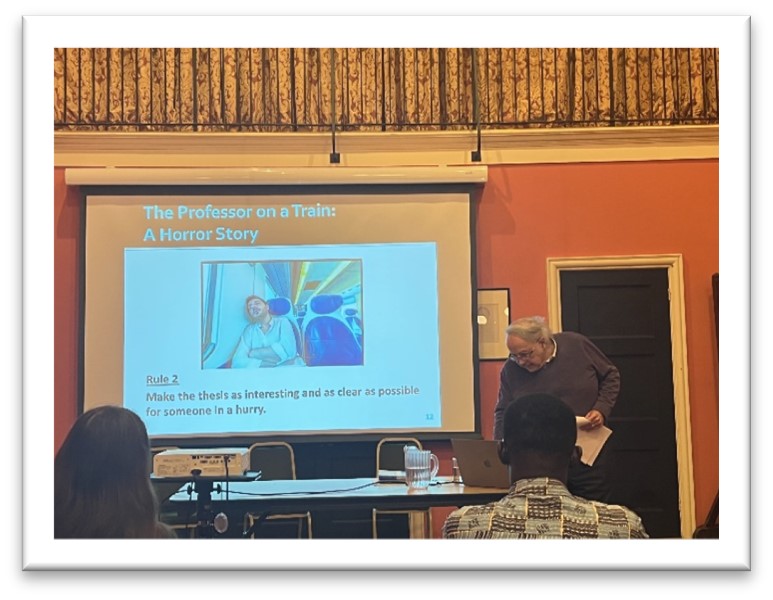
It’s our job as authors to “make the thesis as interesting and clear as possible for someone in a hurry” which is Rule 2 in prof Bramer’s talk. “Think of a busy professor reading your thesis on a train,” Professor Bramer warned. This hypothetical professor, juggling a packed schedule, won’t have time/patience for convoluted writing or unclear arguments. So, start with a killer Chapter 1 because first impressions matter! This chapter gives examiners everything they need to know upfront. Also, throughout the thesis, signpost clearly and use repetition to reinforce key points. As Professor Bramer said, “Repetition and redundancy are helpful”. The takeaway? Respect your reader. A well-written thesis not only communicates your research but also demonstrates professionalism and attention to detail. And let’s not forget the basics: good grammar, proper punctuation, and consistent formatting. Small details make a big impression.

Your Thesis is Your Only Evidence!

Remember that your thesis is the sole evidence of years of research work. “A well-written thesis is essential. A badly written one can be ruinous” he stated. This was not just about writing quality – it was about allowing sufficient time for the iterative process of drafting, reviewing, and refining. A compelling thesis not only captures the attention of examiners but also builds their confidence in the candidate’s work. Key tips included:

  • Chapter 1 as a Mini-Thesis: The introduction/first chapter should summarise the entire work succinctly, making it accessible even to readers in a hurry – remember Rule 2!
  • Signposting and Repetition: Clear structure and strategic repetition help readers navigate the document effectively.
  • Clarity and Consistency: Technical writing is an iterative process, and allowing ample time for revisions is essential. Supervisors play a pivotal role here, and it is important to ensure they have sufficient time to critique drafts thoroughly.

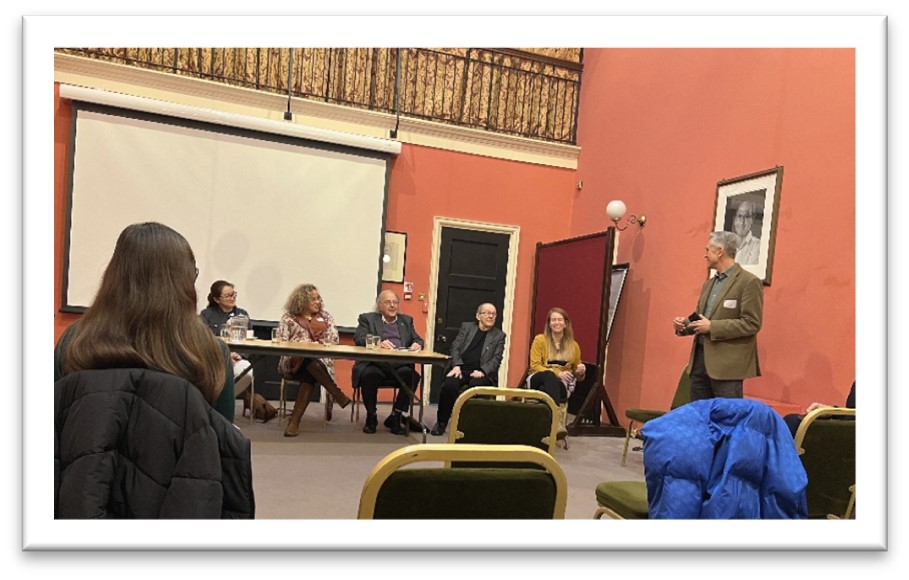
Figure 2: Engaging talks and panel discussions on topics including “Getting a PhD in Computer Science – Doing Good Research,” “The PhD Journey,” and “Post-PhD Pathways.”

Preparing for the Viva – Rule 3: “Make the External Examiner Confident Enough to Pass You”

The viva is a chance to reassure the examiners that you fully understand your work and the research process. It is not a test of survival but rather a professional discussion aimed at validating years of dedication. Examiners want to pass you – it is your job to make that decision as easy as possible for them. Prof Bramer provided practical strategies to navigate this critical stage:

    • Confidence through Preparation: Anticipate common questions such as, “What is the original contribution to knowledge?” and “What are the limitations of your approach?” Rehearse answers to ensure clarity and coherence.
    • Contextual Understanding: Demonstrate an ability to situate your work within the broader field. “Why is your approach significant?” and “How does it compare to the related literature?” This breadth of understanding reassures examiners of your expertise. Show that you can situate your work within the broader field (see Rule 6).

What to Avoid – Rule 4: “Do Not Defend the Indefensible”
Prof Bramer also shared horror stories and pitfalls that candidates should avoid. From making unsubstantiated claims to failing to credit sources properly, these cautionary tales served as reminders of the standards required in academic research. He shared a few cautionary tales of candidates who undermined their credibility by defending indefensible positions. One claimed their algorithm was “1000 times faster” than a benchmark without providing any sufficient supporting data. Misleading claims, such as “No one else has ever worked on this” can undermine credibility. Bramer’s advice was clear: avoid careless blunders, maintain scientific integrity, and always substantiate claims. The lesson? Be realistic and honest. Modest, well-supported claims will always be more persuasive than exaggerated or unsupported ones.

What to Avoid – Rule 5: “Do Not Claim Too Much”
This ties into Rule 4 but deserves its own focus – avoid overclaims! Modesty and accuracy are key. Rather than overstating the impact of your work, provide substantiated claims supported by evidence! Prof Bramer emphasised that your thesis does not need to solve all the world’s problems because nobody does! Examiners are looking for a solid, original contribution to knowledge – not a miracle breakthrough! So, focus on what you’ve achieved, and be clear about its limitations.

Figure 3: Professor Max Bramer’s talk on writing a PhD thesis and preparing for the viva.

Rule 6: “Context Matters”
Examiners expect you to understand where your work fits within the broader research landscape. Be ready to answer questions such as “Why did you choose this approach?”, “In what ways does it differ from or resemble alternative methods?”, “What is the significance of your contribution or the new scientific understanding of your research?” Demonstrating this broader awareness will reassure examiners that you’re a well-rounded researcher with a good grasp of the field.

Final Thoughts
Professor Bramer’s talk was a refreshing mix of practical advice and candid insights. Writing a thesis and defending it in a viva might seem daunting, but with preparation, scientific integrity, and a clear structure, it’s absolutely achievable. And remember, your examiners want to pass you!


From Paper to Poster: Sharing Meta-Meme at the TAS’24 Conference

post by Giovanni Shiazza (2020 cohort)

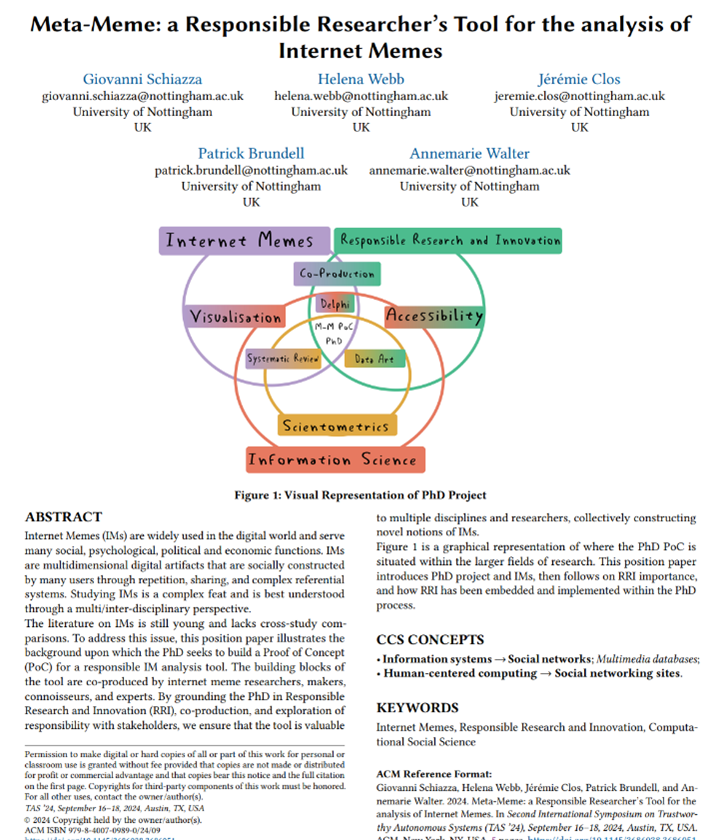
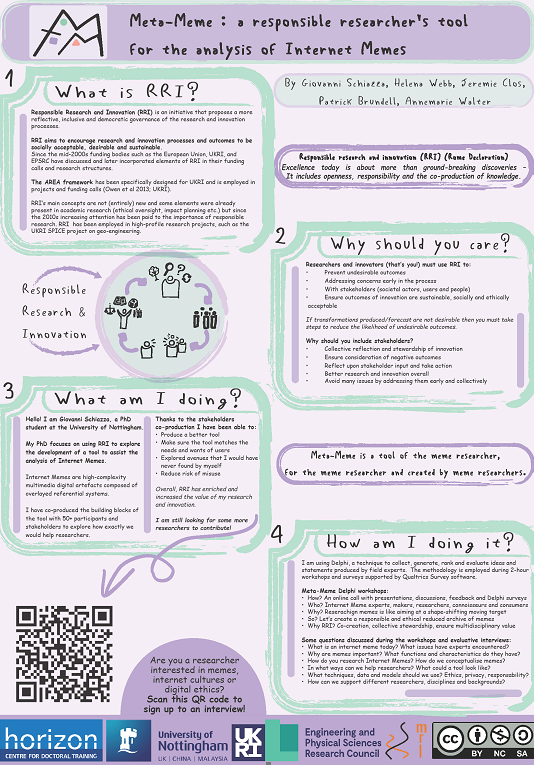
Meta-Meme, a responsible researcher’s tool for analysing internet memes, is a short position paper and poster my supervisors and I published at the second Trustworthy Autonomous Systems (TAS’24) Hub conference (2024).

In this short position paper 👆, I establish the grounds for the PhD: Responsible Research and Innovation, Internet Memes and Information Science. I illustrate the theoretical and practical motivation of the project as well as the practice-research gap I seek to help bridge.

In the RRI section, I illustrate how I got to this point, including the AREA exercises and theoretical thinking done on RRI and internet memes. The paper then demonstrates the methodology and its operationalisation into Delphi questionnaires and workshops. The paper concludes with the importance of such a project in today’s AI industry, which is primarily iRRIsponsible.

The purpose of this paper was to publish the grounding and approach of the PhD whilst obtaining feedback and reviews from peers on the specific elements of the research project. Overall, publishing this paper in a trust conference was beneficial and validating.

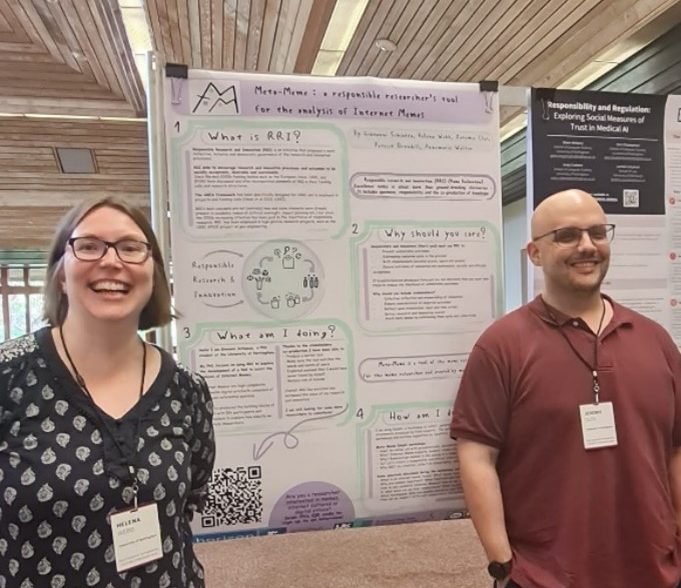
Okay, so then I prepared for the conference, which involved preparing a poster and survey to collect participants with a QR code printed on the poster.

Scanning the QR code (bottom left) leads to a survey to sign up for evaluative interviews as part of the project, widening participation from multidisciplinary researchers and RRI scholars.

Attendees liked the poster; its visuals and colours could draw people in, so the supervisors had further conversations about the project with my supervisors.

Helena Webb and Jeremie Clos at the TAS Conference in Texas

My supervisors (proud parents)👆 attended the TAS conference in Texas and presented my poster while I was at the GSE conference, networking and recruiting more participants for the evaluative interviews.

Unfortunately, I could not go to the conference in Austin, Texas, as there was another conference happening in London, the Government Sciences and Engineering Conference, where I went to reach more policymakers and civil society stakeholders.

Preparing the paper

I started preparing the paper months before the deadline by reading and selecting parts of the documents ready for the PhD’s annual progression reviews. This reading was also done with the materials I prepared for the Delphi workshops, which helped me shape the structure and content of the paper. Most of the content of the paper came from annual review documents. There were a few iterations of the paper based on feedback from supervisors to clarify, restructure, cut out and modify specific parts of the paper. Specifically, for this paper, I found it challenging to find the right tone for a position paper, express the background of the PhD without going into too much detail and balance that against the maximum word count.

It was my first time writing a paper with a specific LATEX template (ACM paper template), and I found it challenging to start, but once I started, it got easier to understand. I have to say I do not particularly like using a template, but it made some things easier to do (referencing, paging and structure) but others more difficult (placing tables, images and making the first page of the paper pretty) and others that were just interesting to do (adding images, creating alternative text for accessibility and screen readers). Latex is a tricky system to get used to, but once you do, you will never go back to MS Word.

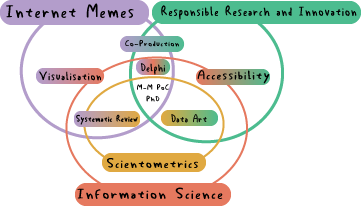
I decided to include 👆 what Latex calls a “Teaser image” which appears at the start of the paper as a visual illustration/summary of the paper. The image illustrates where the PhD is positioned in relation to the related disciplines and fields of research. For accessibility reasons, I also produced an ALTXT for the image (as per ACM requirements) which is only available for screen readers. Describing this Venn diagram was quite challenging, as many overlapping sections made the description lengthy. This was a complex but necessary and essential step to do in order to allow more people to be able to access the paper fully.

The reviews pointed towards a weak acceptance and minor corrections to the paper. The reviewers pointed to adding some clarifications around internet memes, RRI, more specific inclusions, and more concrete examples. As this is a position paper, no new data was produced to go with the paper, so I could not satisfy some of the reviewers’ comments on adding results and data. The paper also needed to be tidied up both in the writing and visual senses. In the review process, there was no way to ask questions to the reviewers or comment on the reviews; you just had to update the paper to match their comments, but there wasn’t another round of reviews. Of particular importance for my research, the reviewers commended the approach and grounding of the PhD, as methods and the proactive stakeholder engagement focused on common understandings of internet memes, answering researchers’ needs and proactively seeking societal acceptability. I was very happy the reviewers could see this in the paper and the positive comments on the approach and methods.

As this was a short paper, it also included preparing a poster which is included below👇.

In conclusion, I think you should always try to publish something as a PhD student and if your paper is rejected, then use the peer’s comments to shape the next iteration of the project or paper. I know getting a paper rejected that you have worked on for months is soul-crushing.

My advice (based on personal experience) is to take a week or two to process the rejection and the feelings, then go back to the paper when you feel ready to face reviewer 2’s comments with a fresh mind and eyes; chances are you will actually understand the comments and make your research better so that next time you submit a paper you will have a better shot at publishing.

Gamification at Earthwatch – Reflecting on my placement

post by Nimisha Parashar (2023 cohort)

Reflecting on my placement at environmental charity Earthwatch Europe.

earthwatch logo

My three-month placement with Earthwatch started in June 2024. My role particularly involved working with the Innovation team at Earthwatch. This team is responsible for research activities in the fields of citizen science and environmental science, within the larger environmental charity that Earthwatch is. With multiple ongoing projects, such as ProBlue, BENCHMARKS, CircleUp, More4Nature etc., the team’s expertise spans across multiple disciplines.

Some of these projects that the Innovation Team is tackling combine game-based approaches with citizen science, which were quite relevant to my PhD. Although I am particularly concerned with gamification (applied to citizen science) for pro-environmental behaviour change, it was useful to understand which projects exist currently in the wider field of citizen science. Additionally, understanding the practicalities of these projects, their execution and funding experience led to an engaging and fruitful experience at my placement.

CROPS and EU-funded projects

A completely novel experience was to learn how the EU-funded projects work, outside of an academic environment. Each project seemed to be divided into different ‘work packages’ or subtasks with separate deliverables and separate due dates. This meant I was working on different subtasks, for different projects that fulfilled different aims of a bigger project overall.

One such project I contributed to was CROPS, a project aimed at upscaling citizen science. My task was to do a literature review of gamification strategies for scaling citizen science. This aligned with different work packages (WP) within the project, such as the WP aimed at coming up with design protocols for upscaling, and the WP aimed at figuring out communication strategies for upscaling and many more.

In the beginning, it seemed like a straightforward project, but the more I engaged with it the more complexity started to emerge. From finding what upscaling could mean, finding how different projects have achieved it, what are the barriers to upscaling, how could one create guidelines for upscaling, to how the project can have a lasting impact. Many such questions started to emerge. The project was also collaborative, which meant different organisations, based in different countries across Europe, tackled different bits of the project. My review, a task I was tackling alone could not have had an impact unless discussed with other project partners as well.

To understand this impact, and the broader implications of this review, I was fortunate enough to get an opportunity for direct contact with all the project partners. At the end of my placement, I presented my work to all these project partners, gaining their feedback. Not just the location of the meeting, which was a beautiful seaside village in Italy (Camogli), but my interactions with the friendly and helpful project partners were equally beneficial for me. It helped me realise how the review impacted the field of citizen science, and how eventually my PhD can do the same. These face-to-face interactions provided important feedback, raised crucial questions and also gave me a chance to form connections.

View of Camogli, Italy - colourful houses stacked along hillside overlooking harbour.
Camogli, Italy

CircleUp and other tasks

Another task that was quite relevant for my PhD was to collaborate with another PhD student working on CircleUp, a project aimed at promoting circular economy in households. This student is particularly interested in developing a game that can instil a sense of community in households participating in the project, making it easier to continue their circular economy journey. As I remain unsure of what my PhD will ultimately involve i.e. will I develop a prototype or not, her work showed what the process of developing the prototype is like. Also directed by the work package deadlines, her PhD journey looked like an interesting alternative to mine.

Other tasks that I ended up doing at Earthwatch, while unrelated to my PhD, were more of an indicator of what working for an organisation like Earthwatch entails. There seemed to be a mix of administrative and research tasks to do, each useful for the project in its own way. On one hand, there was a lack of hierarchy in terms of which tasks had to be done by whom and on the other hand, there was a lack of control over what kind of research or project-related task one was assigned.

Final Thoughts

My placement was completely remote, which meant missing out on some in-person interactions, interesting collaborations, and water cooler moments. However, it also meant a lot more freedom in organising my time. At times, it was challenging to completely break away from my PhD but on days when I had proper boundaries in place, it was a welcome break from thinking about the PhD. It was also nice to have small discrete tasks that could be finished quickly, as opposed to a long research project (i.e. my PhD) that can take 4 years to finish.

Overall, Earthwatch was a welcoming place that did its best to tailor the placement experience to my research interests.


Exploring New Research Horizons: My Experience at the Corpus Linguistics Summer School

post by Ramneek (Athawal) Rai (2023 cohort)

I am currently working on a corpus linguistics project as part of my PhD research on the intersection of gender with entrepreneurship. This method involves using computer software to analyse large sets of language. The aim of my research project is to gain a deeper insight into the language used to describe male and female entrepreneurs. This idea was a result of a session that the CDT hosted on corpus linguistics.

As this is an unfamiliar research discipline, I decided to work on understanding how corpus linguistics studies are conducted over the summer. Hence, from Monday 15th July to Thursday 18th July 2024, I attended the University of Birmingham 8th Corpus Linguistics Summer School. Whilst the synchronous part took place during these dates, there were asynchronous activities that were self-study. Each day followed a loosely similar structure with online lectures/seminars on various topics such as Topic Models and extra reading to assist your learning of the topics. The purpose of attending this summer school was to gain an understanding of corpus linguistics methods so that when I conduct my own research, I have a familiarity with the analysis tools and choice of data collection.

The Monday started with an introduction to corpus linguistics, which was pivotal for a beginner like me. It allowed me to understand what corpus linguistics methods involve and reflect on how I would use those methods in the context of my own research. Additionally, the summer school taught about concordance lines which has also been useful to familiarise myself with as I can now engage in this qualitative method if I were to focus on how individual words or phrases are used within my research project. I learnt how to run different queries on the CQPweb software so that I can search for a specific term or related words in my research. As I will be using the word ‘entrepreneur’, this was beneficial as it taught me how to do my search if I wanted to include the terms ‘entrepreneur’ as well as ‘entrepreneurship’ and ‘entrepreneurs’. There were also examples that helped me understand the content being taught.

Though I am not conducting research on sign language, I found the session interesting on sign language corpora and the challenges when conducting studies in this field. For example, there can be challenges in the consistency of the annotation. The summer school then presented an introduction to Sketch Engine which is the corpus analysis tool that I will be using for my research project on language used to describe entrepreneurs. As I gained knowledge of the different features in SketchEngine, this has helped me currently when using SketchEngine for my PhD research. A key benefit of SketchEngine is the ease of use, therefore making it easier for users like me who are new to this discipline of research.

There were sessions which were less relevant to my research. Nevertheless, it was interesting to gain an understanding of how corpus linguistics can be used in different industries and the ethical issues that may arise with this. For example, one session discussed the ethical considerations when analysing healthcare data using corpus linguistics. Often the ethical issues could be applied in other research disciplines outside medical research, such as research purpose, inclusion and anonymisation. Hence, it was useful to study this session.

Though the summer school was online, I was able to learn a core understanding of corpus linguistics due to the structure of the summer school on each day. As mentioned previously, this was a completely new discipline for me to learn, hence I often had to spend time recapping what had been taught. Additionally, I still refer to my notes that I made as it supports my understanding. As a researcher, it has increased my confidence to learn a new discipline as I am now able to conduct research using a method, I was not previously familiar with. It has also taught me to be open as to what value other disciplines could add to my overall PhD research. When I started my PhD, I did not expect to collaborate with the English department for my research. Though I did have research ideas to explore in language and entrepreneurship, it was not the area of corpus linguistics. Whereas now a large focus of my research this semester is on corpus linguistics research. Additionally, I have found myself enjoying learning a new method as it is not only interesting but has pushed me outside my comfort zone.

Forward-looking, I would be open to attending another summer school in an area that will improve my knowledge for the research projects I will work on throughout the PhD. Sometimes, there is not always a module that covers the area you need to learn, hence attending relevant summer schools allows me to enhance my knowledge for the research projects. Overall, the summer school was interesting, insightful and well-structured, providing a positive experience for me as a student attending their first summer school.

Future Transport Summer School Reflection

post by Iris Jestin (2023 cohort)

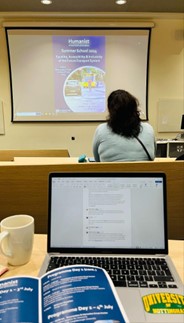
Over the summer of 2024, I had the opportunity to attend the HUMANIST Summer School which researches human factors challenges in transport, held at Loughborough University. The theme of the summer school was Equality, Accessibility, and Inclusivity of the Future Transport System, which couldn’t have been more relevant to my PhD in Adaptive Driving Interfaces for the Ageing Population in Future Vehicles! There were researchers that had come in from different universities from various parts of the world. It was exciting to see the research that was happening in the area across the world.

The three-day summer school started on day one with PhD student presentations called the two-minute thesis. Presenting my research for two minutes seemed more challenging than being asked to present for longer. Listening to the others presenting their research, I couldn’t decide which was possibly the most interesting and relevant to mine, with me making a mental note to talk to almost every researcher about their research, when they were done presenting.

The following days had talks given by various academics out of which some were more relevant than others. One of them that stood out to me was a talk on Driving with Dementia and Mild Cognitive Impairment given by Professor Eef Hogervorst and her PhD student Ahmet Begde from Loughborough University. Eef spoke about normal ageing versus pathological ageing and how this has varied effects on driving. Ahmet spoke about the combinations of tests that explore sensorimotor performance in driving that might best predict dementia. Another session that felt extremely relevant was given by Sharon Cook, a senior lecturer from Loughborough University, who spoke about Using Empathy Suits to Understand Driving Constraints for Older Drivers. Sharon had through her extensive research created a suit which simulated physical constraints of older adults to make research on older drivers more tangible. This felt particularly useful as it gave me insights into how using these empathy suits might be a feasible alternative to involving older adults in driving research. But the point to note was the suits simulated physical and not cognitive constraints. Ana Anund, a researcher from the Swedish National Road and Transport Research Institute (VTI), spoke about deploying Autonomous Pods and Shuttles in the city of Linkoping, Sweden, where it is in the testing phase with the residents of the city. The pods were implemented to run in one direction across the city in the shape of an ‘8’. She mentioned that based on insights from the testing, the pods needed to be adapted to be more inclusive. An example that was mentioned was how a blind resident found the autonomous pod to be very quiet for their liking.

As much as I enjoyed all the sessions, the highlight of the summer school however was visiting the Leicester Space Centre on one of the evenings, followed by a dinner under a hanging planet and star display. This was a good experience to take in the displays from different space missions over the years as well as a good time to network with the other PhD students and academics from different universities. I even found some fellow researchers from the Swedish VTI that were open to circulating my scoping study questionnaire and information sheet around with peers, to help me get responses.

Overall, it was a lovely experience with learnings about how transport research is done across different universities and countries, and innovative methods used for it, prompting some interesting conversations with relevant academics to bear in mind for potential collaborations.

I close with an array of pictures from my favourite bits of the summer school!

Delay is not Delilah*: My Placement with Digital Catapult

post by Favour Borokini (2022 cohort)

I officially began my placement with Digital Catapult, or DC, as rather affectionately I think, it is referred to by Digital Catapult staff and me, eventually, now, in April 2023. Although the Horizon CDT Placement is meant to take place over the course of three months, there is quite a lot of flexibility regarding its duration and structure. In my case, my key contact at my Industry Partner, Dr Aki Jaarvinen, was of the view that my research would greatly benefit from a two-part placement since I was so early in my research. I would spend a month visiting DC offices in London between May to June 2023, familiarising myself with the DC team and their work, especially the Immersive team and then, as my research progressed, return in December through March 2024 to complete the rest of the placement having learnt in the first part, how best suited DC would be to support my research and give me the opportunity to learn what life in the industry was like. 

My PhD with the Horizon CDT wasn’t my first time engaging with DC though. Back when I was in Nigeria and working in tech policy research, I had come across a LinkedIn vacancy for a Responsible AI Ethics Officer position at the organisation that I was highly interested in and tried to apply for and in a bid to learn more about the role and DC, I got in touch with Cecilia Nunn, a member of the DC AI Ethics team. Unfortunately, due to certain visa restrictions, I was ineligible for the position – visa restrictions being a rather remarkably persistent thorn in my flesh, ever since I began to work in international tech policy research. 

When some months after this interaction, Andrea confirmed to me over Teams, while I wondered if it was really happening, with my primary supervisor, that she would be issuing my Letter of Acceptance, I perhaps misunderstood what she meant about the industry partner as I interpreted something she said to mean that my admission was contingent on finding an industry partner to support my research. 

I made a long list of potential industry partners, organisations working in VR or technology policy and similarly related spaces and sent lots of cold emails. Some people responded, usually positively but the vast majority did not. One of the latter was Digital Catapult, or so I thought. What had happened was that Cecilia forwarded my email to Aki, who as a technologist is involved with the Immersive Lab activities and who, I suppose found my research interesting enough at the time and emailed me, and the rest is history. Some other visa application issues meant that I wouldn’t actually meet Aki in person or visit Digital Catapult till April the following year.  

Beginning the Placement 

When I first visited DC, I was struck by quite a number of things. There was the view, of course, through which one could watch Londoners milling ant-like between DC and the towering buildings on one side and the architectural marvel that was the British Library on the other. The offices themselves were quite airy and brightly lit, which I am fairly certain in no small way contributed to the overall friendliness of the team as I mentioned to Dr Oliver Butler, my primary supervisor, DC felt like a great place to work. This feeling would come to be validated several times during my placement, as I observed how tightly-knit and warm the Immersive Lab team and other teams interacted amongst themselves and with me. 

During the first part of my placement, I was introduced to the team including Kerwyn Dyte, the Immersive Lab Manager, Rachel Thuo, a Junior Technologist with the Immersive Team, and Jessica Driscoll, the DC’s Director of Immersive and participated in a number of activities at the lab that got me thinking about some of the ways immersive technologies can remarkably transform our lives. Some of my ideas were admittedly, rather comical(ly dystopian) – plastic surgeons for avatars/digital twins for instance, mind uploading for exercise purposes (drawing from former Horizon CDT student, Dr Angela Thornton’s research) but working with the team and merely observing their sparked my more imaginative side. Rachel and Kerwyn strongly encouraged me to watch Dark Mirror. 

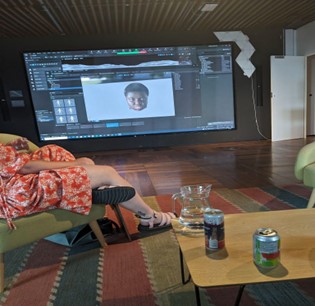
Inside a room with graphic design project being displayed on a large screen

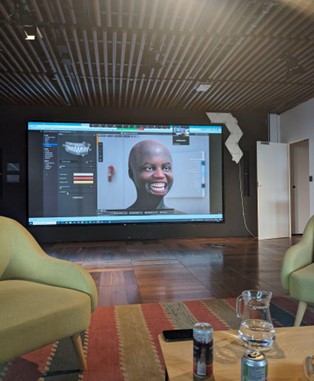
Inside a room with graphic design project being displayed on a large screen
Exploring Virtual Human Creation

DC’s position as a member of the UK Catapult network meant they interacted with a huge number of stakeholders including policymakers and stakeholders, such that by the end of the first part of the placement, it became quite apparent to us that it would be in our mutual interest for me to hold a series of workshops relying on their network and support.

When I began my research, and what perhaps prompted the introduction to Aki, my interests were specifically geared towards creating an ethics framework for virtual reality harms, however as my research progressed, I quickly realised that what I was most interested in were avatars and afrofeminist ethics concerns in their design and use. This change thankfully did not prove too challenging to my industry partner, and with their assistance and support, I successfully organised three workshops with over 20 participants in London and Bristol between December to June.

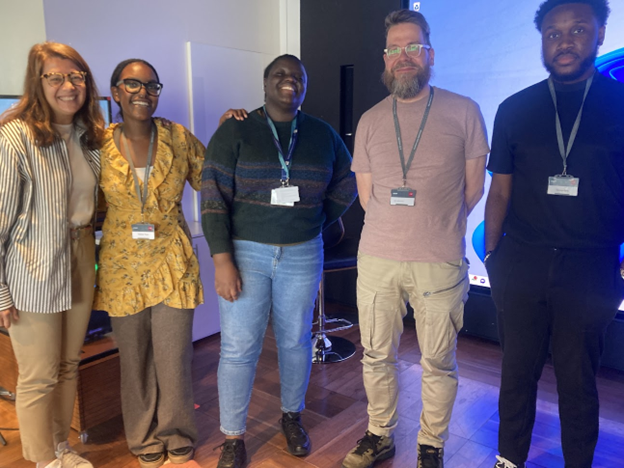
five people standing together with CDT student, Favour Borokini, in the centre
Final Placement day

Lessons Learnt

There were quite a few distinctions between the industry and academic approach. For one, academic research proceeds much slower and I sometimes had to juggle required modules within the CDT and Law school, sometimes missing a couple. Ethics approval requirements meant that I couldn’t run workshops as quickly as I hoped and I was often quite surprised at the speed the Immersive Lab team worked, often beginning and wrapping several projects seemingly at light speed. To work with the very busy people at DC, I had to strike a balance, sometimes needing to write module convenors to be excused on certain days, a skill I think every multitasker should have. I also quickly realised that note taking was very important to keep track of all that needed to be done, so I recorded my industry partner supervision meetings with my primary supervisor dutifully as well.

I was also constantly floored and humbled by the DC team’s interest in my research and their willingness to give up their time and resources and the invitations to participate in various internal and external networking and knowledge-sharing events from Jessie and Aki and occasionally team members I had never even met. It has often been observed that workplaces that refer to themselves as families often turn out to be the farthest thing from family, but somehow, despite not ever once in my hearing referring to themselves as family, DC turned out to be a really interesting place to work.

Perhaps most importantly, working with DC and DC’s network helped me re-engage with the ludic element of technology design and meet with real people across the industry who want to create pleasurable, diverse experiences. I think very often in the tech policy and responsible innovation, elements of escapism and pleasure and leisure (pleisure?) get overlooked and ignored in favour of concepts like justice and equity. But what justice without fantasy and speculation and futurism and fun? My conversations with the team and Rachel especially have motivated me to take an interest in why people love and are interested in immersive technologies, beyond simply designing an ethics toolkit for better design.

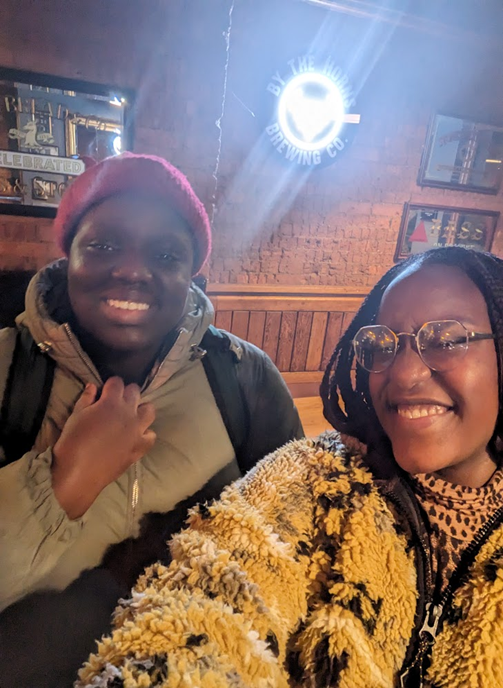
Favour and Rachel taking a selfie
With Rachel after a networking event

Aki’s definition of the metaverse as an imaginary and narrative of different types of technologies and interfaces of a futuristic type of digital interaction is probably the best, most wholesome definition of a space it is rather de jour to deride.

PS

In July, I visited DC again to return a headset I had been loaned by the Lab and spoke with Kerwyn about working with DC again as my research continues to progress. I hope the opportunity arises again. I’m really thankful to Kerwyn, Rachel, Jessie, Aki, Iulia, Nicole, Chris, and Chris, (there are two Chrises!), as well as Cecelia and Chanell, for speaking to me about and supporting my research.

* Delay is not Delilah is a humorous Nigerian perjoration of the phrase, “Delay is not denial”.

Bridging AI and Oral Healthcare: My Placement with Haleon PLC

post by Muhammad Suhaib Shahid (2020 cohort)

  1. Introduction to My Placement Experience

In the summer of 2024, I embarked on a placement with Haleon PLC in Nottingham, as part of my doctoral research with the Horizon Centre for Doctoral Training (CDT). The placement was an incredible opportunity to merge my interests in artificial intelligence (AI) and healthcare, specifically focusing on oral health. Over the course of three months, I engaged in two primary projects: conducting interviews with industry professionals about AI in oral healthcare and collecting dual-modal data involving MRI scans and facial video recordings. This placement not only enriched my research and contributed towards my thesis, but also provided valuable insights into the practical applications and challenges of integrating AI into healthcare.

  1. Part One: Exploring AI in Oral Healthcare Through Interviews

2.1 Initiating Conversations with Industry Experts

The first phase of my placement involved conducting in-depth interviews with professionals at Haleon PLC. The goal was to understand the current landscape, perceptions, and future possibilities of AI in oral healthcare. I interviewed eight participants from various departments, including Innovation, Regulatory Affairs, and Medical and Scientific Affairs. Each participant brought unique perspectives based on their roles within the company.

2.2 Key Themes and Insights

The interviews were structured around several key themes:

  • Understanding of AI in Oral Healthcare: We discussed how AI is currently being utilised in dentistry and oral health, including diagnostic tools, patient engagement platforms, and personalised treatment planning.
  • Ethical Considerations: Participants shared their thoughts on the ethical implications of AI, such as data privacy, patient consent, and algorithmic bias. These discussions highlighted the importance of transparency and trust in implementing AI solutions.
  • Impact on Professional Roles: A significant topic was how AI might change the roles of dental professionals. While some saw AI as a tool to enhance efficiency and accuracy, others were cautious about over-reliance on technology.
  • Optimism vs. Skepticism: The interviews revealed a mix of optimism and skepticism. While there was excitement about AI’s potential to revolutionise oral healthcare, concerns were raised about practical barriers and the readiness of the industry to adopt such technologies.

2.3 Analysing the Data

After conducting the interviews, I performed a thematic analysis to identify patterns and key insights. Using Excel, I organised the transcripts and coded the data, which allowed me to draw meaningful conclusions that would later inform my thesis. This process was invaluable in understanding the multifaceted views on AI within the industry and provided a solid foundation for further research.

  1. Part Two: MRI Data Collection for AI Modelling

3.1 The Need for Dual-Modal Data

The second part of my placement focused on collecting dual-modal data to advance AI modelling in speech and oral movements. The aim was to create a dataset that combined internal views of the vocal tract (using MRI scans) with external facial movements (captured through video recordings). This data is crucial for developing AI models that can predict internal articulatory configurations based on external facial cues—a concept with significant implications for non-invasive diagnostics in oral healthcare.

3.2 Data Collection Process in Nottingham

3.2.1 Methodology

In the initial ethics application, we aimed to recruit 30 participants for the study. Each participant would undergo two recording sessions at facilities in Nottingham:

  • Session One: Participants were recorded speaking and chewing in front of a camera, capturing high-resolution videos of their facial movements as they articulated specific sentences.
  • Session Two: The same participants repeated the sentences while undergoing MRI scans. This provided real-time images of their internal vocal tract movements corresponding to the facial videos.

We later found that the upright MRI machine would allow us to simultaneously record the face and the internal view. We subsequently focused our efforts on this approach and did not implement session one; for the placement, we focused on performing an initial pilot study to refine the protocol.

3.2.2 The Pilot Study with Multiple MRI Machines

The pilot study involved two participants using two different MRI machines:

  • 1.5T Scanner: Offered a balance between image quality and participant comfort.
  • 0.5T Upright Scanner: Allowed participants to speak in a more natural, upright position, improving comfort and potentially leading to more natural speech patterns.

3.3.1 Adapting Procedures for Each Machine

Each MRI machine had unique requirements. For instance, the upright scanner necessitated adjustments in our data collection protocol to accommodate the participants’ posture. We also shortened the sentences used during the pilot to reduce the time participants needed to speak while being scanned, minimising discomfort and movement artifacts.

The pilot study was instrumental in understanding how different MRI technologies could impact data quality and participant experience. It highlighted the importance of selecting appropriate equipment based on the research objectives and provided valuable lessons for future large-scale data collection efforts.

  1. Reflections on the Placement Experience

This placement was a unique opportunity to apply theoretical knowledge in a practical setting. Working with Haleon PLC allowed me to see firsthand how AI concepts could be translated into real-world applications, particularly in oral healthcare.

Throughout the placement, I was constantly mindful of ethical considerations, such as obtaining informed consent and ensuring data privacy. The experience underscored the complexities of implementing AI solutions in healthcare, where patient welfare and ethical integrity are paramount.

Collaborating with professionals from various disciplines enriched my understanding and expanded my professional network. It was inspiring to engage with individuals who are at the forefront of innovation in healthcare.

  1. Conclusion and Acknowledgments

My placement with Haleon PLC in Nottingham was a great experience that significantly contributed to my doctoral research. The combination of conducting interviews and collecting dual-modal MRI data provided a comprehensive perspective on the challenges and opportunities of integrating AI into oral healthcare.

I would like to extend my heartfelt thanks to the team at Haleon PLC for their support and collaboration. Special appreciation goes to the participants who generously contributed their time and insights. This experience has not only advanced my research but also solidified my commitment to contributing to the field of AI in healthcare.


Helpful or Harmful? The Importance of Regulating Mental Health and Well-Being Platforms in the Workplace and Beyond

coman at desk with hands on her head

post by Emma Gentry (2021 cohort) and Lucy Hitcham (2023 cohort), with commentary from Dr Aislinn Gómez-Bergin

If you have been following the news over the last six months, you will have seen that one of the UK’s largest Employee Assistance Program providers (EAPs) has been in the spotlight for having potentially violated measures that aim to protect people from harm. In an ongoing investigation, Health Assured have been accused of allowing organisational representatives to listen in on ‘confidential’ counselling calls between employees and counsellors, though the CEO denies all allegations. The BBC1,2,3 reports callers were not aware that non-authorised parties were listening in without their consent or knowledge.

Health Assured serves well-known employers in the UK, including NHS trusts, police forces, universities, and many more.

What is an Employee Assistance Program (EAP)?

EAPs typically offer a range of support services to assist employees with their mental and/or physical health. As mentioned in a CIPD report, EAPs are a popular way for employers to offer additional support to their employees in the UK. Health Assured describes the benefits of an EAP on their website:

“The purpose of an Employee Assistance Program (EAP) is to boost productivity and reduce staff absences…it provides people with the tools needed to get mentally healthy. It raises awareness among peers. It even prepares for returning to work more quickly.”

It is important that we pay closer attention to the wider ecosystem that may be impacting employees – especially as organisations are increasingly drawn to ‘stand-alone’ solutions.

Potential breaches of ethical frameworks

As well as unethical ‘eavesdropping’ on confidential calls, Health Assured are accused of staffing helplines with untrained staff who were prevented from speaking out on such issues. Prior to this investigation, Health Assured sold its employee assistance services under the premise that it was the only BACP (British Association for Counselling and Psychotherapy) approved provider in the UK. They used their BACP approval as a marketing technique to sell services to organisations. The BACP outlines an ethical framework for practicing counsellors and psychotherapists in the UK to protect clients in their care. Their key principles include:

    • Being trustworthy: honouring the trust placed in the practitioner
    • Autonomy: respect for the client’s right to be self-governing
    • Beneficence: a commitment to promoting the client’s well-being
    • Non-maleficence: a commitment to avoiding harm to the client
    • Justice: the fair and impartial treatment of all clients and the provision of adequate services
    • Self-respect: fostering the practitioner’s self-knowledge, integrity and care for the self

Health Assured were held to a certain standard which they did not meet, which has resulted in a suspension of their accreditation. Until we know the outcomes and implications of this case, we can meanwhile consider: what are the key issues here, and what might the future hold for mental health and well-being applications in the UK?

Working Towards a Better Future

While perhaps the most obvious solution is regulation, this is far from straightforward. Alongside the boom in digital mental health tools, there have been increased attempts in the UK to develop regulations from bodies such as the NHS, MHRA and NICE but these are not all legally binding and leave room for grey areas.

Recently, the MHRA and NICE launched a three-year project, funded by the Wellcome Trust, into the regulation and evaluation of digital mental health tools. By working with experts across industries, they aim to comprehensively evaluate the potential risks and benefits of digital mental health technologies (DMHTs) to enable access to safe and effective tools. Part of their research has shown that the public were in favour of DMHTs but either assumed such tools were already regulated or that regulation of apps was the ‘wild west’ and did not pose much risk. Despite this, many supported regulation if this did not restrict access to DMHTs. Therefore, it is important to remember that those developing, regulating and contracting DMHTs hold a significant position of power over users and should consider their duty of care, as I have found in my research (Lucy). This includes making sure that regulation and responsible research and innovation (RRI) are not just “tick box” exercises and companies like Health Assured maintain ethical standards for their services and products.

Dr Aislinn Gómez-Bergin, Transition Assistant Professor in digital mental health, discusses the wider landscape surrounding EAPs:

“The reality is that, in the UK, there is no law requiring therapists or therapy providers to adhere to any standards or qualifications. Membership bodies that do provide a set of professional standards, such as BACP, are voluntary and so limited in what they can do when those standards are breached. You might ask, what is preventing this sector from becoming a free for all? In many cases these companies may wish to adopt principles of doing good or, as with Google, “don’t be evil”. The question then is, how do they decide and who decides what is good? In the case of Health Assured, they had voluntarily signed up to BACP accreditation (although they did not adhere to their standards) and made what proved to be a rather foolish decision to encourage more business through breaking confidentiality.

Clearly, a sustainable business model is an important consideration for employers, who pay for these services, and for users who rely on their mental health support. The problem arises from not anticipating and reflecting on the unintended consequences of their actions. The impact? Avoidable damage to their reputation from a BBC exposé and potential fines if found to have breached data protection rules.

Taking a responsible research and innovation approach when considering what is good, these unintended consequences are explored and actions are taken to mitigate or prevent them; it takes a wider perspective than what a company might be tempted to take (i.e., focusing on those paying for the service and thereby creating a disconnect between consumer and user), allows for more voices to be considered, and can help a company understand not just the socio-technical consequences but also the legal.”

On a final note

Digital mental health continues to revolutionise our world today, and we are likely to see further transformation as AI becomes more sophisticated; however, it is important that we continue to embrace the potential of technology responsibly. While EAPs have been portrayed in a negative light this year, it is important to remember that many calls are handled successfully and sensitively. Utilising a Responsible Research and Innovation (RRI) approach may be more about upholding the reputation of safe and effective services whilst re-establishing public trust in psychological services more broadly. The right support can be transformative for people and our society – we must work together to protect that.

Further resources

Responsible Research and Innovation Initiative