What I learned about my PhD by knocking on doors

post by Stephen ‘Parky’ Parkinson (2023 cohort)

In academia, it’s all too easy to spend a lot of time and effort thinking about theory, reading other academic’s writing, and focusing on your research design. They’re all important, but sometimes it stops you from poking your head above the parapet and seeing what things are like in the “real world”.

My PhD research looks at how individuals are engaging with the circular economy and to what extent digital technology plays a role. We live in a society that uses too much and throws too much away, and this all takes a big toll on the environment. The circular economy aims to reduce waste by focusing on actions like repairing, sharing, and reusing, instead of always buying new and throwing away. I’ve spent the first two years of my PhD immersing myself in academic debates about the circular economy, and it’s taken me across a whole breadth of topics, including discard studies, Jevons paradox and rebound effects, and ideas of circular citizenship. But the term “circular economy” doesn’t mean much to the average person; it isn’t something most people talk about over dinner. In fact, many haven’t heard of it at all (and who can blame them when academics can’t even agree what it means).

So, what better way to understand what people think than getting out and talking to them? Last summer, I had the chance to do just that by helping Oxfordshire County Council with a doorstep survey in the town of Wantage. It was a great opportunity to talk to people… a lot of people. Over six weeks, the team I was working with managed to knock on nearly 4000 doors and had over 300 conversations.

Why I ended up knocking on doors?

My experience formed part of the Horizon CDT placement module, a three-month opportunity designed to help students develop skills and connect their research to a context outside of academia. My placement with Oxfordshire County Council was organised through their involvement with CircleUp, a Horizon Europe project in which my industry partner, Earthwatch Europe, is also involved. The aim of CircleUp is to explore different ways to engage households with circular economy behaviours; in particular, focusing on how to waste less clothing, electronics, paper and plastic packaging, and food (perfectly aligned with my PhD!) To test this, CircleUp is working with over 100 households in the UK, Germany, Latvia and Norway.

As part of the UK activities in CircleUp, Oxfordshire County Council wanted to run a doorstep household survey with two aims: to understand what circular economy behaviours people already did, and to recruit households to take part in the CircleUp project. Rather than asking about the circular economy directly (a surefire way to prompt blank stares), the questions instead focused on examples of activities to reduce waste run by the local environmental group Sustainable Wantage (for instance, a repair café, library of things, refill shop, clothes swap, and community fridge).

The fieldwork came with its own set of challenges. As usual in the British summer, we spent as much time sheltering from the torrential rain as we did shading from the sun. And each door knock could start a new adventure from (over)friendly dogs, people in the middle of moving house, and others who were keen for a long chat (or rant) about completely unrelated topics. But was all the risk worth the reward?

What I learned from the conversations

I learnt a lot from the placement. It gave me great hands-on experience in every stage of designing and conducting a large-scale household survey. The data collected will also provide really helpful context for the studies I’m carrying out in my PhD. But the biggest learnings weren’t these practical skills, they were the cumulation of experience from each door knocked. Every conversation revealed a different perspective, as much shaped by practical realities and family routines as they were by deeply-held values and beliefs. It reminded me that circular economy behaviours aren’t abstract concepts – they are built on layers of lived experience and personal history, mixtures of habits and impulsive actions, and that often, despite best intentions, behaviour is determined by local infrastructure and other practical limitations.

One of the biggest takeaways I had from the experience was that, although the term circular economy is unfamiliar, the underlying principles of reducing waste through reuse, repair, and sharing are instinctively appealing to a lot of people. Even if people hadn’t heard about community activities like library of things or repair cafes before, once we explained more about them, many really liked the idea and seemed keen to get involved.

At the same time, the conversations could be difficult to navigate because everyone brought their own priorities and interpretations. Once we’d mentioned waste, some people dismissed the whole topic as about recycling and couldn’t see beyond this as the main (or only) way to reduce waste.

Overall, the placement challenged me to think differently, talk about my work differently, and reflect more deeply on the purpose of my PhD. It helped me learn what the circular economy could mean to the people whose everyday habits shape it . And ultimately, it helped me to ask, “what matters to households (and what doesn’t)?”

And for that, nothing beats knocking on a door and having a conversation.

Co-Design, Coding and Children: My RECOGNeyes Placement Experience

post by Kirsty Woodward (2023 cohort)

During my placement at the Institute of Mental Health, I explored the RECOGNeyes project, which is a project that challenges how we think about attention and gaming. My role focused on helping to develop this innovative computerised game, which is designed to improve attention in children with ADHD.

Unlike most games that use a mouse, keyboard or handheld controller, RECOGNeyes allows players to control gameplay through their eye gaze. The science behind this approach builds on research showing that gaze-based training can enhance eye control, improve reading fluency, and even lead to changes in the brain. Building on these findings, the project now aims to introduce this technology in schools to determine whether it can improve attention among children with ADHD.

Behind the Scenes: Designing Eye-Tracking Tasks

One of the main components of my placement was task development. I was responsible for creating several experimental tasks for the upcoming study, exploring whether the RECOGNeyes game improve a child’s attention or if it simply trains gaze stability without improving information processing.

To explore this, I developed two reading tasks. Recognising that a “one size fits all” approach rarely works with children, we ensured that each participant would see tasks suited to their specific age or reading ability. The experiment randomly selected three of nine reading extracts, one from each category (animals, space, and history). All extracts were created and evaluated with a widely used readability formula (ATOS) to ensure each extract matched the appropriate reading level. For each extract, I also wrote five comprehension questions to assess understanding.

In addition, I developed a task combining anti-saccade and pro-saccade measures which is a classic psychology tools for assessing subtle aspects of eye movement control. The anti-saccade part of the task (where participants must not look at the target) measures inhibition, a process often reduced in individuals with ADHD.

Developing these tasks allowed me to build both my technical and conceptual skills. I gained hands-on experience with Tobii Lab software, which I anticipate will be invaluable for my future research. While learning to interpret results, specifically reading-related eye-tracking metrics, I realised the importance of making knowledge accessible across disciplines. To support this, I produced a detailed how-to guide for developing tasks and how to modify them, alongside a glossary of metrics. Creating these materials enhanced my ability to communicate complex processes clearly, which is a vital skill in multidisciplinary research settings.

Meeting the Players: Co-designing with Children

While the technical work was rewarding, the most human element of my placement was supporting Public and Patient Involvement (PPI) sessions.

These sessions were about collaboration and connection. Before each meeting, I set up the equipment and ensured every child had a functioning station for playing RECOGNeyes. Once participants arrived, the focus shifted from preparation to engagement. I helped the children learn how to control the game with their eyes, gathered real-time feedback, and assisted with the control task.

This hands-on involvement generated invaluable feedback. Working directly with children with ADHD, their parents, teachers, and Special Educational Needs Coordinators (SENCOs) reinforced a powerful lesson, which is that research design must involve those with lived experience. The children’s feedback highlighted areas where the game could be more engaging, reminding us that the success of an intervention depends not only on its theoretical effectiveness but also on its appeal to users. This experience demonstrated the power of co-design in producing research that is not only valid but genuinely impactful in real-world contexts.

Resilience and the Realities of Research

My time with RECOGNeyes taught me as much about resilience as it did about research. Projects rarely unfold exactly as planned, and we faced delays and unforeseen challenges. Observing the senior researchers’ persistence taught me a lot and reminded me that risk assessments are not just administrative tasks but essential tools for anticipating and mitigating potential issues.

Final Thoughts

This placement significantly enhanced my professional and research skills, particularly in task design, collaboration, and stakeholder engagement.

Communicating across diverse fields from game development to education has improved both my confidence and my ability to translate research for varied audiences. Ultimately, this experience has reinforced my motivation to pursue research that not only contributes to academic knowledge but also makes a meaningful difference in everyday life. Engaging with a project that bridges technology, psychology and real-world application offered a refreshing complement to my PhD work.

Szymon’s View on Mixed Methods: My Experience at DGNSS 2025

post by Szymon Olejarnick (2023 cohort)

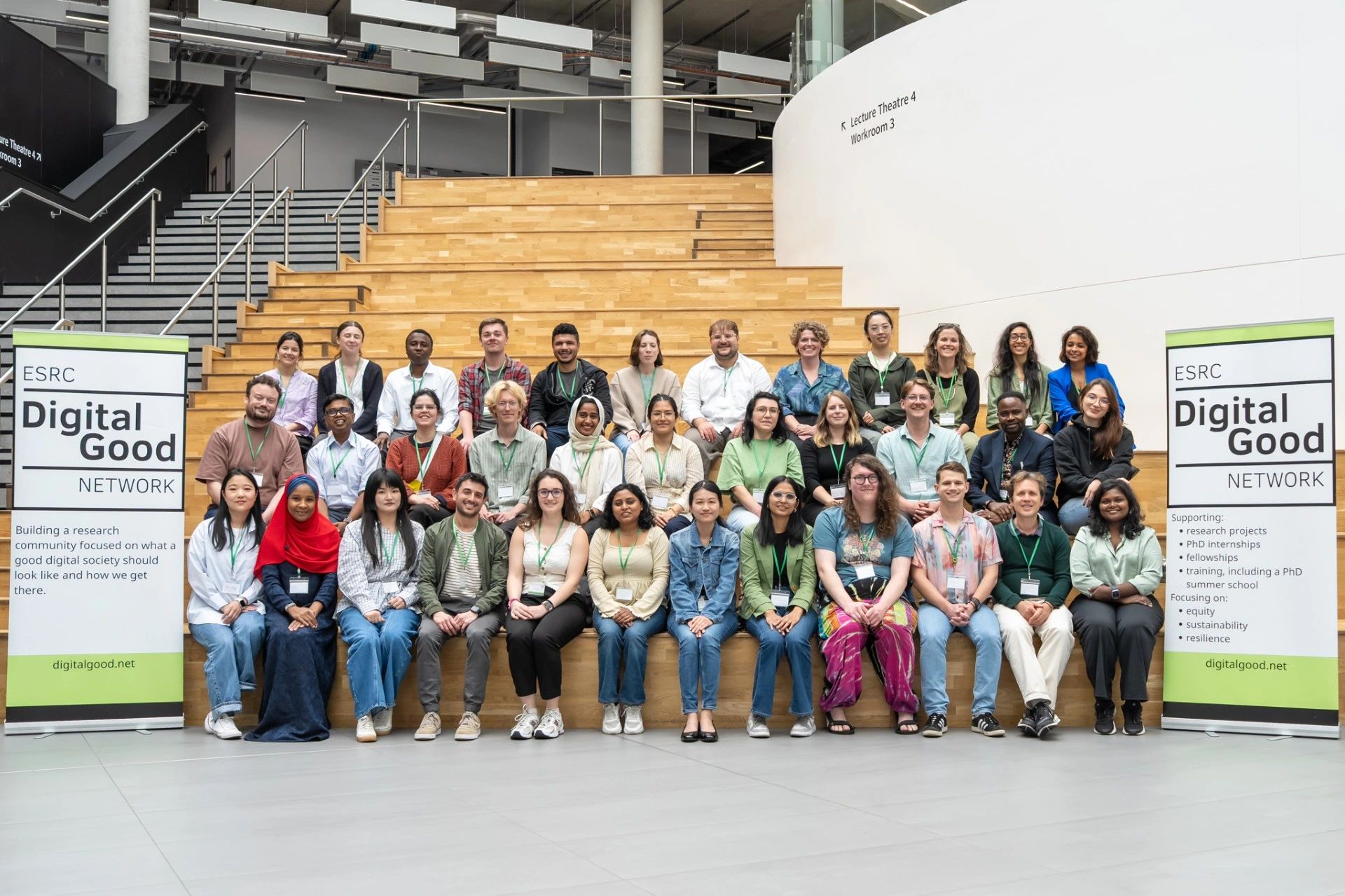
On 23 – 25 June 2025, I took part in the Digital Good Network Summer School (DGNSS) 2025, a summer school funded by the Economic and Social Research Council (ESRC), which took place in Sheffield, alongside my colleagues, Lucy and Jenn (you can read Lucy’s reflection here). I wanted to share my own experience of this summer school to provide an “outsider” quantitative experience of the mixed methods theme of the DGNSS.

The Digital Good Network in itself ties together researchers from across the UK and beyond, who work on one shared topic: what does the “digital good” mean and how do we get there? Over the course of the three days of the DGNSS, I took part in a wide variety of workshops and networking activities, all tied under the theme of developing and fostering digital good. This blog post will briefly describe my experience with the events and networking at the DGNSS 2025.

Two sessions were particularly important for my own research. The first was a workshop on online hate, convened by Dr Danielle Kelly from University of the West of Scotland. We looked at a variety of AI-generated examples of hate discourse shared on social media. We were split into groups to work on one of the examples – in my case, we worked on sexist online discourse. We analysed the motive behind hate speech, probable cause and consequences, and ways of preventing hate speech. As the DGNSS is an interdisciplinary event, I got to analyse this excerpt alongside sociologists, cyberpsychologists and cybersecurity researchers. Pooling our knowledge and experience together, we arrived at a complex explanation of the example from both a macro and micro standpoint, highlighting how online discourse usually revolves around the struggle for power. This exposed me to analysing online behaviours through lenses other than psychological, underlining that online behaviours can also stem from issues in the wider society, rather than from within an individual. This is especially crucial for my PhD, as the player multidimensional wellbeing (PMDWell) framework I have developed draws from psychological, sociological and policy literature to arrive at a comprehensive framework of internal and external player wellbeing.

The other session that was of particular interest was a demonstration on natural language processing, convened by Dr Laszlo Horvath from Birkbeck, University of London. We were provided with a gentle introduction to the concept of natural language processing – parsing dense blocks of text through an algorithm that can then can not only conduct quasi-thematic analysis, but can also classify words and phrases according to their linguistic role, for example, nouns, adjectives or emotive language. This data can then be analysed and presented in a wide variety of ways, particularly as bar graphs, representing the frequency of word usage according to linguistic class. We then got an opportunity to experiment with some of this on our own using Python and Anaconda, using parliamentary minutes as data. This allowed me to learn what the natural language processing workflow looks like and what kind of results it would be able to provide. I am very much looking forward to employing natural language processing later in my PhD, experimenting with how it could be employed in addition to standard thematic analysis of interview transcripts.

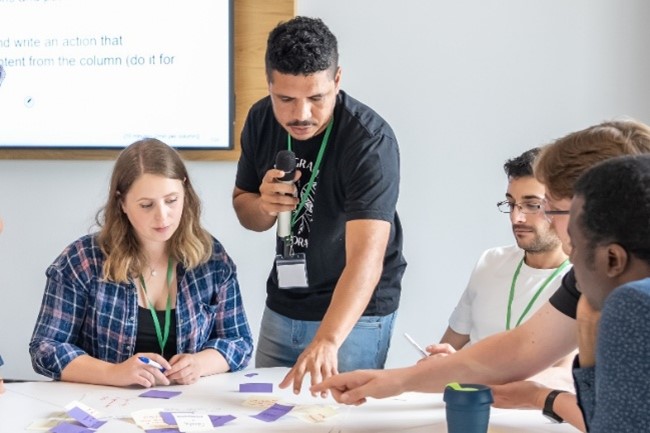
Although not immediately relevant to my PhD, the remaining sessions were also just as interesting and provided me with an opportunity to dive into a different range of research methods. During the reading session, we discussed three human-computer interaction papers, selected especially due to their unorthodox format, typically not seen in psychological or STEM literature. This exposed me to the wide variety of ways that a paper can be written and argued about. During the session about data visualisation, we got exposed to the idea of data visualisation as an art, rather than a sheer necessity, underlining how we can better communicate complex scientific ideas by crafting intricate graphics to best showcase our results. The co-design workshop also made us think about a research challenge from a unique standpoint, designing a prototype using the academic and lived expertise of an interdisciplinary group, to arrive at a product that can be used by anyone. There was also enough downtime during the day, which allowed me to incorporate some of the things I’ve learnt into my own research, particularly the data visualisation workshop, after which I was able to improve the graphics for my upcoming paper.

Outside of the sessions, the DGNSS was also an excellent opportunity to network and foster connections for further collaborations. The initial icebreakers were prompted by a “pecha kucha” style presentations – each participant got to present their entire PhD in less than 2 minutes, making us extract the most meaning out of it, at the same time pushing us to make the topic as accessible as possible, considering the interdisciplinary nature of the DGNSS. Thanks to this, informal chats during the event were made significantly easier, instantly recognising people and their topics whilst waiting in the queue during the coffee break. This exposed me to many researchers, who on the surface appear to be working on something completely different to me, but sharing some similarities to my own work. Sheffield was also a great place to host an event like this, with its bustling culture and hospitality. Thanks to the DGN hosting dinners in Sheffield, we got to network in a more informal setting over some great food and drinks.

The DGNSS was an excellent opportunity to learn about methods I would not otherwise consider using, and network with colleagues from fields I would not otherwise consider engaging with. Thanks to this experience, I am now a member of the Digital Good Network, and I look forward to working with them further – in the short term to provide an even wider variety of experiences during the Summer School, as well as in the long term through future grant applications and fostering collaborations. I would recommend the DGNSS to any researcher working on the digital good, especially those who want to step out of their methodological comfort zone and learn about other ways of conducting digital good research.

Reflecting on the Digital Good: Reflections from the 2025 Summer School

post by Lucy Hitcham (2023 cohort)

📷photo credit: Digital Good Network

An introduction to the Digital Good

I first became aware of the Digital Good Network shortly before the start of my PhD in 2023, the same year the Network was set up. Their vision for understanding how digital technologies shape our worlds and how we can work towards a good digital society resonated with me and my optimism for how technology can improve our lives. For me, this is about understanding how digital technologies can be used for the good of people’s mental health. So I took note of their goals for the research programme and the opportunities they would be offering and bided my time, waiting to apply for the summer school at the right point in my PhD. To my delight, I was accepted to the 2025 summer school cohort at the University of Sheffield.

Going back to school

The summer school took place over the course of three, packed days of activities and networking. After a fun, and unexpectedly competitive, rock-paper-scissors icebreaker, we moved into Pecha Kucha presentations where the sheer range of backgrounds of those attending was immediately striking and continued to shape our conversations for the rest of our time together. This really brought it into perspective just how valuable interdisciplinarity is when tackling such complicated issues around technology and our society.

The next couple of days were filled with sessions to help us think, learn and challenge ourselves through an engaging line-up of talks and interactive sessions. I was introduced to new theories, methodologies, approaches and encouraged to challenge my own assumptions. The keynote by Professor Dorothea Kleine grounded us in this at the end of the first day by asking us to think about how equality, justice and sustainability should be central when we consider digital innovation. Something which is important to me as I continue to think about how ethics and responsible design should play a role for mental health technologies to make them “good”. What followed was a fascinating mix of workshops on theory, co-design, data visualization, online harms and digital ethnography.


📷photos credit: Digital Good Network

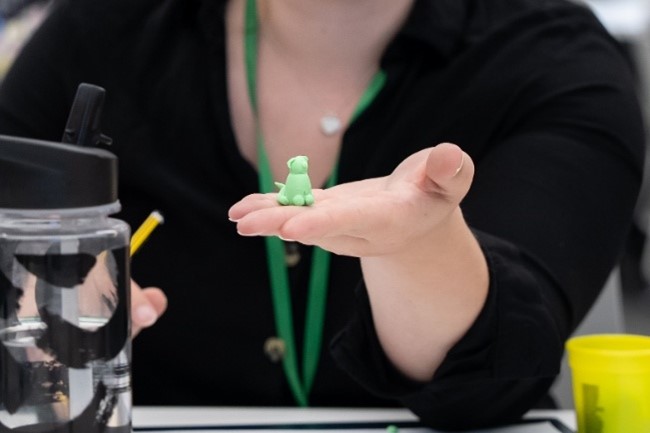
For me, these sessions helped me reflect on the direction of my research and how I can conduct it. Reema Patel’s workshop introduced the Theory of Change framework, motivating me to ask what change I would like to see, how I should frame this issue and where I see opportunities to intervene. Meanwhile in Dylan Yamada-Rice and Susan Lechelt’s sessions gave me space to appreciate the creativity we can incorporate into our research and give me hands-on experience with such participatory methods (including Play-Doh!). This reminded me that creativity is not a distraction from rigorous research, but often, it is what makes rigor possible especially when working with our communities.

So what does the digital good mean to me now?

As I move forward with my work, I carry with me new questions and approaches to my research. For me and my research topic, I hope for a society in which digital mental health technologies can be looked at with optimism, can offer safe and effective care, and are designed in a way that considers need, design and responsibility. But I also come away with a boost in my curiosity, creativity and confidence and a renewed sense of belonging and purpose, for my research but also as a member of this valuable research community. The value opportunities such as this, for connection and learning, is hard is measure but is something I would recommend to any researcher.

Angela Higgins’ Research Exchange at KTH: Reflections from Stockholm

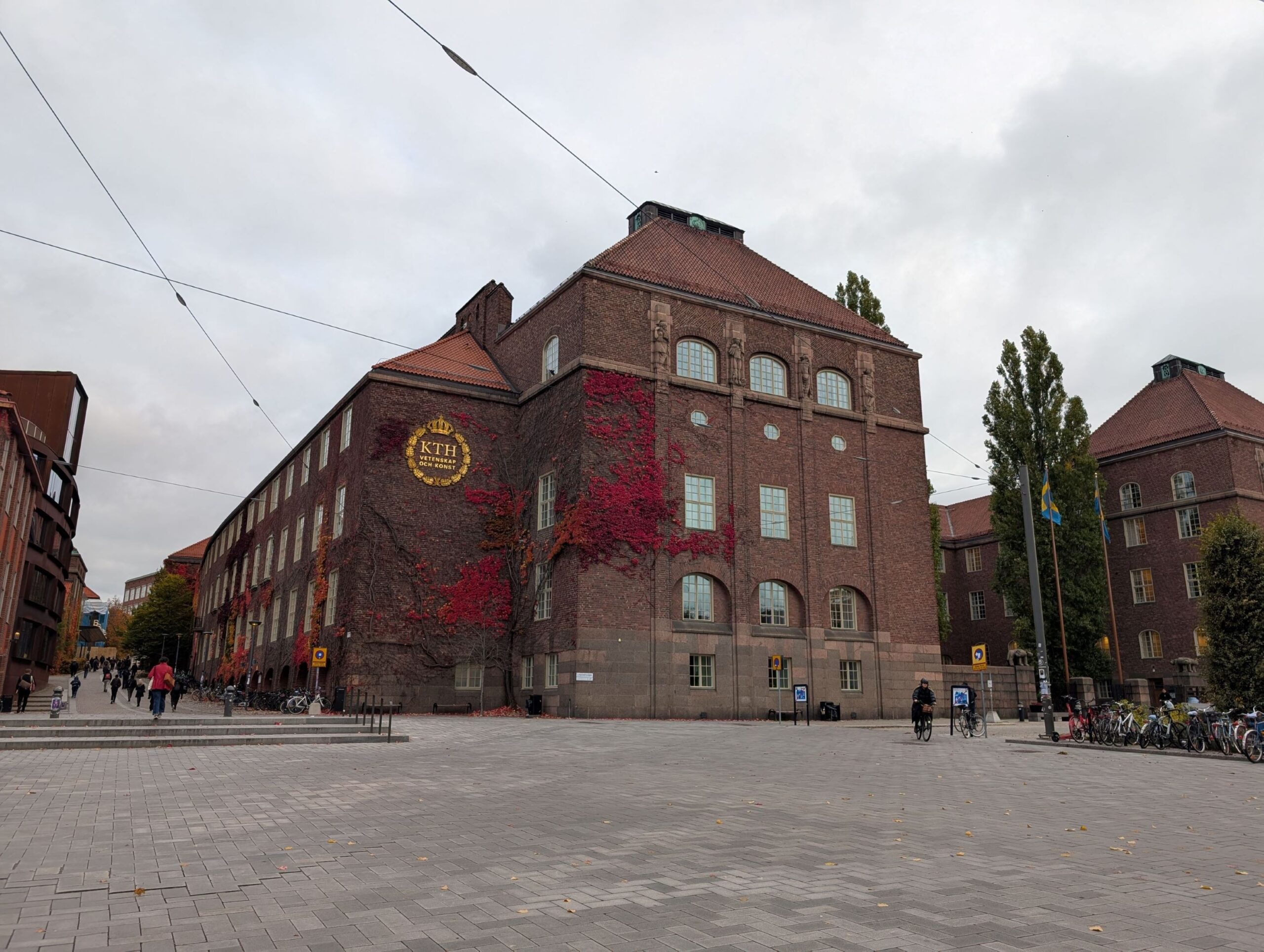
We’re delighted to share a new blog post from Horizon CDT student Angela Higgins, who has just returned from a month-long research exchange at KTH Royal Institute of Technology in Stockholm. Hosted by Professor Kristina (Kia) Höök, Angie spent late October to late November immersing herself in the lab’s work on embodied interaction design and feminist research methods.

Below, Angie reflects on the purpose of her exchange, the projects she worked on and what she took away from her time in Sweden.


post by Angela Higgins (2022 cohort)

Purpose of the Exchange

At the end of October 2025, I travelled to Stockholm for an exchange at KTH Royal Institute of Technology, working alongside Professor Kristina (Kia) Höök and her team, who specialise in embodied interaction design. I had previously visited the group in September 2024 for a week-long soma design workshop on chronic pain (the focus of my PhD research). That experience opened up new ways of understanding movement, sensation, and embodied experience. It also led to further collaboration (including co-writing papers and further workshops in Nottingham) and left me wanting to deepen my understanding of somaesthetic design methods.

I applied for the International Exchange grant so I could return to KTH and spend time with the team, fully immersing myself in the culture of a research group whose work centres on feminist approaches, embodied methods, and lived experience. I wanted to learn, reflect, and bring those practices back into my own work with older adults and assistive robotics.

Planned Activities

Before arriving, I planned to take part in a series of soma design workshops, spend focused time writing and thinking alongside collaborators from previous events, and simply join the everyday rhythms of the lab, from informal discussions to collaborative planning sessions.

What I Worked On

I took part in several collaborative planning and writing sessions on ongoing projects, which felt far richer and more effective than working over Zoom. I also had the chance to experiment with the brand-new Haptic Bits soma design toolkit for haptic prototyping. Alongside this, I sat in on project planning meetings to observe how ideas develop and how collaboration is nurtured within the lab. Finally, I participated in multiple soma design workshops, from small, simple sessions to large, complex multi-day events.

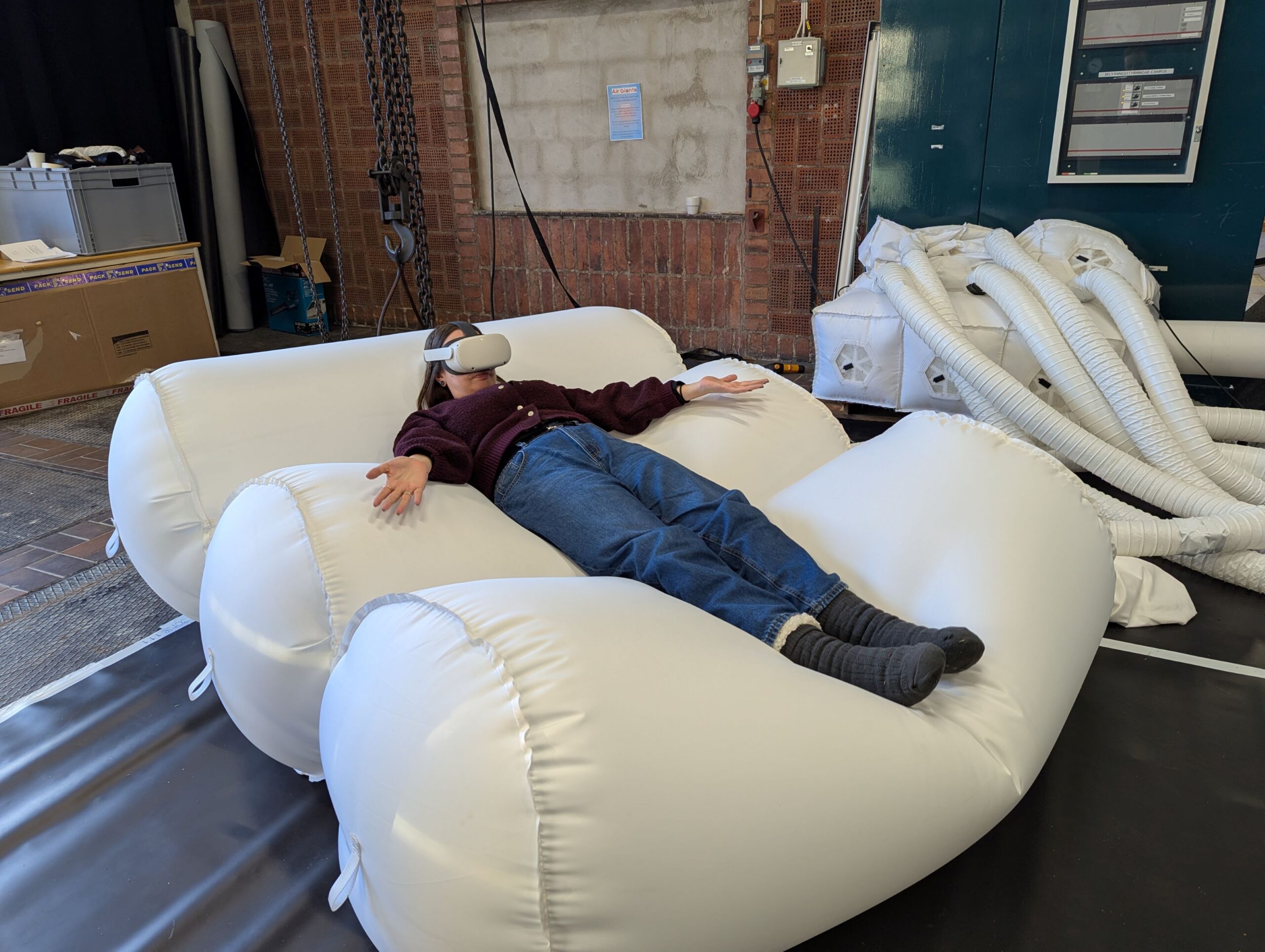
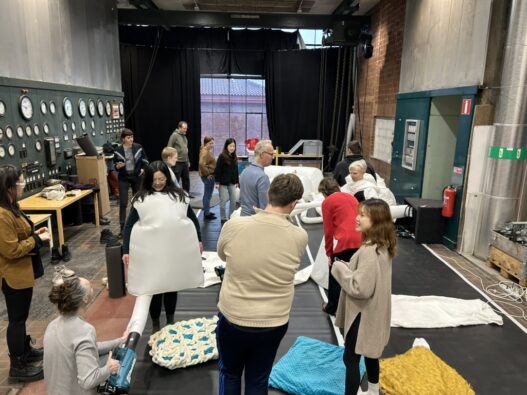
The main event of my visit was a three-day soma design workshop with Air Giants and researchers from KTH, Uppsala University, KAIST, and the University of Copenhagen. Air Giants, an arts company based in Bristol, create enormous, soft, interactive robots. These are big, squishy, playful machines usually seen at festivals. For this workshop, they brought a series of full-body, wearable robot prototypes for us to explore.

Our challenge was to investigate interactions and experiences with these robots, and my group worked under the theme “Touching and Being Touched.” While the robots certainly touched us (a lot, and often quite firmly), we initially struggled to understand where our own active touch fit within the interaction. By the final day, however, we created a “touching loop” by involving an additional human to control the robot, resulting in a unique and surprisingly intimate interactive experience.

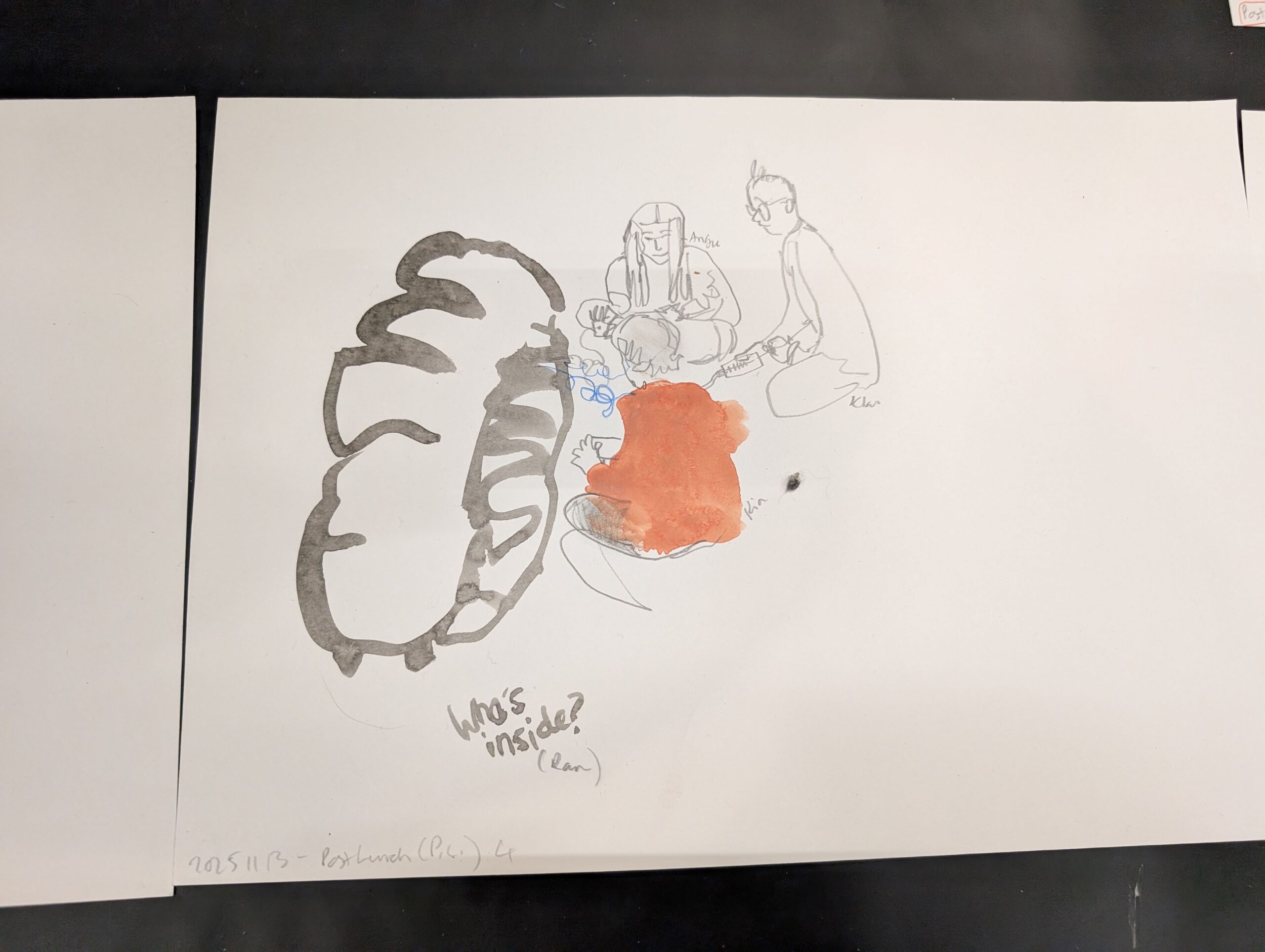
The workshop was also beautifully illustrated throughout by artist Jenny Soep, offering a creative and expressive form of data capture. Overall, the event demonstrated the value of researchers spending hands-on time with emerging technologies and how physical exploration can spark new ideas in ways difficult to achieve through discussion alone.

What I Learned

I gained a much deeper understanding of soma design as both a method and a stance. Working in person with colleagues I usually only see on Zoom allowed us to build a richer collaborative relationship, helping me develop ideas around feminist approaches, embodied knowledge, and co-creation.

I also expanded my network, meeting researchers from a wide range of fields who are exploring body-centred design, interaction, health, actuation, sensing, and wellbeing from fascinating angles.

Challenges

One challenge during the exchange was finding out that our CHI paper had been rejected. Although disappointing, it became a shared moment of solidarity within the group. Several colleagues were going through the same cycle of revisions, rejections, and resubmissions, and it was reassuring to be surrounded by people who understood the frustration. We commiserated together and vented over fika, which turned the setback into a chance to connect, reflect, and regain momentum.

A Light-hearted Note

On the subject of fika (regular work breaks where people gather to drink coffee, eat something sweet, and chat) I quickly grew fond of the slow, social rhythm it creates. Stepping away from our screens for a few minutes became a simple but meaningful way to connect with the group, share ideas, and ease into the everyday life of the lab. And I have to give a special mention to kanelbullar, the cinnamon buns found everywhere in Sweden, which are particularly delicious.

Conclusion

My month at KTH was an invaluable opportunity to immerse myself in a research culture deeply aligned with my own interests in embodiment, care, and co-design. The exchange strengthened existing collaborations, introduced me to new perspectives, and gave me hands-on experience with emerging somaesthetic tools and methods. I returned inspired, energised, and equipped with new ideas to bring into my work with older adults and assistive robotics. Most importantly, the time spent with colleagues (both in workshops and over fika) reinforced the value of slow, thoughtful, embodied ways of working that place lived experience at the centre of design.

drawing by Jenny Soep
www.instagram.com/jennysoep/

The Value of Co-design for Technologies: Reflections on my research placement with the CaTS-App team

post by Lucy Hitcham (2023 cohort)

*Trigger warning: Mentions of self-harm

Technologies have vast potential to improve our mental health and wellbeing and tackle the rising youth mental health crisis. With increasing rates of young people suffering from mental health disorders and engaging in self-harm, the Digital Youth research programme is focused on understanding the complex risks and opportunities for mental health associated with young people’s engagement with the digital world.

In the summer of 2024, I began my part-time research placement with the CaTS-App (Card sort Task for Self-harm) team, one of the ongoing projects of the Digital Youth programme. This project aims to co-develop a new digital tool to understand and support young people who self-harm, building upon prior research into self-harm and suicide in adolescence. With my PhD research focusing on the use and responsible design of digital mental health interventions, I was thrilled to join the team to see the co-development of this technology in action while deepening my understanding of co-design, digital mental health interventions, and interdisciplinary collaboration.

Bringing my experience to the project

For the placement, I helped the team build on their phase 1 findings, which focused on understanding the need and attitudes of stakeholders and initial concept development for this proposed digital version, into phase 2 of their work. Phase 2 was aimed at designing and refining a digital prototype informed by young people’s lived experiences using three co-design workshops and patient and public involvement (PPI) feedback activities.

These workshops were one of the main focuses of my placement: helping to understand the goals and information being sought for this phase and translating them into three workshops for our group of young people. I heavily drew on my interdisciplinary background in childhood studies, psychology, digital mental health and responsible practice to develop workshop activities that were creative, engaging and successfully addressed the questions we wanted to ask, while being sensitive to the young people’s age and lived experience of self-harm.

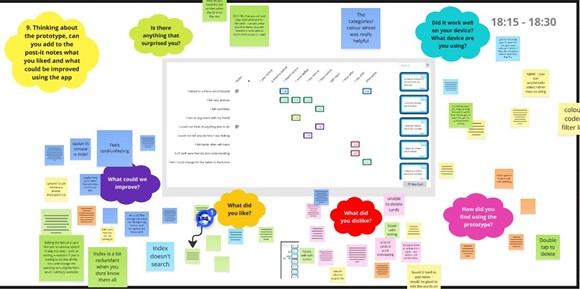
The result was three carefully crafted Miro boards which were used in the online co-design workshops to gather our groups’ opinions on how the app would be used with professionals, which design features would be appealing and appropriate to complete the CATS tasks, how data protection and security could be addressed, and how we could enhance the user-experience for the digital version of this tool. Following the content analysis of all these responses, we then held a showcase to make sure we correctly represented the young people’s voice before feeding all design decisions back to the app creators in the team to develop the next version of the app prototype.

Throughout this process, I was able to draw on my experience with theory, research methods and knowledge as an interdisciplinary researcher to work with the different team members and implement the intended research goals into practical activities that remained authentically user-centred and ethically grounded in the voices of those it intended to support.

Screenshot from a CaTS-app co-design workshop Miro board

What did I learn?

One of the goals of my PhD is to understand how digital mental health interventions are developed in a responsible way, using practices such as co-design. The placement offered an invaluable opportunity to observe and participate in this process first-hand and understand the benefits co-design offers, but I have some other key takeaways for this placement.

Firstly, I have been able to recognise that creativity plays a valuable role in academic research. Engaging young people through creative co-design activities enabled richer insights than more traditional methods might have produced, particularly in understanding their preferences, motivations, and emotional responses to digital mental health tools. With this, I have developed my technical skills in using Miro to design visual, interactive content which I hope to use more in the future.

The placement also highlighted the importance of starting with end users from the outset. Rather than adapting existing technologies to fit user needs, the approach adopted by the CaTS team ensured that young people’s perspectives shaped the project from the very beginning. Firstly, this means that the digital tool is addressing a need expressed by the community, to be problem-focused and not solution-focused, and secondly, that these valuable insights were continuously brought in to properly address this need for supportive tools for self-harm care. This felt very meaningful to me, and hopefully to the young people involved.

Lastly, I was able to realise the benefits that being an interdisciplinary researcher brings me. I found it incredibly helpful to be able to draw on my knowledge and experience in different disciplines for this placement. And while being an interdisciplinary researcher can feel like an identity crisis at times, it has been valuable to see how it can be a real strength!

Presenting the work

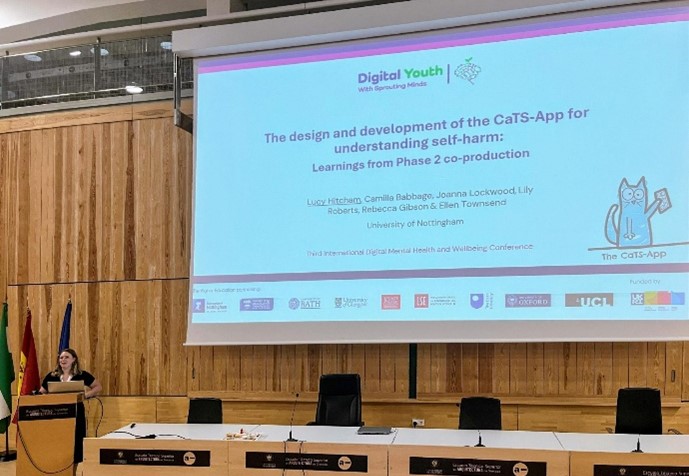
To finish off the placement, I had the opportunity to present at the third International Digital Mental Health and Wellbeing (DMHW) Conference in sunny Granada, Spain in May 2025. This event brought together leading researchers, practitioners, and innovators working at the intersection of technology and mental health, with a particular focus on young people’s wellbeing.

This was a valuable opportunity to present our findings from phase two of the CaTS-App project and hear about other research happening in the field, particularly from my fellow presenters in the co-design session. It was an excellent chance to highlight some of the strengths of the project, including our creative methods, sustained engagement with our young people, along with the additional young people advisory group, Spouting Minds, who are invaluable to the Digital Youth programme.

Presenting at DMHW 2025 in Granada, Spain
Granada, Spain

Concluding Reflections

My placement with the CaTS-App project has been a pivotal experience in my doctoral training. It demonstrated how participatory and interdisciplinary approaches can enrich the design of digital mental health interventions, ensuring they are both evidence-based and responsive to the needs of their end users.

Beyond the methodological insights, the placement has shaped my broader understanding of how research can translate into meaningful, user-centred innovation to support our population’s mental health needs. It reinforced the notion that impactful digital health solutions emerge not solely from academic expertise, but from collaboration, creativity, and a sustained commitment to co-production. I have greatly enjoyed my time with the CaTS team and thank them dearly for including me in this important work!

To learn more about the CaTS-App project, including our research reports and next steps, please visit the project webpage.

A Macchiato of Meaning: Reflections from Penn State

post by Phuong (Violet) Nguyen (2022 cohort)

Just like a caramel macchiato has layers – milk, espresso, and caramel – my exchange experience at Penn State was rich with layers of learning: academic, cultural, and personal.

I recently completed my international exchange at The Pennsylvania State University. State College is a small, quintessential American town, often described as “a town in the middle of nowhere.” Nestled in the heart of Pennsylvania’s forests and mountains, it’s affectionately known as Happy Valley. Thus, for one layer of learning – culture – I discovered a hidden corner of the U.S. I realised that no amount of Hollywood films, music videos, or pop culture could have prepared me for State College. It’s not the kind of place you stumble upon unless you have a reason to be there, becoming a student at Penn State, for example. In State College, everything revolves around Penn State. It’s a true college town; everywhere you look, people wear Penn State gear, and even the local supermarkets sell Penn State clothes, Penn State cakes, and also kitchen stuff with the Penn State Logo. On game days, especially for American football and volleyball, the quiet town transforms into a sea of blue and white (the university colour), buzzing with energy and pride.

Interestingly, I found many similarities between the University of Nottingham and Penn State. Both are located in the heart of the countries, surrounded by greenery and a bit removed from the hustle of major cities. Both are proud sporting universities, where athletics are not just extracurricular but part of the campus identity, blue and white logos, and a main campus called “University Park.” These parallels made Penn State strangely familiar to me.

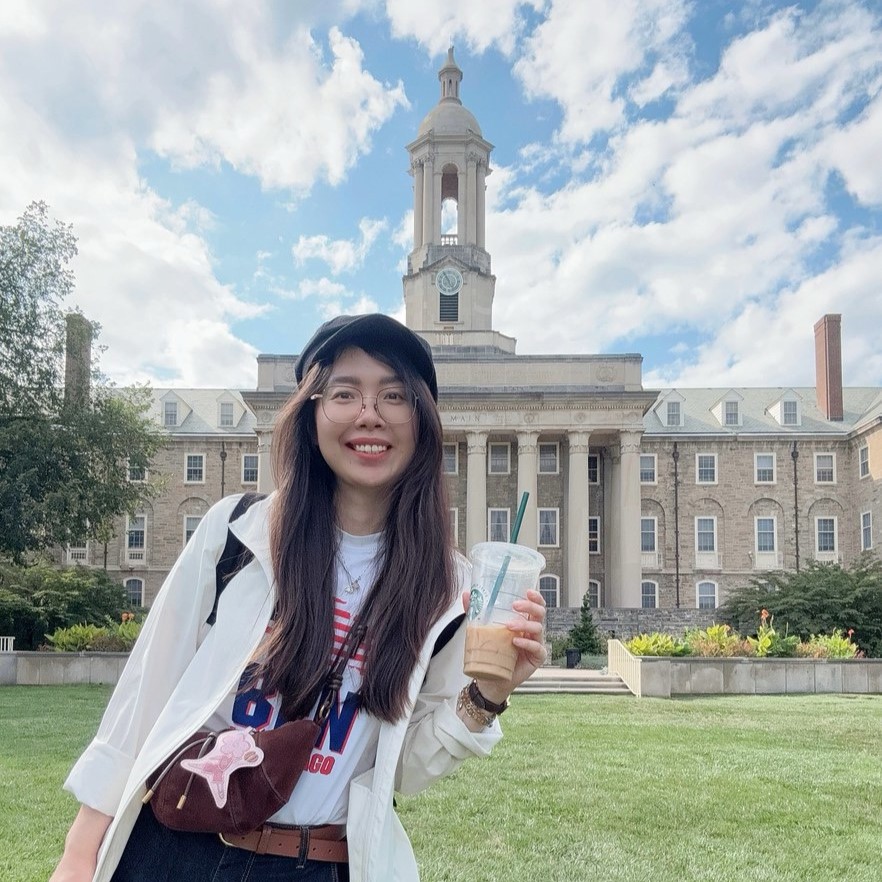
Violet in front of ‘Old Main’ (Penn State University)

The first layer of academic learning- Student life at University Park

During a call with my PhD supervisor, he saw me sitting outdoors and simply asked, “Are people in the U.S. treating you well?”. Only one problem in the Penn State office was that I did not find any separate meeting room for a conference call, but I have absolutely no complaints about the university and the support I received from the US departments and supervisor. The university admin system is very smooth, so everything is set up easily.

I received more encouragement and guidance from the supervisor than I ever expected. In this research, I wanted to develop a System Dynamics model to show how different parts of the transport system influence each other, and how these elements affect diverse traveller behaviours. At first, I felt pressured; the research was difficult (to be honest, that’s how I feel at the beginning of every study I’ve done). I built the first version of the model, and then after each meeting, I revised it again, and again, and again… But the supervisor was never frustrated when I could not show a good result. Instead, he patiently guided me through every detail, showing me where things could improve and helping me understand the logic behind each part.

There are three important things I learned through this work. First, even though my supervisor encouraged me to aim high for a top journal, he always reminded me that the real goal isn’t a good publication, but a meaningful research contribution and impact. The research aim isn’t to build a perfect System Dynamics model, but to use that model to solve a real problem. That’s why his encouragement wasn’t “You have good research,” but “You will make a good contribution.” That subtle shift changed how I saw my work.

Second, I learned to pay careful attention to every link I created and every symbol I used in the model. It’s easy to say A influences B, but it’s much harder to explain how and why that influence happens. I had to think beyond my own perspective, as someone who doesn’t use a car, and consider how car users might see things differently. It reminded me to approach the work with an objective mind.

And third, I learned patience. I was disappointed that I didn’t finish all the tasks I had planned before the exchange. I thought I’d complete my data analysis, but I got stuck on the model mechanism for a long time. I felt guilty. But in the final meeting, the supervisor taught me something important. People often focus on data analysis as the final product, the thing to showcase, but without a strong, convincing logical framework, the data analysis results are meaningless. That’s why we spent weeks building a solid system mechanism, so that when I present it, whether at a conference or elsewhere, no one can easily challenge its logic. Our job is to challenge ourselves, persuade ourselves, discuss with other people and build strong arguments. Once the mechanism was clear, we knew exactly what data was needed, and the analysis only took a short time. When my supervisor said, “You’ve made good progress.” And for the first time, I felt I could finally let go of the constant worry that I wasn’t good enough. That experience taught me to be more patient with myself, to learn bit by bit, step by step, rather than rushing toward results just to have something to show.

I’ve been learning about systems thinking since my first year, from my PhD supervisor’s course and during my internship with the Department for Transport. Now, I understand it. I know how to use it. Happiness comes in small things, like comparing my first model version to the recent one and seeing how much better it looks, with feedback loops in perfectly round shapes. I can see my progress, slowly learning the things I’ve always been interested in. My motivations for joining the international exchange were to learn System Dynamics in the place where it was developed, and I did.

The second layer of culture – Something very American

I was placed in an office with three other PhD researchers. They were all friendly, and we had great conversations about a wide range of topics. Through these chats, I started noticing differences between the PhD programs in the U.S. and the UK. For example, U.S. PhD students spent much more time learning maths and quantitative methods in my first year (maybe because of the discipline of the department). International students in the U.S. had a 20-hour work week, but they’re only allowed to work within the university. They call the supervisor “advisor”. They don’t have an internal examiner, or maybe they have, but they call them by a different term. The viva and progression process is also different.

Before coming to the U.S., I didn’t drink Starbucks (as I preferred Vietnamese milk coffee), but somehow, grabbing a Caramel Macchiato from Starbucks in the Library became my morning ritual before going to the office. In the UK, I never ate bagels because I found them tougher than sandwiches. But I’ve learned that toasting bagels makes them better, and it was nice to eat bagels with Philadelphia cream cheese. I think it’s not really about taste. People often ask me how I can eat fish and chips in every British town I visit. I think it’s about opening and accepting local culture. I’ve come to realise that culture isn’t just something displayed in museums. It’s in everyday life, in the supermarket aisles, in what people eat, what they buy. And sometimes, these moments remind me of things I saw on TV and YouTube when I was a child. It’s strange and comforting at the same time. It was America that I knew.

The third layer of personal learning – In the U.S., don’t be scared

Before I arrived in the U.S., and even during my stay there, many unexpected things happened: visa delays, accommodation issues, and travel disruptions. I still remember arriving in Philadelphia, looking out through the airport window at the blinding storm that turned the entire landscape white, and receiving an emergency alert on my phone. I asked myself, “When will these challenges stop?”. More things happened during my stay in State College, but if I could advise myself a few months ago, I’d simply say: “Just let it be. Don’t worry too much.” Visa problems? Just wait. Accommodation issues? Keep searching. Storms and delayed flights? Follow the airline’s guidance. We can’t control everything, and trying to change what’s beyond our reach only adds stress. I learned to let go, to trust the process.

The U.S. also surprised me in ways I didn’t expect. The news had made me anxious before the trip, but in reality, Washington D.C. was peaceful, New Yorkers were friendly, and State College was sunny every day. The country felt different from what I had imagined, and much warmer than I feared.

I left State College just as the leaves were turning yellow. Two months, August and September, felt short, but they were long enough to leave a lasting impression. I’m deeply grateful for this experience. This exchange wasn’t just about one chapter of my PhD thesis. It was about my personal growth. After all, I know I’ll miss Penn State. I’ll miss the anxious days, the loneliness when every friend has different time zone, the wandering, the worries, the supermarket food…. I’ll miss the deep conversations with office mates, the tough questions in the meeting, the late evenings in the library, the stress over research progress, and the joy of seeing “very good” in an email from my supervisor. All of it reminds me of how I adapted, how I faced challenges, and how I grew.

And maybe, every time I order an iced Caramel Macchiato at Starbucks, I’ll remember Penn State with a smile.


Reflection on the Leisure Walking Systems Working Group Impact Project

post by James Williams (2020 cohort)

Bridging academic research with practical industry applications in place-based walking systems

Introduction

The Leisure Walking Systems Working Group (LWSWG) impact project represents a significant milestone in bridging academic research with practical industry applications in the domain of place-based walking systems. Over a three-month period funded by the Horizon CDT Impact Grant, this project has successfully delivered comprehensive resources that advance our understanding of how improved place representation can enhance leisure walking systems. This reflection examines the project’s achievements, challenges encountered, lessons learned, and the broader implications for the field.
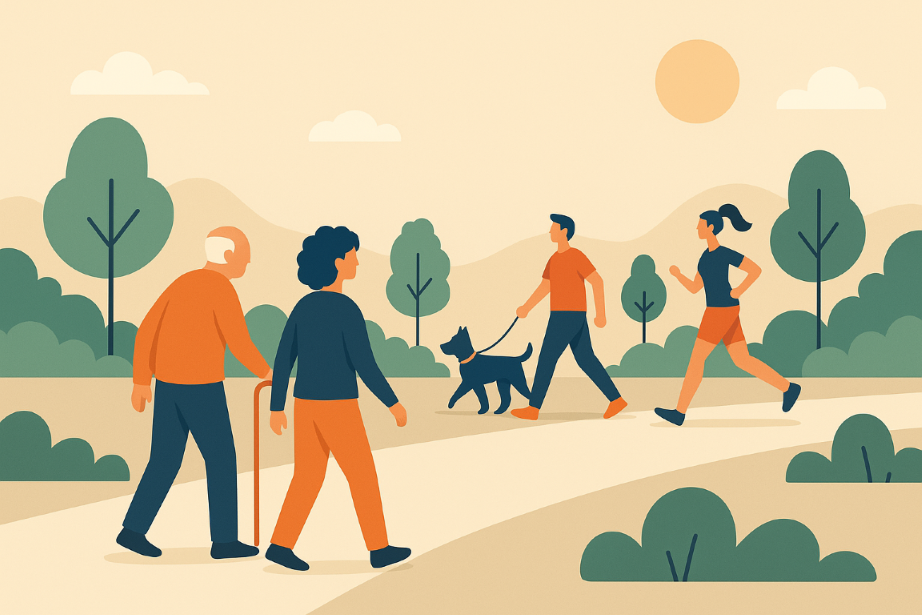
For those interested in exploring the comprehensive resources developed through this project, the complete documentation, implementation guides, and demonstrator systems are available at lwswg.jwilliams.science. This digital platform serves as the central hub for accessing all project outputs and ongoing community engagement.

Project Overview and Objectives

The LWSWG impact project was conceived with the ambitious goal of creating a comprehensive knowledge resource that would serve both academic researchers and industry practitioners working on leisure walking systems. The project aimed to address a critical gap in the field: the lack of integrated, accessible resources that combine theoretical foundations with practical implementation guidance for place-based walking systems.

The three-month timeline, whilst ambitious, was strategically designed to create momentum and deliver tangible outputs that could immediately benefit the community. The project was structured around four key deliverables: benefits and market differentiators analysis, digital presence development, demonstrator system creation, and comprehensive technical reporting. This structured approach ensured that each deliverable built upon previous work whilst maintaining focus on practical applicability and industry relevance. The compressed timeline necessitated careful resource allocation and prioritisation, requiring the team to balance breadth of coverage with depth of analysis across multiple research domains.

Key Achievements and Impact

Comprehensive Knowledge Integration

One of the most significant achievements of this project has been the successful integration of research findings across multiple domains. The documentation spans eight distinct research areas, from recommendation systems and geospatial integration to user experience design and accessibility guidelines. This integration represents a departure from traditional academic silos, demonstrating how different aspects of walking systems can work together cohesively. The interdisciplinary approach required careful synthesis of methodologies, terminologies, and best practices from each domain, creating a unified framework that maintains the rigour of individual disciplines whilst enabling practical application. This achievement addresses a critical gap in the field where research findings often remain isolated within disciplinary boundaries, limiting their practical applicability and broader impact.

The creation of over 25 technical documentation pages provides a substantial knowledge base that addresses both theoretical foundations and practical implementation challenges. This breadth of coverage ensures that practitioners can find relevant guidance regardless of their specific focus area within walking systems development. Each documentation page was carefully crafted to balance depth of technical detail with accessibility, ensuring that both academic researchers and industry practitioners could engage meaningfully with the content. The cross-referenced structure allows users to navigate between related concepts whilst maintaining focus on their specific areas of interest. This comprehensive approach transforms isolated research findings into a cohesive knowledge ecosystem that supports both learning and practical application.

Industry-Ready Resource Development

The project’s emphasis on creating industry-ready resources represents a significant contribution to the field. Rather than producing purely academic outputs, the LWSWG has developed practical tools including implementation guides, evaluation frameworks, and technical specifications that support immediate application in real-world projects. These resources were developed through extensive consultation with industry partners and practitioners, ensuring that they address genuine challenges faced in the development and deployment of leisure walking systems. The practical focus extends beyond documentation to include working examples, code templates, and assessment tools that can be directly integrated into existing development workflows. This industry-oriented approach represents a significant departure from traditional academic outputs, creating resources that bridge the gap between research and practice.

This industry focus is particularly evident in the benefits and market differentiators analysis, which identifies competitive advantages for organisations implementing improved place representation in their walking systems. By translating academic research into business value propositions, the project has created a bridge between research and commercial application.

Digital Platform for Knowledge Sharing

The development of a comprehensive website and digital platform represents a strategic investment in long-term knowledge sharing. The website serves not only as a repository for current findings but also as a foundation for ongoing collaboration and community building. This digital presence ensures that the project’s outputs remain accessible and can continue to evolve beyond the initial impact grant period.
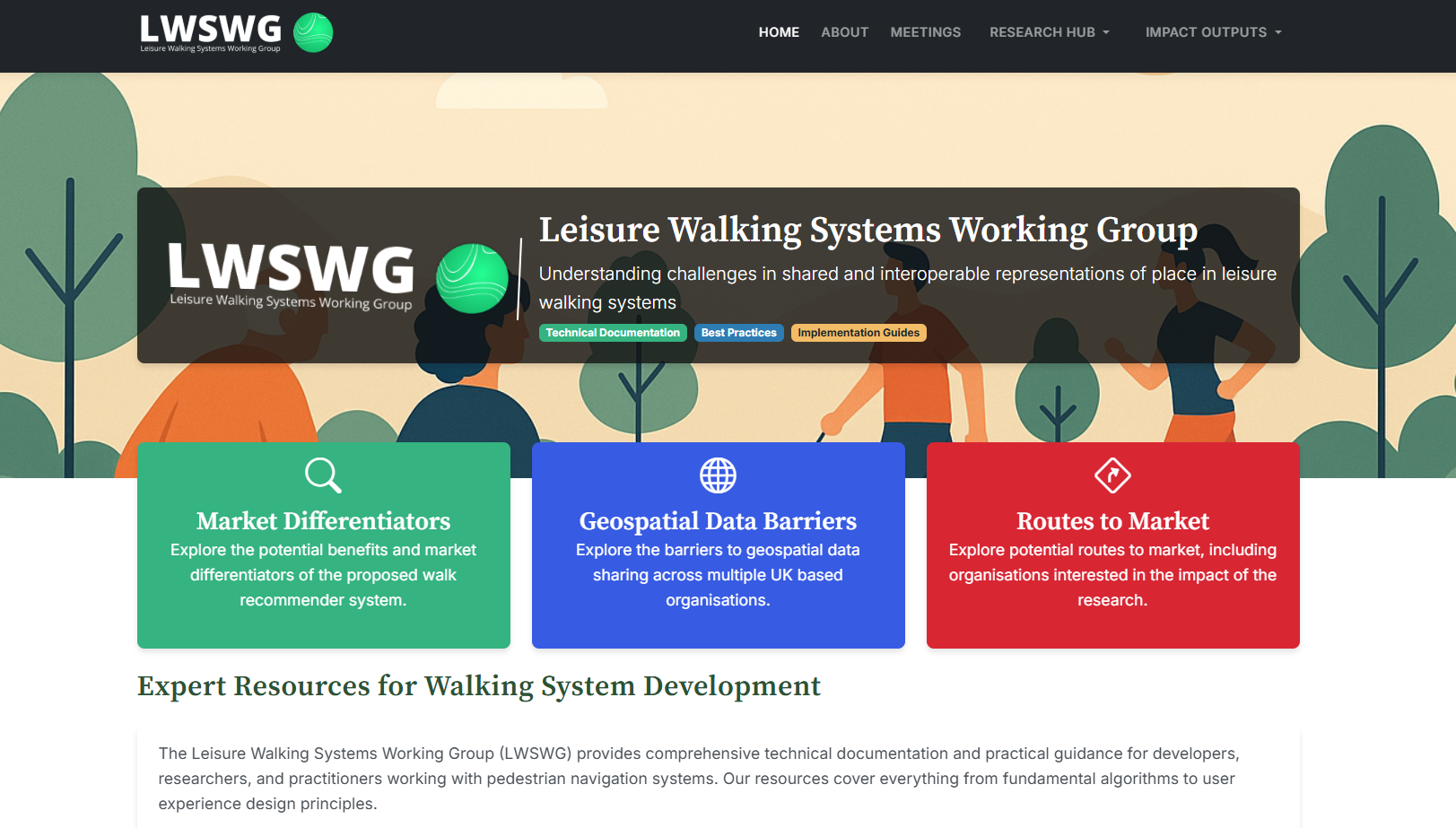
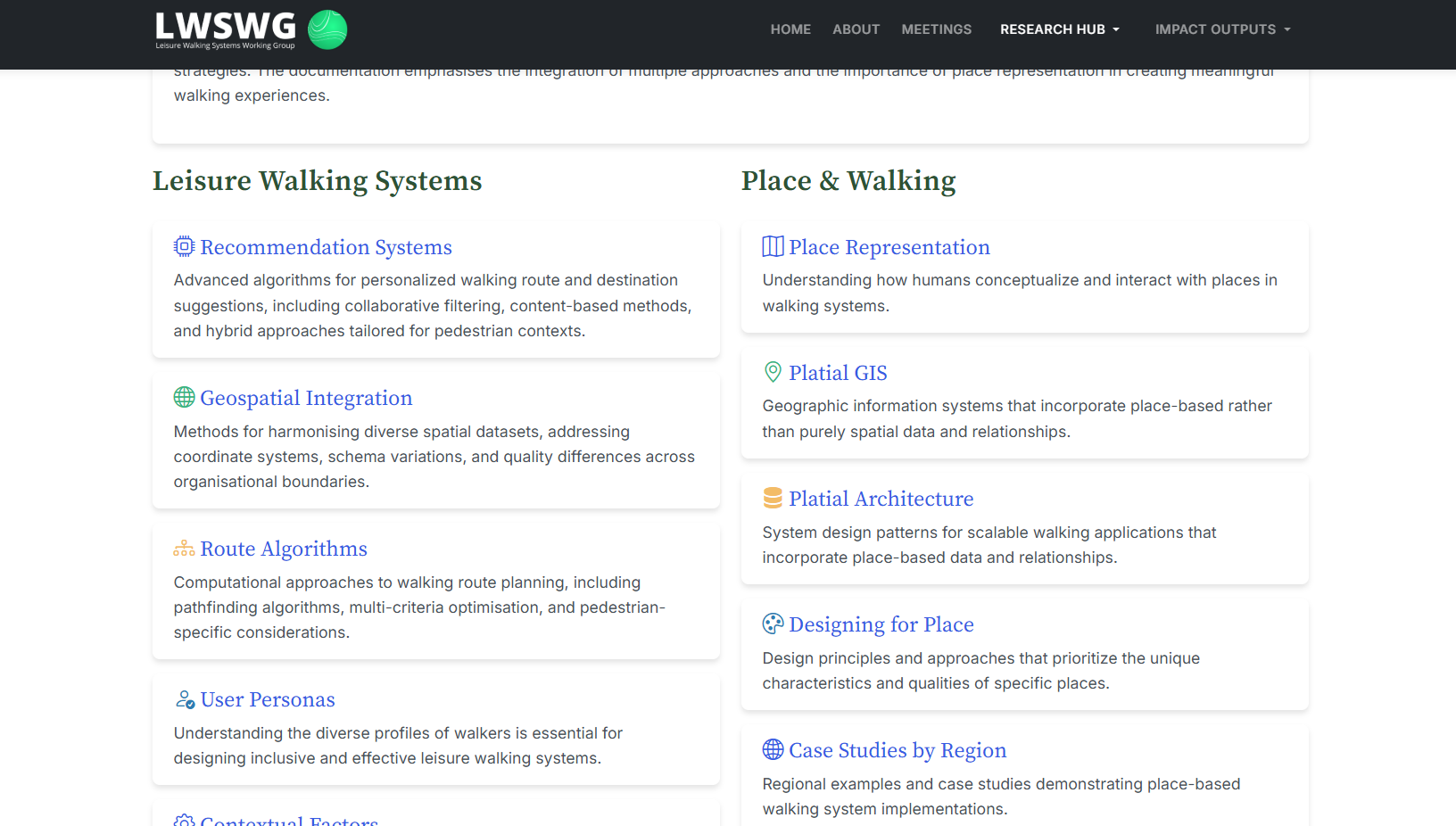
The website’s structure, with its mega-menu navigation and organised content hierarchy, demonstrates careful consideration of user experience and accessibility. This attention to usability ensures that the resources can be effectively utilised by diverse audiences with varying levels of technical expertise.

Demonstrator Framework

The creation of an integrated documentation framework as a demonstrator system represents an innovative approach to showcasing practical implementation. Rather than developing a single software prototype, the project demonstrates how multiple approaches can work together effectively through comprehensive documentation and cross-referenced resources.
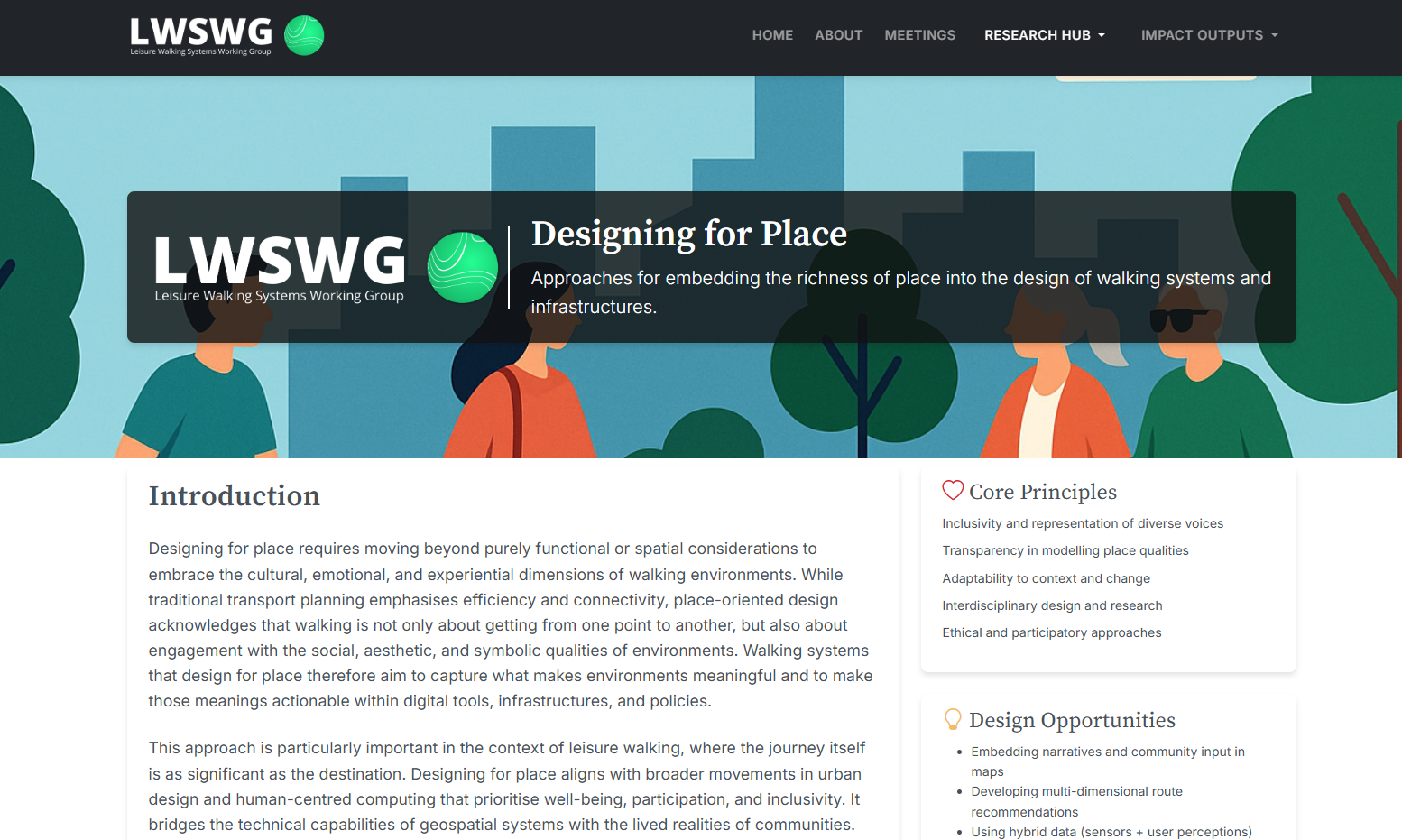
This approach has several advantages: it remains accessible to a broad audience, it can be easily updated and maintained, and it provides multiple entry points for different types of users. The demonstrator effectively shows how recommendation systems, place representation frameworks, and user experience design principles can be integrated in practice.

Challenges and Lessons Learned

Timeline Constraints

The three-month timeline, whilst creating valuable momentum, presented significant challenges in achieving comprehensive coverage across all research areas. This constraint required careful prioritisation and strategic decision-making about which areas to focus on most intensively. Whilst the project successfully delivered substantial outputs, there were inevitably areas where deeper exploration would have been valuable.

This challenge highlights the importance of realistic timeline planning in impact projects and the need to balance breadth of coverage with depth of analysis. Future similar projects might benefit from longer timelines or more focused scope to allow for deeper exploration of specific areas.

Balancing Academic Rigor with Practical Application

One of the ongoing challenges throughout the project was maintaining the appropriate balance between academic rigour and practical applicability. The target audience spans from academic researchers requiring detailed theoretical foundations to industry practitioners needing immediate implementation guidance.

This challenge required careful consideration of content presentation, terminology, and depth of technical detail. The solution involved creating multiple entry points and levels of detail within the documentation, allowing users to engage at their appropriate level of expertise.

Resource Integration Complexity

Integrating knowledge across multiple domains proved more complex than initially anticipated. Each research area has its own terminology, methodologies, and best practices, requiring careful synthesis to create coherent guidance. This complexity highlighted the importance of interdisciplinary collaboration and the value of having diverse perspectives involved in the project.

The integration challenge also revealed the need for clear frameworks and methodologies for combining different types of knowledge and expertise. This represents an area where further research and development would be valuable for future similar projects.

Broader Implications and Future Directions

The LWSWG project demonstrates a successful model for academic-industry collaboration that could be replicated in other domains. The project’s structure, which brings together academic research with industry needs, creates value for both communities whilst advancing the overall field.

This collaboration model has several key elements: clear communication of value propositions to both academic and industry audiences, practical outputs that address real-world challenges, and sustainable platforms for ongoing engagement. These elements could serve as a template for future impact projects in related domains.

Knowledge Management and Dissemination

The project’s approach to knowledge management and dissemination represents a significant contribution to how academic research can be made more accessible and useful to broader communities. The combination of comprehensive documentation, digital platform development, and multiple access points creates a model for effective knowledge transfer.

This approach could be particularly valuable for other interdisciplinary fields where knowledge integration and practical application are important. The project demonstrates how digital platforms can serve as effective vehicles for complex knowledge dissemination.

Community Building and Sustainability

The establishment of a digital platform and community around leisure walking systems represents a foundation for ongoing development and collaboration. This community-building aspect extends the impact of the project beyond its initial timeline and creates opportunities for continued knowledge sharing and development.
The sustainability of this community will depend on continued engagement and the ability to evolve with changing needs and technologies. The project has created a strong foundation, but ongoing investment and community management will be necessary to maintain momentum.

Technical and Methodological Contributions

Documentation Methodology

The project has developed a comprehensive methodology for creating technical documentation that serves multiple audiences. This methodology includes structured approaches to content organisation, cross-referencing, and accessibility considerations that could be valuable for other similar projects.
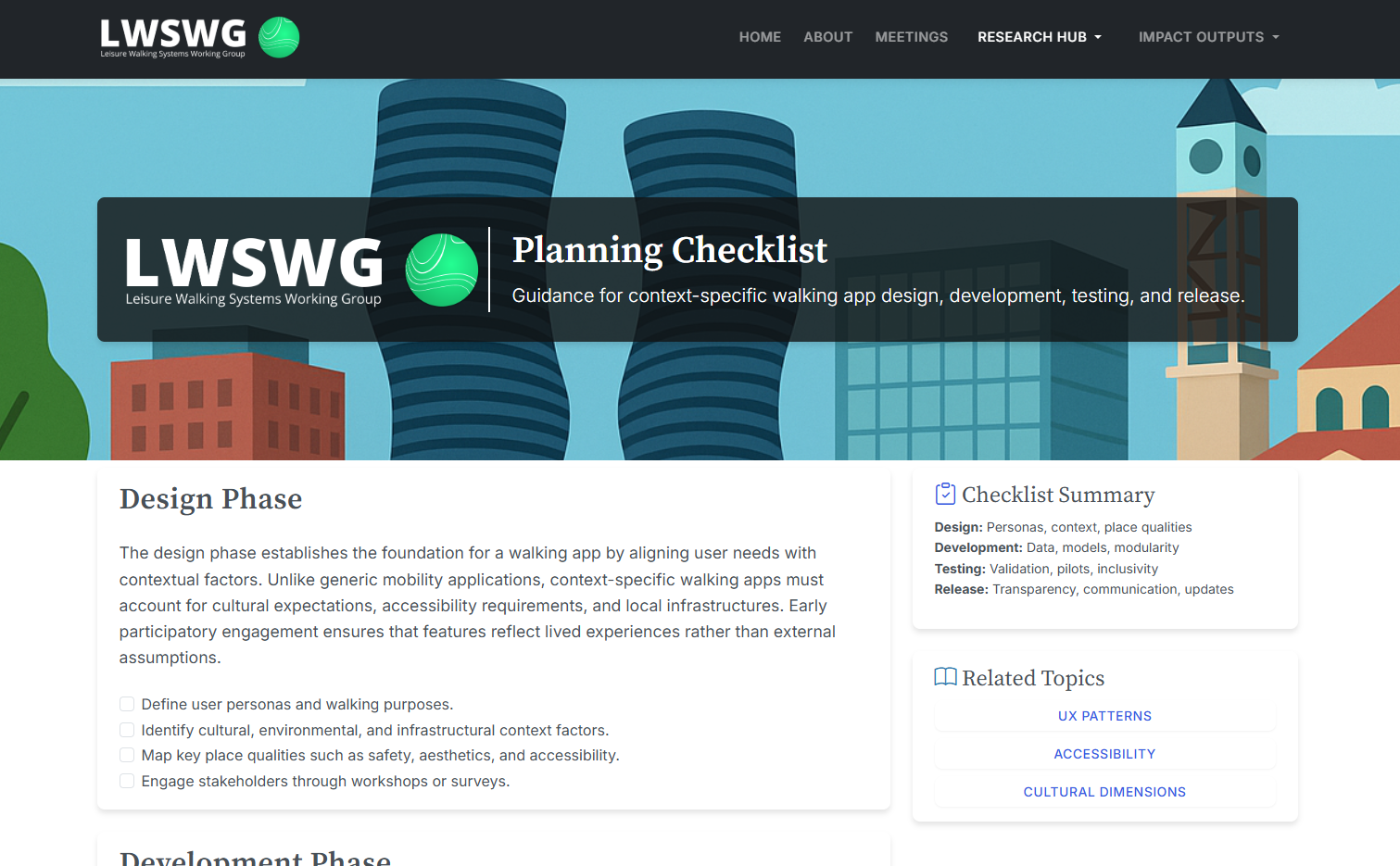
LWSWG Planning Checklist

The documentation methodology emphasises clarity, accessibility, and practical applicability whilst maintaining academic rigour. This balance represents a significant contribution to how technical knowledge can be effectively communicated and disseminated.

Evaluation Framework Development

The development of evaluation frameworks for walking systems represents a significant methodological contribution. These frameworks provide structured approaches to assessing the effectiveness of different system components and their integration, which has been lacking in the field.

These evaluation frameworks could be valuable for both academic researchers conducting systematic evaluations and industry practitioners seeking to assess their system implementations. The frameworks provide a foundation for more rigorous and comparable evaluations across different contexts and implementations.

Integration Architecture

The project’s approach to integrating multiple research areas into a coherent framework represents a significant architectural contribution. The development of clear relationships and dependencies between different components provides a foundation for more systematic development of walking systems.

This integration architecture could serve as a template for other interdisciplinary projects and provides a foundation for more systematic approaches to complex system development.

Personal and Professional Development

Project Management and Leadership

Leading a project of this scope and complexity has provided valuable experience in project management, stakeholder engagement, and interdisciplinary collaboration. The project required coordinating multiple workstreams, managing diverse stakeholder expectations, and ensuring delivery within tight timelines.

This experience has developed skills in strategic planning, resource allocation, and team coordination that will be valuable for future projects. The project has also provided insights into the challenges and opportunities of academic-industry collaboration.

Technical Communication and Knowledge Translation

The project has required extensive work in technical communication and knowledge translation, developing skills in making complex technical concepts accessible to diverse audiences. This work has involved creating multiple levels of detail and explanation, developing clear visual representations, and ensuring accessibility across different user groups.

These communication skills are increasingly important in academic and industry contexts where effective knowledge transfer is critical to impact and success.

Community Engagement and Building

The project has provided valuable experience in community engagement and building, including stakeholder identification, relationship management, and platform development. This experience has developed skills in understanding diverse community needs and creating platforms that serve multiple constituencies effectively.

These community engagement skills are valuable for future projects that require building and maintaining diverse stakeholder relationships.

Conclusion

The Leisure Walking Systems Working Group impact project has successfully delivered comprehensive resources that advance both academic understanding and practical application of place-based walking systems. The project’s achievements in knowledge integration, industry-ready resource development, and community building represent significant contributions to the field.

The challenges encountered, particularly around timeline constraints and balancing academic rigour with practical application, provide valuable lessons for future similar projects. The project’s approach to academic-industry collaboration and knowledge dissemination creates a model that could be valuable for other domains.

The broader implications of this work extend beyond the immediate outputs to include contributions to academic-industry collaboration models, knowledge management approaches, and community building strategies. These contributions position the project as a significant milestone in the development of more effective approaches to research impact and knowledge transfer.

The personal and professional development aspects of the project have been substantial, providing valuable experience in project management, technical communication, and community engagement. These skills and experiences will be valuable for future projects and career development.

Looking forward, the project has created a strong foundation for continued development and collaboration in the leisure walking systems domain. The digital platform, comprehensive documentation, and community framework provide resources that can continue to evolve and support the field’s development.

The success of this project demonstrates the value of strategic impact investments that bridge academic research with practical application. The combination of comprehensive knowledge integration, industry-ready resources, and sustainable platform development creates a model that could be valuable for other interdisciplinary domains seeking to maximise their research impact.

Ultimately, the LWSWG impact project represents a successful example of how academic research can be translated into practical value whilst maintaining scientific rigour and creating sustainable platforms for ongoing development. The project’s achievements provide a strong foundation for continued work in this important and growing field. The comprehensive resources developed through this project, including detailed implementation guides, evaluation frameworks, and demonstrator systems, are available at lwswg.jwilliams.science for researchers, practitioners, and organisations seeking to advance leisure walking systems through improved place representation.


Originally published on James Williams’s website: https://blog.jwilliams.science/leisure-walking-systems/

Measuring Player Wellbeing in Video Games

post by Szymon Olejarnik (2023 cohort)

Recently, I published the first paper from my PhD titled “The PMDWell Framework: A Confirmatory Factor Analysis of Video Game Players’ Wellbeing” in Computers in Human Behavior Reports, a prestigious (Q1, IF 5.8) interdisciplinary journal, blending the fields of computer science, human-computer interaction and psychology. This paper critiques the current status quo of player wellbeing literature, presents and validates a novel measure of player multidimensional wellbeing, the PMDWell, based on a theoretical framework grounded in the literature – what ought to influence wellbeing as a result of video game engagement. In this post, I will describe the publishing process, from conceptualisation and writing, through editing and addressing reviewer comments, to publication.

This paper is the first step towards broadening our understanding of how video games influence player wellbeing in the wider sense. The motivation for this paper arose during the writing process itself. I started work on this paper in early as October 2023, when I first reviewed the literature focussed on linking video games to wellbeing outcomes. Initially, this paper was meant to become the first chapter of my thesis, outlining the status quo in the literature, constituting a narrative literature review. However, it quickly became apparent that there were major research gaps on this topic in the field of video game psychology – most studies focussed on a single modality of wellbeing, with virtually no research considering wellbeing as multidimensional, as is done in other areas of psychology, or fields like economics or policy. This lent itself to another conceptual issue – cyberpsychology is dominated by research on mental health, with little attention paid to physical health or external life circumstances of the players. The disconnect between the various findings on different modalities of wellbeing proved to be the biggest issue – it was no longer viable to write this paper as a narrative review. I rewrote the very first draft of this paper as a critical review around April 2024, outlining the problems with the current knowledge base, and setting the groundwork for questionnaire construction and validation, initially planned for the following paper.

The draft of the critical review was completed in May 2024. At the same time, I finished constructing the questionnaire grounded in the critical review and began recruiting participants for the subsequent studies. Consulting on the progress of both papers with my supervisory team, it transpired that the Introduction section for the questionnaire validation paper would be virtually identical to the critical literature review, and that the two papers ought to be combined into one to make for a stronger case for questionnaire construction and validation. I converted the paper into an Introduction section, and continued recruiting participants to meet a satisfactory sample size. We finished recruitment in December 2024, and began constructing confirmatory factor analyses models based on the initial theoretical framework, with much success, yielding satisfactory statistics and reducing the questionnaire to items that were strictly necessary. Collaborating with my primary supervisor, Prof Daniela Romano, we further scrutinised the paper to ensure it met the rigour standards for publication in top-tier journals. Going through various revisions, we eventually arrived at the final draft of the paper, which was then promptly submitted to Computers in Human Behavior Reports in June 2025.

Prior experience with academic publishing taught me one thing: assume nothing, no matter how good the work may be. We did, however, pass the initial editorial checks and the paper was sent out to peer review. A month later, I received the news that the reviewers suggested Revisions. As Elsevier does not provide a split between Minor/Major Revisions, this could have meant anything, ranging from fixing minor typos to a complete rework of the paper. Browsing through the comments, it was a relief to see that the reviewers were fond of the paper and understood its novel contribution. Addressing the first round of comments took me around a week – the reviewers suggested a rewrite of one of the literature review sections, and further scrutinised the statistical analysis. This improved the quality of the manuscript significantly, as it highlighted some of the shortcomings of my analysis, thanks to which I was able to improve the models form the statistical standpoint. I addressed the comments thoroughly, resulting in 8 pages of responses to comments, fully justifying my approach and pointing out where corrections have been made. We resubmitted the paper mid-August, receiving another round of comments at the beginning of September. This time round, the comments were very minor – improving wording of the method justification, adding more information on participants below the age of 18 and improving visual distinctions between the framework diagrams. Responding to these comments took less than a day, with the paper finally being accepted on the 10th September 2025.

This paper constitutes the very first chapter of the PhD thesis – it reviews the most up-to-date literature, outlines the research gaps and validates a novel measure of wellbeing. This provides the very foundation of my PhD, and provides statistical validation for it, allowing for follow-up studies to take place. We are currently scrutinising the draft of a cross-sectional paper based on the same dataset, ahead of submission to Computers in Human Behavior. Here, we analyse the multidimensional wellbeing data in conjunction with hourly use and video game addiction to investigate how video game use interacts with wellbeing, and how this could result in addiction. The following papers will apply the same principle, with Paper 3 analysing the longitudinal version of the PMDWell dataset, and Paper 4 conducting a national-level analysis using secondary data. We also aim to dive deeper into player wellbeing, conducting a qualitative study in how players are affected by video games before, during and after engagement. Publishing this paper opens up many doors for me as a researcher, allowing for others to reproduce and further validate my method, and will certainly yield many collaborations in the coming years.

The full version of the paper is available at https://doi.org/10.1016/j.chbr.2025.100806

Between the Doorbell and the Threshold. Ethical Encounters in Surveillance Research

post by Anjela Mikhaylova (2022 cohort)

A Placement Journey with CNWA into the Lived Ethics of Surveillance

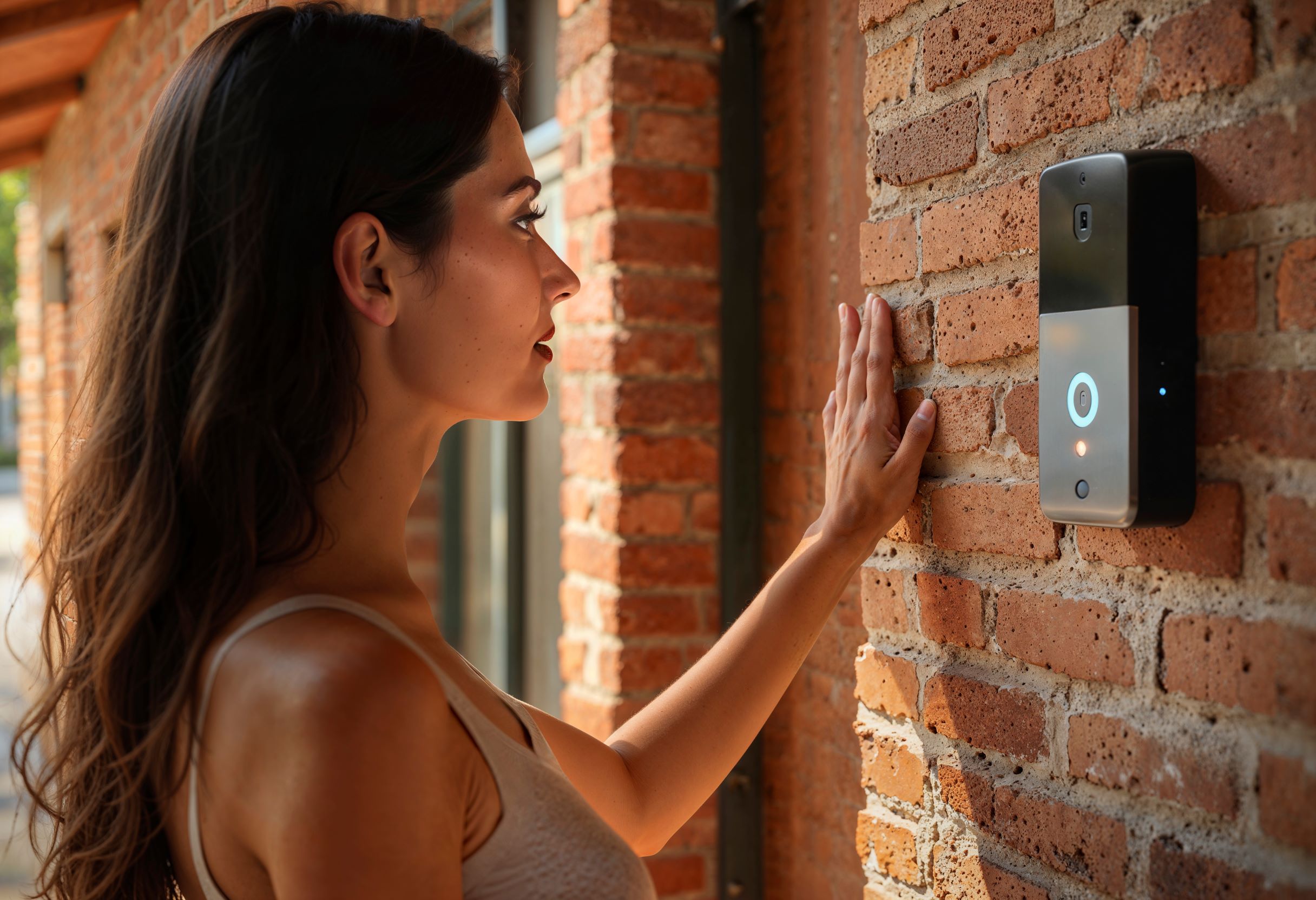
Some placements begin with a desk, a login, and a to-do list. Mine began with a smart doorbell – small, glowing, watching. Not just a gadget, but a quiet presence on the threshold between public and private lives.

I knew from the start I didn’t want this placement to be a box-ticking exercise. I wanted to move beyond reports and statistics into the lived realities of the people whose doorsteps, and stories, these devices quietly watch over. That opportunity came through a placement with Cumbria Neighbourhood Watch Association (CNWA), working alongside QPM Joe Murray, a grassroots safety leader deeply embedded in local networks.

Placement Overview – Activities and Outcomes

I arrived with a plan: test my academic frameworks in the field and see how they held up in practice. How do residents, police, and bystanders actually experience surveillance? Are doorbell cameras protective, invasive, or both?

We designed an anonymous survey in MS Forms, with an opt-in at the end for those willing to be contacted for follow-up interviews. This reached a diverse group: smart doorbell owners, people captured by neighbours’ devices, and police officers involved in local safety initiatives. The anonymised responses were as layered as they were revealing. One early survey response captured the complexity: “I didn’t buy it [smart doorbell] for surveillance, I bought it for peace of mind.” Surveillance, I realised, isn’t always about watching others: sometimes it’s about creating a sense of security for yourself.

Over the course of the placement, I gathered a mix of perspectives, moments, and reflections. Those conversations and survey responses have already shaped multiple co-authored papers: “Smart Doorbells in a Surveillance Society,” presented at the ETHICOMP2025 conference, and “Smart Doorbell Surveillance: Breaching All Seven Types of Privacy”, now under review with the journal Surveillance & Society. I also plan to weave the placement’s findings into my thesis and into a forthcoming article, “From Surveillance to Reassurance: The Lived Experience of Smart Doorbells,” a natural extension of this work, which is also under review. Beyond the immediate outputs, the placement left a lasting imprint on my research itself, and as I move into the writing stage, I carry with me a renewed sense of purpose.

Understanding the Partner’s Concerns and Adapting My Skills

Those outputs didn’t appear out of nowhere. They grew out of a process that ended up looking very different from the plan I arrived with. My original plan was to conduct face-to-face interviews. But early conversations with Mr Murray made it clear that some participants might feel uneasy discussing sensitive topics in that format. So, we pivoted to an anonymous survey – a small change on paper, but one that prioritised safety, autonomy, and comfort. Participants could share their experiences on their own terms, with the option to be contacted later if they wished.

I had to adapt quickly: revising my ethics application, reframing academic language, and softening some of my critical assumptions about surveillance. Before this placement, my research lens was sharply critical. Influenced by Foucault’s Panopticism and Zuboff’s Surveillance Capitalism, I saw smart doorbells primarily as instruments of surveillance, control, and visibility. Once I started listening to real stories without trying to fit every answer into these frameworks, the placement began to open up in ways I couldn’t have predicted, and that’s when the voices I’d been missing came through most clearly.

Placement – PhD Connection

Working with CNWA grounded my PhD and continues to influence my methods, language, and scope.  It pushed me to hold my critiques alongside another reality: for some, these devices are less about surveillance and more about feeling seen, protected, and connected. As one respondent summed it up: “I feel visible, but finally on my own terms.”

That shift didn’t mean abandoning critique. Instead, it deepened it. My thesis will no longer focus solely on critique. It will reflect complexity, contradiction, and care. My frameworks – Foucault, Zuboff – still guide me, but now they walk alongside lived experience, recognising that surveillance isn’t just theoretical anymore. It’s intimate, negotiated, and sometimes life-affirming, capable of being both protective and problematic, sometimes in the same moment.

The themes that emerged: privacy boundaries, control over personal data, perceptions of safety, and the behavioural shifts that come with visibility – now constitute a core focus of my thesis. The link between my placement and my PhD is a two‑way exchange: placement fed into my research, and my research shaped how I approached the placement.

Industry vs Academia: A Different Kind of Urgency

CNWA’s collaborative style was refreshingly agile, always attuned to the real needs at hand.  In contrast, the academic journey, marked by evolved drafts, reshaping revisions and peer reviews, unfolds at a deliberate, methodical pace. At CNWA, the rhythm flowed with a different cadence: swift, responsive, and grounded in people-first ethical pragmatism, with an emphasis on immediate impact. Project moved quickly from idea to action, supported by short, personal feedback loops.

Experiencing this contrast meant adapting my own working style and priorities. Above all, I learnt that growth comes from letting the world push back on your framework and honouring the emotional weight behind data. The placement didn’t just give me a different pace of work, it offered a model for how research can live beyond the university, grounded in both ethical responsibility and real-world relevance.

Creating Our Lives in Data

For me, this was no longer about studying data from a distance but about understanding how people live with it, and why that matters. One participant told me, “I know it’s watching, but at least I chose who gets to see.” Another said, “I don’t care who sees the footage as long as I know someone’s watching.”

That quiet assertion of control revealed what data agency looks like in real life. It was not simply about compliance with abstract privacy laws, but about emotional autonomy and dignity. I came to see that data is never neutral or detached, instead, it is lived, charged with emotion, trust, and power.

This shift in perspective now shapes how I think about surveillance: not as a purely technical or legal issue, but as something deeply human, negotiated in the spaces where technology meets lived experience.

My message to future CDT and PGR students preparing for their placements:

If I could leave one message for future CDT PGR students, it would be this: the plan you arrive with is just your starting point, not the map you have to follow. Come prepared, but leave space for change.  It might feel uncomfortable at times when real conversations, real lives, and real needs challenge your frameworks and your assumptions, like mine, but that shift is often where the richest insights emerge. So, yes, bring structure. But stay flexible.