PhD researcher Matthew Yates (2018 cohort) is currently recruiting participants to take part in a short online study on detecting fake aerial images. Generative Adversarial Networks (GANs) have been used to create these images.
Hello. I am 3rd year Horizon CDT PhD student partnered with the Dstl. My PhD project is about the detection of deep learning generated aerial images, with the final goal of improving current detection models.
I am looking for participants from all backgrounds, as well as those who have specific experience in dealing with either Earth Observation Data (Satellite aerial images) or GAN-generated images.
Purpose:To assess the difficulty in the task of distinguishing GAN generated fake images from real satellite photos of rural and urban environments. This is part of a larger PhD project looking at the generation and detection of fake earth observation data.
Who can participate? This is open to anyone who would like to take part, although the involvement of people with experience dealing with related image data (e.g. satellite images, GAN images) is of particular interest.
Commitment: The study should take between 5-15 minutes to complete and is hosted online on pavlovia.org
How to participate? Read through this Information sheet and follow the link to the study at the end.
Feel free to contact me with any queries. Matthew.Yates1@nottingham.ac.uk
My first summer school started with an invite via email. Despite my interest in the topic, my first thought was that robotics was not my area of expertise (coming from a social science background), so maybe I shouldn’t bother applying as I’d be out-of-my-depth. Although after some consideration, I thought it would create some great opportunities to meet new people from diverse backgrounds. So, I stopped worrying about my lack of knowledge in the area and just went for it; and I got a place!
The summer school was held digitally due to COVID-19 restrictions, which had both its benefits and pitfalls. On the first day, we were welcomed by Debra Fearnshaw and Professor Steve Benford, and were then given the opportunity to introduce ourselves. From this it was apparent that there was a wide variety of delegates from several universities, with a range of disciplines including social sciences, robotics, engineering and manufacturing. The first day mostly consisted of talks from experts about the challenges we face in connecting technology and the potential of co-robotics within the fields of agrirobotics, home and healthcare. The main task of the summer school was to create a cobot (collaborative robot) that could overcome some of the issues that COVID-19 has created or exacerbated. The issue that the group chose to address had to fall into one of the categories introduced on the first day: food production (agrirobotics), healthcare or home. Along with this challenge, more details were needed on function, technological components, and four key areas of the cobot design: ethics, communication, learning and safety. These aspects were introduced on the second day. After being split into groups at the end of the first day, I felt happy as my group had a range of experience and expertise between us, which I felt would bode well for the challenge as well as being beneficial for myself as I could learn something from everyone.
Similarly, the second day consisted mostly of talks, this time based on the four themes mentioned previously. The ethics discussion was interesting and included in-depth explanations around aspects to consider when reflecting upon the ethical consequences of our designs, such as privacy, law, security and personal ethics. An online activity followed the ethics talk but was soon interrupted by a technical glitch. Despite this, we were able to engage with alternative resources provided in order to reflect upon the ethics of our cobot design. This was useful both for our eventual design, as well as applying this to our own PhD research.
The other themes then followed, including a discussion around interaction and communication in technology. This was an insightful introduction to voice user interfaces and alike, and what the current research is focusing on in this field. While fascinating on its own, it was also useful in thinking about how to apply this to our cobot design, and which features may be useful or necessary for our cobot’s functionality. A talk on the third theme of learning was then delivered, including details about facial recognition and machine learning, and the applications of these in the field of robotics. Likewise, this was useful in reflecting upon how these features may be applicable in our design. Finally, the theme of safety was considered. This talk provided us with the knowledge and ability to consider safety aspects of our cobot, which was particularly apt when considering COVID safety implications too. Overall, the first two days were quite lengthy in terms of screen time (despite some breaks), and I found myself wilting slightly towards the end. However, I think we could all understand and sympathise in the difficulty of minimising screen time when there is a short space of time to complete all of the summer school activities.
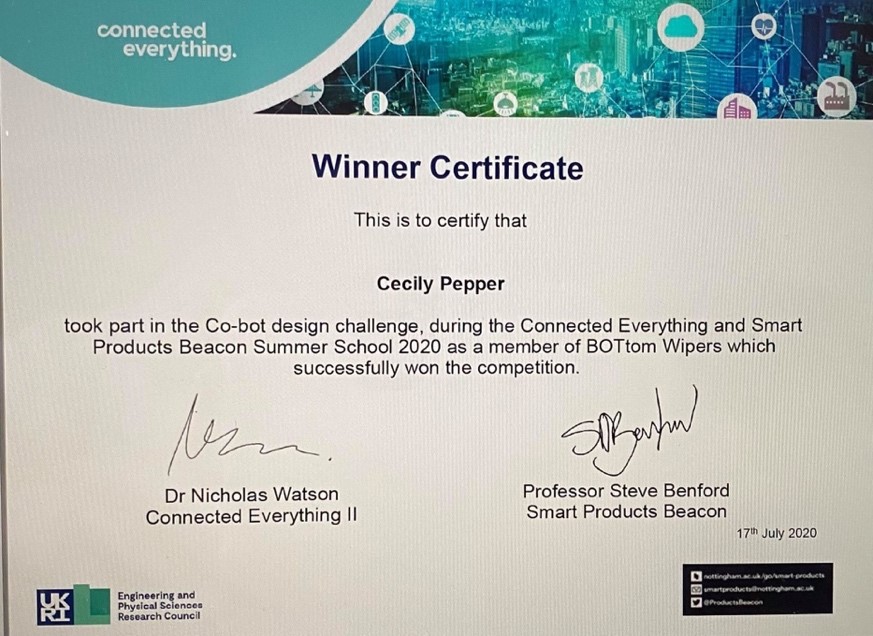
On the final day, we split into our teams to create our cobot. This day was personally my favourite part of the summer school, as it was fantastic to work with such a variety of people who all brought different skills to the group. Together, we developed a cobot design and went through the themes from the previous day, ensuring we met the design brief and covered all bases. Probably the biggest challenge was keeping it simple, as we had so many ideas between us. Despite our abundance of ideas, we were strict with ourselves as a group to focus and keep the design simplistic. Additionally, the five-minute presentation time meant that we had to keep our design simple yet effective. We then presented our home assistant cobot, Squishy. Squishy was an inflatable, soft cobot designed to assist carers in lifting patients who were bed-bound (as occupational injuries are a significant problem within the care industry). Squishy’s soft design enabled comfort for the patient being lifted, while the modular design provided a cost-effective solution and the possibility of added-extras if necessary. Along with this, Squishy was beneficial in that it consisted of wipe-clean surfaces to enable effective cleaning in light of COVID-19, as well as aiding social distancing by reducing the need for carer-patient contact. Other features of Squishy included machine-learned skeletal tracking and thermal cameras to aid safe functionality, and minimal personal data collection to maintain ethical standards. After the presentations and following questions, the judges deliberated. Results were in…my team were the winners! While I was happy to have won with my team, the most fruitful part of the experience for me was meeting and learning from others who had different backgrounds, perceptions and ideas.
Overall, I felt the summer school was well-organised and a fantastic opportunity to work with new people from diverse backgrounds, and I was very glad to be a part of it. I’m also pleased I overcame the ‘Imposter Syndrome’ feeling of not believing I would know enough or have enough experience to be a valuable delegate in the summer school. So, my advice to all students would be: don’t underestimate what you can contribute, don’t overthink it, and just go for it; you might end up winning!
The Summer School was funded by EPSRC through the Connected Everything II network plus (EP/S036113/1).
Say hello to Squishy initially inspired by Baymax (Hall, D., Williams, C. 2014). This COBOT concept was co-created during an intensive online Summer School in July 2020 run jointly by Connected Everything and the Smart Products Beacon at the University of Nottingham.
The online event, running over two and a half days, involved 28 delegates from various UK universities and culminated in a brief to design a COVID-ready COBOT (collaborative robot) to work in either Food Production, Healthcare, or the Home. Squishy was the collaborative brainchild of myself and the other five members of my group – the BOTtom Wipers… The group comprised me and Cecily from the 2019 cohort at Horizon CDT and Laurence, Hector, Siya and Robin from Lincoln, Strathclyde, and Edinburgh/Heriot-Watt universities, respectively.
The day and a half leading up to the design brief set the context through a series of related talks on the challenges of working in the different sectors as well as discussions on core aspects such as Ethics, Interaction and Comms, Learning and Safety. Hence by Friday morning, we were ready for our design challenge – to design a COBOT relevant to the COVID world we currently live in and present the concept in five slides lasting five minutes – and to achieve this by mid-afternoon the same day!
Our group quickly worked out to make the most of our individual and different backgrounds ranging from robotics and machine learning to neuroscience and psychology. The challenge we decided on was situated in the home, lifting bed-bound residents since it places considerable physical strain on carers and requires close contact with individuals; obviously less than ideal in a COVID world.
Our solution was Squishy: a cost-effective assistive COBOT inspired by the fictional superhero Baymax (Hall, D., Williams, C. 2014) and the caterpillar robot made using a 3D printer that could output soft, rubbery material and hard material simultaneously (Umedachi, T., Shimizu, M., & Kawahara, Y., 2019).
We decided on a soft, modular COBOT since we felt this would be more comforting and comfortable for the individuals being lifted. Manufacturing costs can limit access to assistive robots so Squishy was inflated using pressurized air with different air pockets allowing his shape to be modified to suit individuals of different body sizes/shapes. To ensure stability and safety as well as hygiene, we chose a two-body system comprising flexible 3D printed silicon moulds overlaid with wipe clean textile. Being able to keep Squishy clean was critical given COVID.
Our next challenge was to ensure that Squishy could lift and put down an individual safely. We decided to use input from thermal cameras and real-time skeleton tracking using OpenPose since this is a relatively straightforward and cost-effective system. We planned to teach Squishy to hold and lift safely via incremental learning of holding/lifting varied body shapes and weights, either from data sets or by imitation. The use of thermal cameras and skeleton tracking also allowed us to provide two additional modules if required. The first option was temperature screening (37.8 degrees Celsius or greater potentially indicating COVID infection) and the second was for Squishy to gently rock the individual to comfort them if required. A rocking motion has been shown to promote sleep in infants and, more recently, also in adults, (Perrault et al., 2019).
For ease of use and safety we deliberately kept the input and output communications simple namely a wearable control bracelet or necklace with buttons for basic functions e.g. lift up/down as well as an emergency stop button which would signal that assistance was required.
Ethical issues were key, both in terms of the collection and storage of personal data but also the psychological aspects of Squishy interacting with humans. We decided to only collect the minimum personal data required for a safe and comfortable interaction such as height, weight and BMI (which could be combined with skeleton tracking data) with the individual requiring assistance only being identified by a unique identifier. Data would be stored in a safe storage system such as Databox. Databox is an EPSRC project involving collaborators from Queen Mary University of London, the University of Cambridge and the University of Nottingham and a platform for managing secure access to data. All our data processes were GDPR compliant.
The individual’s response to and relationship with Squishy was also central to the design both in terms of the COBOT’s appearance, feel and touch and the use of slow, comfortable movements which engender relaxation and trust.
Having discussed and honed our design ideas we then had to consolidate them into five slides and a five-minute presentation! We were each involved in different aspects of the brief following which we collectively refined the slides until we had the final version. Getting across the key elements in five minutes proved to be a challenge; with our first run-through coming in at closer to seven and a half minutes but on the day, we just managed to finish on time. It was interesting to see how many people really struggled with the time challenge, and I am sure my experience at summer school will be useful for when I enter the Three Minute Thesis (3MT®) in 2021…
And the outcome of all this hard work and collaboration? I am delighted to report that The BOTtom Wipers and Squishy won the COBOT challenge. J
References:
Hall, D., Williams, C., 2014. Big Hero 6 (Film). Walt Disney Animation Studios.
Perrault, A. A., Khani, A., Quairiaux, C., Kompotis, K., Franken, P., Muhlethaler, M., Schwartz, S., & Bayer, L. (2019). Whole-Night Continuous Rocking Entrains Spontaneous Neural Oscillations with Benefits for Sleep and Memory. Current Biology, 29(3), 402-411.e403. https://doi.org/https://doi.org/10.1016/j.cub.2018.12.028
Umedachi, T., Shimizu, M., & Kawahara, Y. (2019). Caterpillar-Inspired Crawling Robot Using Both Compression and Bending Deformations. IEEE Robotics and Automation Letters, 4(2), 670-676. https://doi.org/10.1109/LRA.2019.2893438
I hope you are all doing well and are well-supported during these trying times. This period has allowed me to reflect on two public engagement activities that I took part in last year. The activities involved two exhibitions where I had the opportunity to engage with the public presenting three Mixed Reality Lab (MRL) creations in two venues (MRL at CHI, 2019 and Halfway to the Future, 2019). The MRL creations that I presented were:
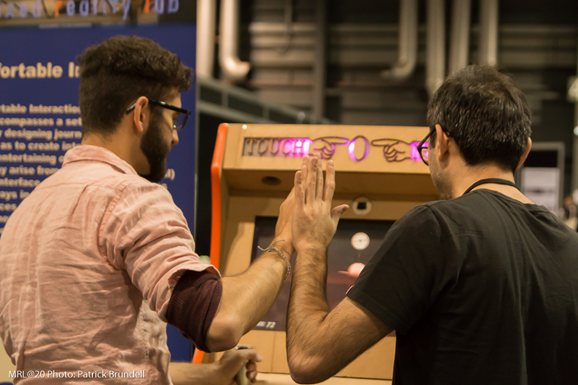
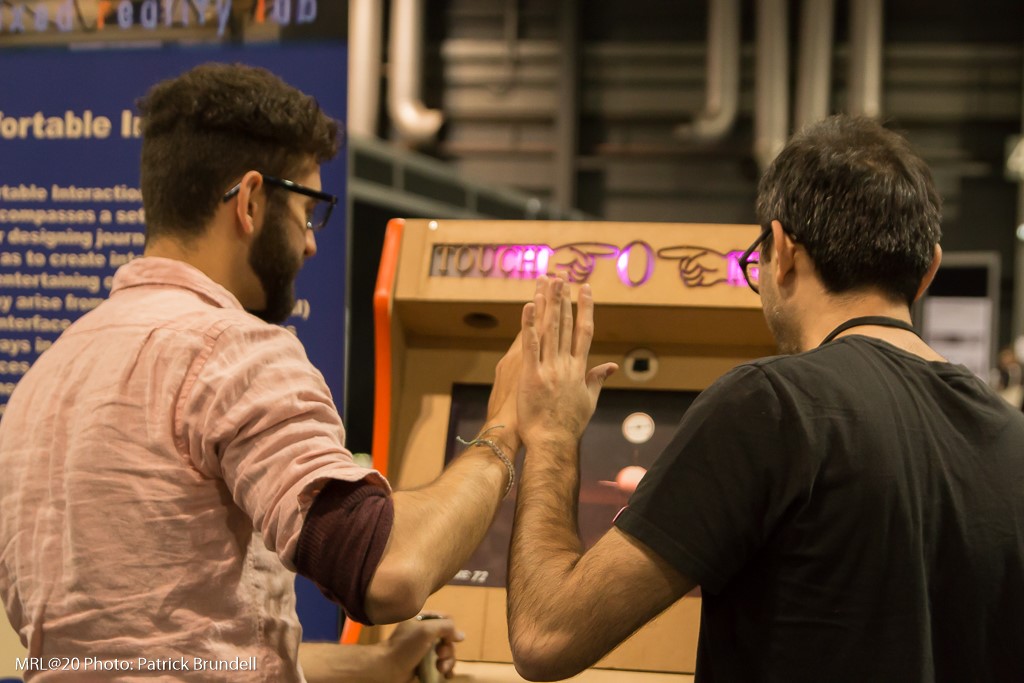
Touchomatic A touch-based two-player cooperative video game, in which each player holds a sensor stick with one hand and touches the hand of the other participant to control how low and high an airship can fly. Participants have to find the sweet spot to fly the airship to collect coins and not run out of gas.
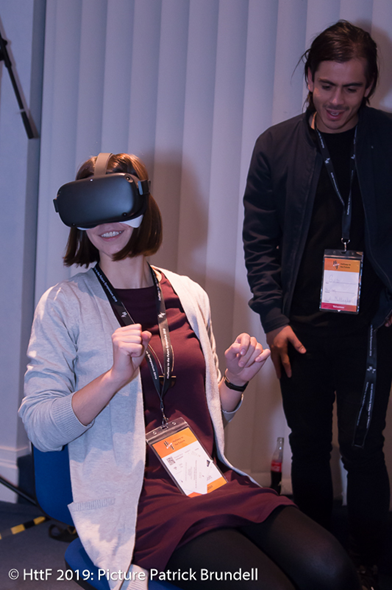
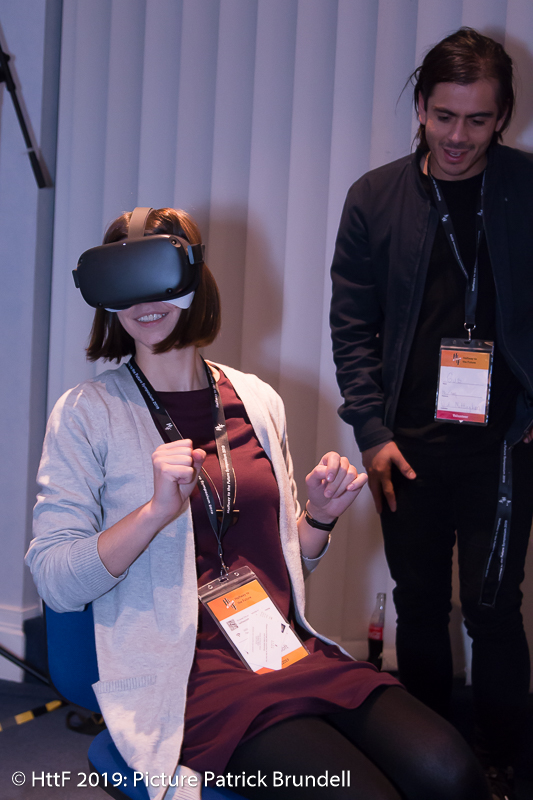
Get Screwed A virtual reality (VR) experience that plays with notions of control, sensory misalignment, and vertigo. Participants are placed on top of a swivel chair which is rendered as a bolt by the VR interface and attempt to unscrew it by turning.
VR Playground A VR exploration of sensory misalignment, in which people use the motion of a swing to control their navigation through the virtual world. The VR interface couples the motion with movements in the game.
Photo credit: Patrick Brundell
In the two venues, people from different backgrounds came to try the above experiences: researchers from the field of human-computer interaction (HCI), employees of technology companies, people who don’t work in technology-related fields, and people who accompanied attendees of the conference, from adults to children, all participated in the experiences.
People were interested not only in having the experience, but also in knowing more about the technological, creative, psychological, and other components of the creations. People wanted to know what technology was used and what happened in our minds that made it possible for the creation to integrate the virtual and physical. Given that people had different levels of expertise in the area, it was necessary to give explanations according to people’s needs. In a nutshell, the response of a professor will differ from that of a child.
Overall, I found the exhibitions a challenging task. There were difficult moments when people were not satisfied with my answers, and I had to find other ways of explaining the mechanics of these VR experiences. I found it very useful to relate my explanation to common knowledge through metaphor and analogy that people could easily make a connection with them.
It was a very enriching experience given that I had the opportunity to talk about interactive experiences, VR, and motion sensing with people from different backgrounds. Those topics are very different from the area of research on which my PhD is focused, which is on design ethnography and smart products.
In general, the experience was very fulfilling. I had the opportunity to share my time exchanging ideas with people and engage in thought-provoking conversations. It has taught me valuable skills related to speaking about and explaining my research with a diverse audience. I consider some positive outcomes of my participation in these public engagement activities to be:
The opportunity to practice critical thinking and think about the relevance of our research for the real world
Improvement of communication skills, as we are accustomed to talking to an academic audience, and this kind of experience gives the opportunity to practice with a non-academics
Building confidence as we have to be prepared to answer all kinds of questions on the spot and without prior preparation
Personal satisfaction from sharing with society part of the research that we conduct in the confined spaces of the lab
I hope that shortly we are able to take part in such open and diverse environments again.
Publishing a Paper about In-Person Interactions at a virtually held Conference (CHI PLAY)
The National Videogame Arcade (now National Videogame Museum) is a games festival-turned-cultural centre that celebrates games and the people who make, play and interact with them. While more traditional museums might now allow visitors to directly interact with their exhibits, the NVM encourages this direct interaction in an open, genuine way: “Games are for everybody” is one of the core values of the museum. Outside of being an educational and creative hub for everything games-related, it is also my PhD’s industry partner.
Before the NVA moved to Sheffield in September 2018 to become the NVM, I was lucky to join my research partner for most of their last month in Nottingham. Since my research is centred around exploring ideas of (self-)care through a justice-, collective- and games-informed lens (to paint a picture with broad strokes), I was very keen on figuring out how people in the NVA made sense of it, how they created meaning in their interactions with the space and others: To do so, I joined visitors during their “journey” through the NVA: I watched people play games, enjoy themselves (or get frustrated!) and share and make memories.
After carefully analysing the data (and a couple of busy months with other studies), I asked two of my fellow doctoral researchers if they would be interested in exploring the data once again and writing a paper together: Gisela Reyes-Cruz (my go-to-person for everything interaction and ethnomethodology-related!) and Harriet “Alfie” Cameron (who has a keen eye for everything museum- and power-structures-related).
Together, we wrote and submitted “Plastic Buttons, Complex People: An Ethnomethodology informed Ethnography of a Video Game Museum” to CHI PLAY 2020, where it got accepted!
The paper explores how people interact with each other through establishing practices in and around the playable exhibits, but also between each other. It finishes with some ideas and design implications that spaces that want to engage people in co-located play can take on to support or disrupt group interactions.
Here is our abstract as a teaser:
“This paper reports on an ethnomethodology-informed ethnography of a video game museum. Based on 4 weeks of ethnographic fieldwork, we showcase how groups of visitors to the museum achieved the interactional work necessary to play games together and organise a museum visit as a social unit. By showcasing and explication excerpts of museum visits we make the taken-for-granted nature of these interactions visible. Embedded within an activity map that outlines how people prepare, play, wind down and exit games, we showcase the sequential, temporal, and carefully negotiated character of these visits. Based on our findings and the resulting Machinery of Interaction, we propose three design implications for spaces that aim to exhibit video games and/or try to facilitate co-located, collective video gameplay.”
It is a weird feeling to present our first paper in a virtual format, but it is a tremendously joyful occasion (and a very enriching learning experience)!
This paper would not have been possible without the support of my supervision team Martin Flintham, Pat Brundell and David Murphy; the lovely and wonderful folks at the NVA/NVM, all of the visitors who took part in research and Stuart Reeves for valuable comments on one of the earlier paper drafts!
Hello everyone. I hope you are doing well and are well-supported during these trying times. This period has allowed me to reflect on two public engagement activities that I took part in last year. The activities involved two exhibitions where I had the opportunity to engage with the public presenting three Mixed Reality Lab (MRL) creations in two venues (MRL at CHI, 2019 and Halfway to the Future, 2019). The MRL creations that I presented were:
Touchomatic
A touch-based two-player cooperative video game, in which each player holds a sensor stick with one hand and touches the hand of the other participant to control how low and high an airship can fly. Participants have to find the sweet spot to fly the airship to collect coins and not run out of gas.
Get Screwed
A virtual reality (VR) experience that plays with notions of control, sensory misalignment, and vertigo. Participants are placed on top of a swivel chair which is rendered as a bolt by the VR interface and attempt to unscrew it by turning.
VR Playground
A VR exploration of sensory misalignment, in which people use the motion of a swing to control their navigation through the virtual world. The VR interface couples the motion with movements in the game.
photo credit: Patrick Brundell
In the two venues, people from different backgrounds came to try the above experiences: researchers from the field of human-computer interaction (HCI), employees of technology companies, people who don’t work in technology-related fields, and people who accompanied attendees of the conference, from adults to children, all participated in the experiences.
People were interested not only in having the experience, but also in knowing more about the technological, creative, psychological, and other components of the creations. People wanted to know what technology was used and what happened in our minds that made it possible for the creation to integrate the virtual and physical. Given that people had different levels of expertise in the area, it was necessary to give explanations according to people’s needs. In a nutshell, the response of a professor will differ from that of a child.
Overall, I found the exhibitions a challenging task. There were difficult moments when people were not satisfied with my answers, and I had to find other ways of explaining the mechanics of these VR experiences. I found it very useful to relate my explanation to common knowledge through metaphor and analogy that people could easily make a connection with them.
It was a very enriching experience given that I had the opportunity to talk about interactive experiences, VR, and motion sensing with people from different backgrounds. Those topics are very different from the area of research on which my PhD is focused, which is on design ethnography and smart products.
In general, the experience was very fulfilling. I had the opportunity to share my time exchanging ideas with people and engage in thought-provoking conversations. It has taught me valuable skills related to speaking about and explaining my research with a diverse audience. I consider some positive outcomes of my participation in these public engagement activities to be:
The opportunity to practice critical thinking and think about the relevance of our research for the real world
Improvement of communication skills, as we are accustomed to talking to an academic audience, and this kind of experience gives the opportunity to practice with a non-academics
Building confidence as we have to be prepared to answer all kinds of questions on the spot and without prior preparation
Personal satisfaction from sharing with society part of the research that we conduct in the confined spaces of the lab
I hope that shortly we are able to take part in such open and diverse environments again.
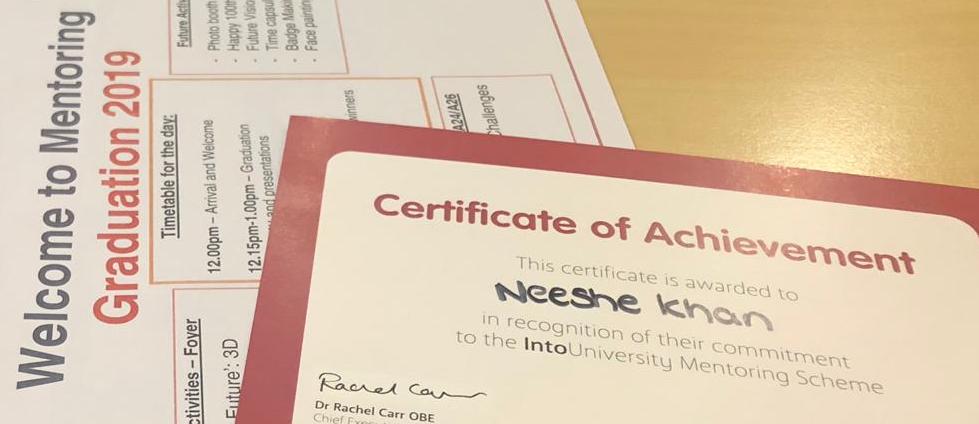
Last year I decided to partake in a program that engages primary school children from disadvantaged backgrounds to engage with students from the local university. This provides an opportunity for children to have positive role models or Mentors that can provide support and some sort of a roadmap to whatever they might dream to be when they grow up. I decided to do this to encourage a child to dream about a life in STEM.
As young adults, it is easy and intuitive to explore, experiment, and discover the right choices for your future career. Despite having an aptitude for STEM you might want to explore Arts or Business which is perfectly acceptable. However, when you change your mind STEM doesn’t welcome you back into the fold. There are stringent requirements for the combinations of subjects you must have and the grades you need to be able to start an undergraduate degree. If you have Physics at A-levels (anyone who has done this will tell you that Physics contains more Mathematics than A-Level Mathematics subject) it is required that you must also have Mathematics in A-levels. So if like me, a student also wants to explore economics, business studies, and a language, it means you can no longer enter an Engineering undergraduate degree regardless of your grade in Physics. However, this poses no issues for pursuing a degree in any non-science subjects as all undergraduate degrees will make you relearn the basics, and often lecturers will tell you to forget what you learnt in previous years as it’s mostly inaccurate for truly understanding the subject. Unsurprisingly, I believe that this ‘locking out’ of bright young minds for STEM fields based on ‘desirable combinations’ is in large the main contributor towards the STEM skills crisis that the western world is now facing.
But coming back to the point, I wanted to help a young child strengthen their academic STEM foundations and generate interest where they can see an exciting future in this space. In a few days, I was matched to an 11-year-old (let’s call her “Tara”) who’s interested in STEM and aspires to become a doctor.
While there are several programs available, I really enjoyed this one. It was structured, transparent, had clear expectations and outcomes, and well organised. It offered training and support for the Mentors which meant I would enjoy speaking to Megan (project co-ordinator at the venue) about what my meeting plans were or if I wanted some insights or advice.
I started off the program by providing continuity. I became a staple figure in her life which meant we would meet at a fixed schedule, for the agreed duration, at the agreed time, and follow the agenda that we had agreed in our previous meeting. I always showed up. Much like the gym, showing up (to see this little person waiting for me) meant more than half the effort was already done. We had decided to work on subjects that Tara identified she needed help with, particularly focusing on SATs (Maths, Science, and English). I also allowed Tara to decide what our meetings would look like, empowering her to be in control of our progress. This meant that while she performed very well on tests, we also reflected on what factors contributed to the mistakes and explored tools to overcome them. After a year, Tara ended up achieving one of the top scores in her school and got one of the two scholarships for a private secondary school in the area.
There were also some difficult times. I sometimes struggled to get her attention or interest. Many times this was because she had other things on her mind. Her mom was a qualified nurse from another country who couldn’t practice in the UK without an equivalence which takes time and money, two of the biggest resources for any immigrant. She ended up working two jobs in a profession outside her qualification. Tara discussed her challenges in trying to study in close quarters with her younger siblings. At a young age, she was wise beyond her years and I would often catch myself remembering how little she actually was. We put in the effort to developing skills to overcome the pressure and stress SATs bring to their young lives. We practised exercises to help retain focus in busy environments and relieve stress which included slime making and controlled breathing.
I really enjoyed discovering how the current education system uses new techniques to teach children. For instance, the way we would multiply was completely different! Thankfully our answers almost always matched! When they didn’t, I had to learn her system of understanding and convert my reasoning to fit Tara’s model so it would a) be correct/spot her mistake in her workings and b)make sense to her. I took this as a challenge and found this quite a fun exercise on most days.
Overall, I feel that I made some difference towards Tara achieving her goals and hopefully contributed towards making her STEM career aspirations a real option in her future. I would really encourage everyone to take up this as a rewarding experience to engage the future in any discipline and field you personally care about. Just be consistent and dedicate as much time as you think you can spare. Even a half-hour a week can help contribute to a young life that might need skills you might not know you have.
Dtree’s Vision ‘Our vision is a world in which every person has access to high quality health care.’
Dtree’s Mission ‘Our mission is to work with partners to leverage digital tools and data to save lives. We will be as focused as you on your health system goals, while working in partnership with you to implement digital solutions to improve program quality and impact.’
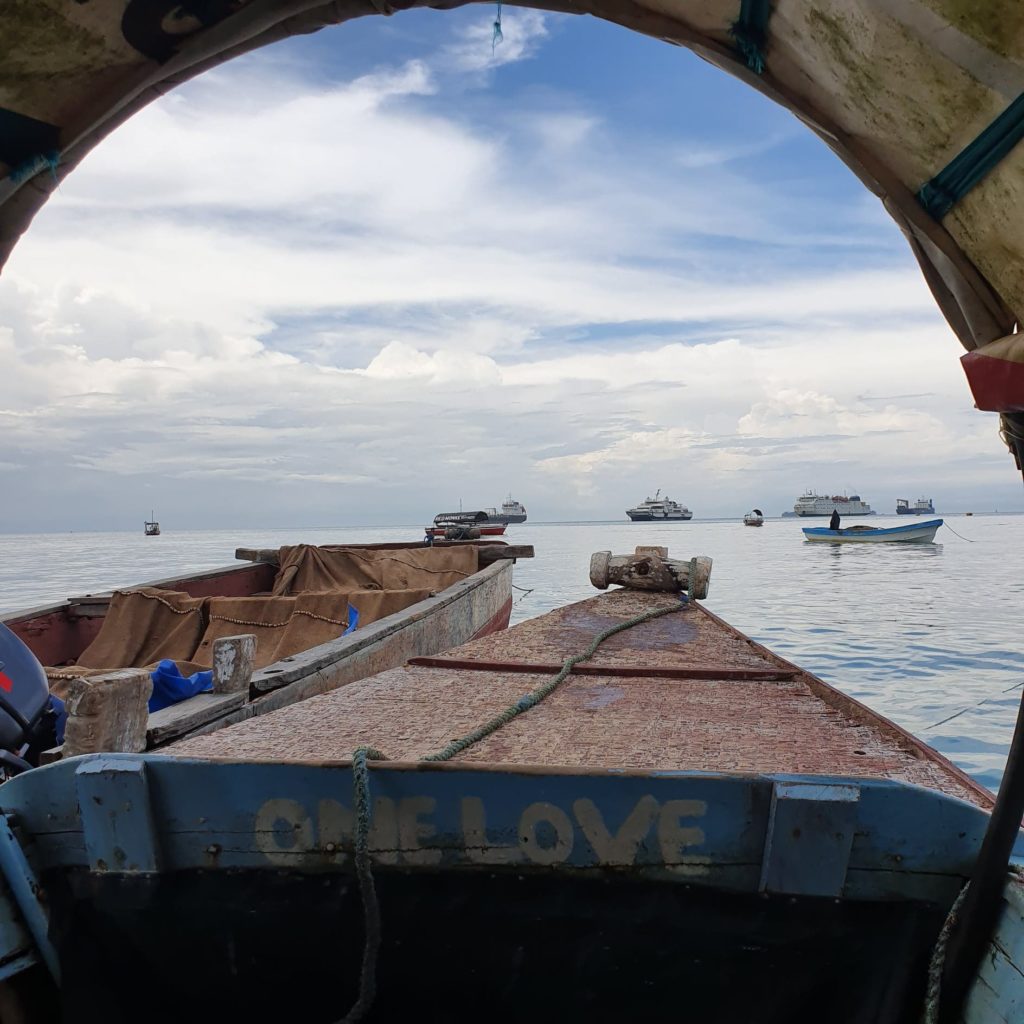
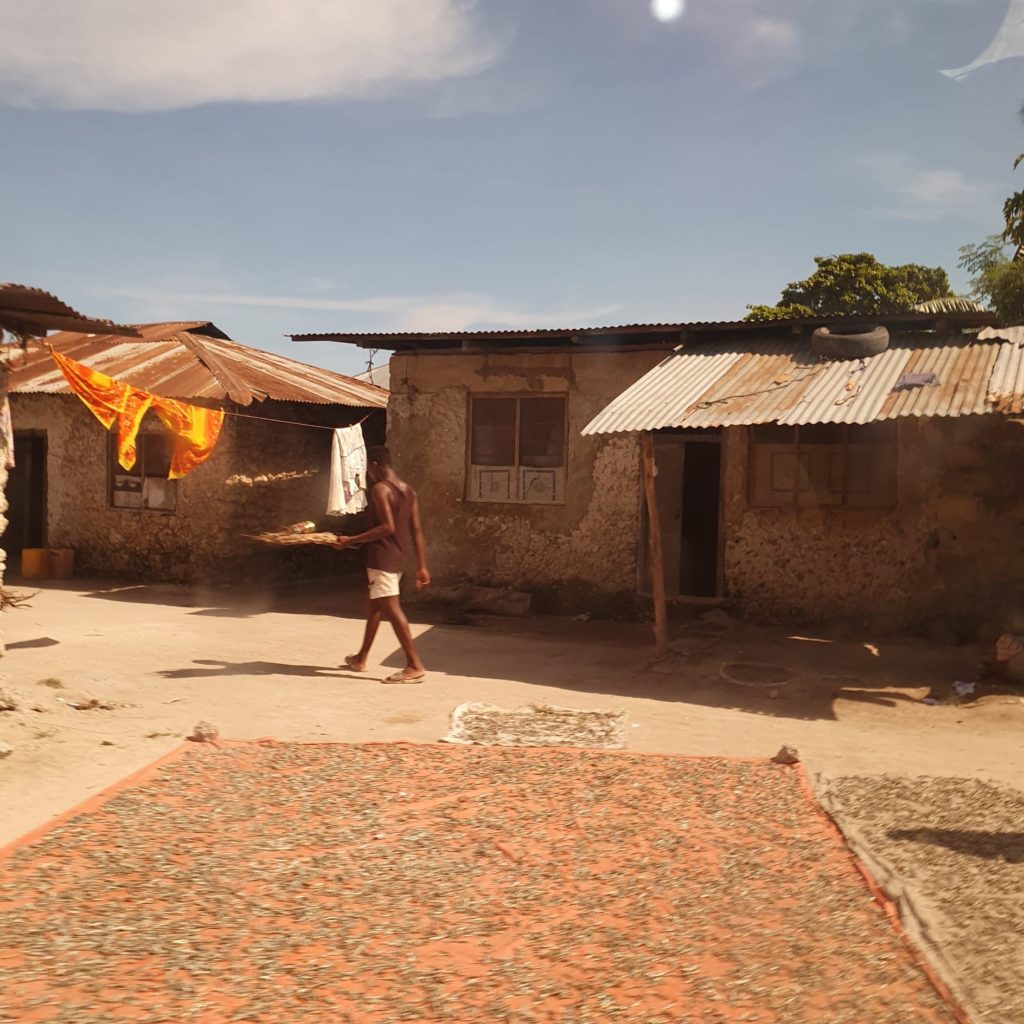
Who are Dtree? Dtree focuses on a number of different projects on digital global health. Current projects include: Sexual and reproductive health (helping women achieve their reproductive goals), maternal and new-born health (working to reduce maternal and neonatal mortality), child health (preventing treatable childhood deaths) and emergency transport (Where no ambulances are available). With field offices in Dar es Salaam, Zanzibar Tanzania, as well as Lilongwe and Malawi and management offices in Boston and Washington DC, Dtree’s projects are engaged in countries throughout Africa. To expand projects Dtree have conducted 2 million area visits and are continuing to expand their engagements. The underlying system for Dtree is based on three main philosophies: Innovation, implementation and Impact. They leverage technologies to support and improve program efficiency in the projects. They use high levels of experience to help partners replicate and scale high impact programs. Finally, they work with partners to continually measure impact and increase efficiency. The core that ensures their success is this incredible collaboration between innovative technology and strong relationships with expert partners and local communities. This project structure is responsible for the high levels of impact they already have and continue to achieve. In a nutshell, this is my main take away from the experience and is something I plan to rely on for all my future ambitions within the field.
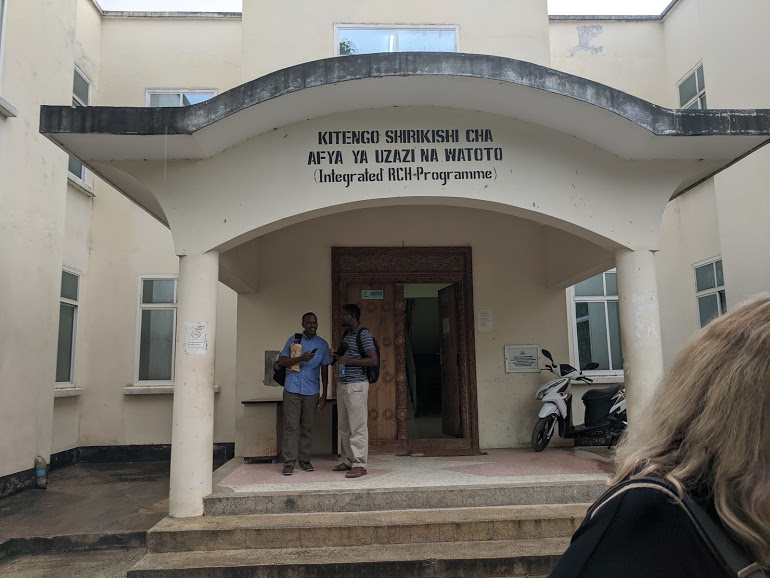
D-tree offices which are shared with the Department of Health in Zanzibar
What are we at N/Lab working on with Dtree? I joined a project on maternal and neonatal care responding to healthcare challenges in Zanzibar. D-Tree International has been working with the Zanzibar Ministry of Health to improve the delivery of community based maternal and neonatal care via innovative and award winning Safer Deliveries program. The project will also hopefully be expanding to include child health, looking at issues such as malnutrition. A critical component of the program is the analysis and use of data for decision making to support and design effective interventions. Using machine learning and advance analytical approaches to find higher risk cases of clients information sharing and education can be better targeted for allocation of limited resources.
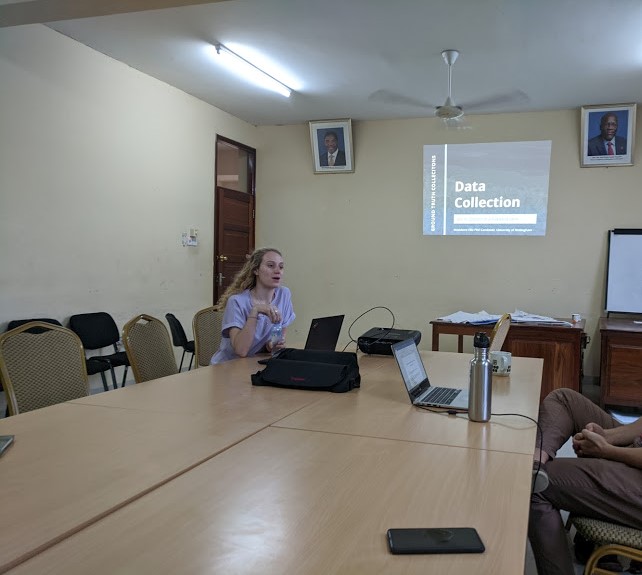
Maddy presenting to the Tanzania country manager at D-tree.
So, what did I learn from the visit to Dtree in Zanzibar?
Popping the research bubble The nature of PhD’s require an intense level of focus on one fine-grained topic. Within this process, that particular topic can become all encompassing; it will gradually start to feel bigger and bigger. This can make it easy to lose the context of your topic. This internship helped remind me that my PhD is a tiny dot within the field I am focused on. More than that, the field itself is also just a tiny dot in the grand scheme of things. Internships provide a wonderful opportunity to pop this research bubble, remind ourselves of the context we are working in and get insight into problem sets, methods and opportunities that we might not have even been aware existed before this. This has not only been an incredible thing for my personal growth through life, but also strengthened my PhD by allowing me to address some elements of my work with newly formed perspectives. Importance of working with communities
Importance of working with communities Another key take away is that the importance of working with communities and collaborating with related experts cannot be underestimated. I have always taken the importance of community collaboration as an essential for sustainable change in the other charity work I do, this experience with Dtree has taken that further and helped me to understand different levels of this and the application to academic research. Dtree has an iterative process of developing and applying technologies and programs with numerous assessments from collaborators at each stage. Anything you want to build needs to have the end used in mind at every stage and should utilise as much expert advice as possible on the way. While with Dtree we had a meeting with some of the field workers, the purpose of the meeting was for us to understand the context of the work and for them to understand the basic ideas of the applied machine learning. This shared knowledge allowed an extremely productive conversation about the future steps of the project. By understanding each other’s challenges and capacities we were able to reach novel solutions and approaches to the task at hand.There is a difference between the right solution and the ‘best’ solution.
There is a difference between the right solution and the ‘best’ solution. This take away is linked to the two reflections above. Researchers working on a thesis are bound to have expert knowledge on a topic, combine this with the academic pressure of technical novelty and it is easy to become focused on finding that ‘incredible new publishable method’. In the real world, these complicated impressive methods are not always going to be the most helpful or appropriate. Sometimes the application of a quick simple existing model will provide the most efficient support for an impactful project. This experience has shown me the importance of addressing this conflict as early as possible in a project. What are the goals of each stakeholder, what do I want my impact to be? This has lead me to reflect on my own goals. Am I looking to publish papers and make mathematical advances, which can provide long-term large scaled impacts, or do I want to make simple technological applications to problems with immediate community impact. Actually, I think I sit somewhere in the middle, I want to be a part of increasing the capacity for long term impact and technical novelty but also I want to prioritize appropriate impactful projects at the present moment.
The future is now Data and technology are advancing rapidly before our eyes, with every step forward technology takes; the availability of the previous steps becomes more and more accessible to problems sets with limited resources to make change. This is beyond a silver lining for development. Take for example the development of face recognition phone passwords. Before this experience, I wouldn’t have thought that holds much relevance to my work at all, but that’s not true. It’s the butterfly affect, the small improvement will move like a wave through the mobile phone industry making all previous models that little bit more accessible and affordable. Increasing access to these technologies opens opportunities, for examples improved data collection which can advance a project.
Technology isn’t the only thing which is moving at lightning speed, the older I get the faster time seems to move. I found the work Dtree do extremely inspiring and it has cemented some of my future professional goals. This bridge between mathematical technologies and impactful social good developments is where I want to be. Life is moving fast and although it’s great to have these goals, all of these experiences and moments are part of my goals. As cheesy as its sounds, it really is a journey not a destination. My advice to other PhD students taking internships would be to use this as a time to be reflective, make time to think about the things you haven’t thought of yet!
Side note I used to think networking was a bit of a buzzword… It isn’t… talk to EVERYONE you can. Ask their advice, ask for their thoughts, ask to hear about their journey and ask for their contact information.
It’s been a long while since I last blogged; seems like an ongoing theme over the past few years. It’s not that I purposefully don’t, I honestly just forget.
Anyway, here we are, in the middle of a pandemic and boy aren’t we feeling it. In a lot of ways life in my household has not changed a great deal. I have worked from home for over three years and my husband is a keyworker so, for the most part, things are relatively ‘normal’.
That doesn’t mean however, that I am finding writing my PhD thesis a walk in the park. It’s been extremely testing to say the least. I am currently about 4 months away from submission and on paper I am more than on track to finish on time; I am also determined to make that a reality. I still have my discussion, introduction, epistemological position, and appendices left to draft and my goal is to have the discussion written by the end of May.
Something that I find particularly difficult is going from the anxiety-filled, but excited and accomplished feeling when sending a section of chapters to supervisors, to a blank document: the next chapter. After having just finished one roller coaster of emotions the thought of starting it all again with another chapter feels painful. So much so that I don’t even want to get started on it.
I know that the best advice is “to just start” and then when I am in the zone, things will fall into place. Right now, it’s not like I have anything really to do that gives me a legitimate excuse not to do it. I am pretty sure that terraforming my island on Animal Crossing isn’t a good enough reason really.
Knowing that the final 9 months leading up to the submission was going to be a difficult one, in January I organised a writing group that met biweekly in Nottingham. It was organised as a relaxed space for people to write/work together and feel that they can have a ‘blah’ moment if they needed it. Going into lockdown, I knew that people transitioning to working from home constantly was going to rattle with their motivation to work, as having that separation between work and home is so valuable. Having all that roll into one gets messy.
The writing group now meets 3 times a week online. We turn our mics and cameras off for the most part, and work together. There is a chat box and we break (randomly) for chats. Knowing that there is someone on the other end of the line trying to work, brings a sense of community and the feeling that we are all in this together.
Without the encouragement of my friends at the CDT, I honestly don’t know how the past few weeks would have shaped up.
Today was a writing group day. I have grown tired of having no motivation and genuinely wanted to make a dent into this next chapter. With the encouragement of others, I’ve broken ground; two discussion points have been completed. Two of many, many more.
I hope that tomorrow I can tackle one more, hopefully more; but I won’t put too much pressure on myself.
As the Coronavirus moves into Pandemic status and more and more countries use ‘Lock Down’ techniques to mitigate the spread, we are going to be left with more and more people self-isolating. Have the effects of self-isolation been considered on individuals’ mental wellbeing? We are suddenly plunging large swathes of the population into social situations that they may never have experienced before over the long-term. How will they cope? How would you cope if you have to self-isolate?
Another concern is that this
self-isolation feels enforced in that we feel like there is no alternative.
This, again, plays against our natural, social instincts and serves to ‘confuse
our senses’. We are having to force ourselves to be isolated when we are
naturally social animals. From a mental wellbeing perspective, this is a
challenge.
However, the good news is we all
have our digital selves and social networks for company. We ‘chat’ and message
and read and ‘meme’ daily. Indeed, we have never been more technologically
supported to manage this exact circumstance with mobile phones, FaceTime,
WhatsApp, Slack et al we can connect instantaneously to multiple friends and
family (and fellow researchers.) However, our physical networks are being
broken so will our digital identities be strong enough to support our mental
health? Evidence of extreme isolation and survival through digital identity is,
perhaps unsurprisingly, scarce (maybe this will be an opportunity for me to get
a study active) but evidence of mental health problems from lack of physical
human contact exists. This is what we are facing on a global scale thanks to
Coronavirus.
What is the loneliness we are
discussing, we have all felt a bit down when we can’t connect or don’t have
plans to connect. FOMO (or Fear Of Missing Out) can also feed feelings of
loneliness but essentially what we are dealing with here is a much more
deep-seated ‘need’ for connection that is not being met. Clearly Self-isolation
will expose more people to the chance of feeling a connection is not being met.
This could potentially lead to more people having mental health problems in the
short and the long run or turning to addictions to quell the feelings of
loneliness. It’s more easily done than you realise. Mind, a UK charity have
this simple diagram that demonstrates, what I call, the downward spiral of
loneliness.
The sort of effects of this
spiral include ‘depression, anxiety, low self-esteem, sleep problems and
increased stress.’ None of which we particularly need to be feeling when there
is a deadly pandemic flying around the planet.
I’m speaking from personal
experience as I was terrible at being alone and dealing with loneliness in my
20’s so I went out to pubs. A lot. And then it became a habit, which became an
addiction. It was only through building physical connections that I didn’t fall
off the edge altogether.
So how can we mitigate the
dangers of enforced self-isolation? Some simple steps help to maintain mental
wellbeing when isolated. Having agendas or timetables or just to do lists helps
to motivate and rewards progress. Having hobbies and activities you can enjoy
alone, be it computer games, music, reading or binge watching to name a few.
Also building connections by reaching out, keep what communication channels are
available open and use them regularly to show you are thinking about one
another. Play games together, Word with Friends is a good start. Make
plans for the end of the pandemic. Discuss the potential end of
capitalist societies due to the pandemic. Just connect.
The important thing is to be
aware that self-isolation will not suit everybody and those that struggle with
it may need your help. And if you find you are struggling, I’m only as message
away.
Another concern is that this
self-isolation feels enforced in that we feel like there is no alternative.
This, again, plays against our natural, social instincts and serves to ‘confuse
our senses’. We are having to force ourselves to be isolated when we are
naturally social animals. From a mental wellbeing perspective, this is a
challenge.
However, the good news is we all
have our digital selves and social networks for company. We ‘chat’ and message
and read and ‘meme’ daily. Indeed, we have never been more technologically
supported to manage this exact circumstance with mobile phones, FaceTime,
WhatsApp, Slack et al we can connect instantaneously to multiple friends and
family (and fellow researchers.) However, our physical networks are being
broken so will our digital identities be strong enough to support our mental
health? Evidence of extreme isolation and survival through digital identity is,
perhaps unsurprisingly, scarce (maybe this will be an opportunity for me to get
a study active) but evidence of mental health problems from lack of physical
human contact exists. This is what we are facing on a global scale thanks to
Coronavirus.
What is the loneliness we are
discussing, we have all felt a bit down when we can’t connect or don’t have
plans to connect. FOMO (or Fear Of Missing Out) can also feed feelings of
loneliness but essentially what we are dealing with here is a much more
deep-seated ‘need’ for connection that is not being met. Clearly Self-isolation
will expose more people to the chance of feeling a connection is not being met.
This could, potentially, lead to more people having mental health problems in
the short and the long run or turning to addictions to quell the feelings of
loneliness. It’s more easily done than you realise, Mind, a UK charity have
this simple diagram that demonstrates, what I call, the downward spiral of
loneliness.
The sort of effects of this
spiral include ‘depression, anxiety, low self-esteem, sleep problems and
increased stress.’ None of which we particularly need to be feeling when there
is a deadly pandemic flying around the planet.
I’m speaking from personal
experience as I was terrible at being alone and dealing with loneliness in my
20’s so I went out to pubs. A lot. And then it became a habit, which became an
addiction. It was only through building physical connections that I didn’t fall
off the edge altogether.
So how can we mitigate the
dangers of enforced self-isolation? Some simple steps help to maintain mental
wellbeing when isolated. Having agendas or timetables or just to do lists helps
to motivate and rewards progress. Having hobbies and activities you can enjoy
alone, be it computer games, music, reading or binge watching to name a few.
Also building connections by reaching out, keep what communication channels are
available open and use them regularly to show you are thinking about one
another. Play games together, Word with Friends is a good start. Make
plans for the end of the pandemic. Discuss the potential end of
capitalist societies due to the pandemic. Just connect.
The important thing is to be aware that self-isolation will not suit everybody and those that struggle with it may need your help. And if you find you are struggling, I’m only a message away.