post by Lucy Hitcham (2023 cohort)
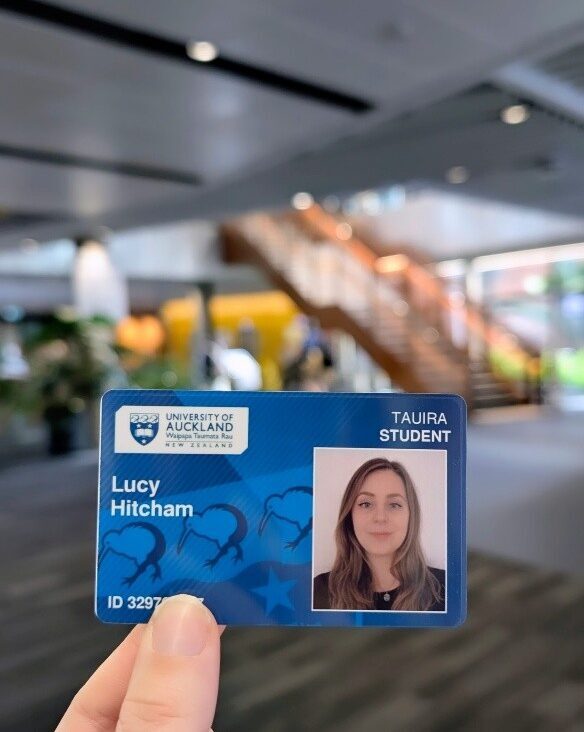
I recently returned from a two‑month research exchange in Aotearoa New Zealand, generously funded by the Horizon CDT. During my time there, I was based at both the University of Auckland and Victoria University of Wellington, working alongside researchers in youth and digital mental health.
I remember being interested in the international exchange opportunity way back when I applied for my CDT place. I’m a big believer in stepping outside of your comfort zone to grow and learn so taking up this exchange and choosing a country on the opposite side of the world felt like a good start – and escaping the English winter for the summer of New Zealand helped!
Seeing research differently
My PhD focuses on how digital mental health technologies are used, adopted and designed but much of my research until now has been grounded by the UK context. New Zealand, however, offered a different perspective.
New Zealand (NZ) offered a compelling contrast: a system undergoing change through the development of Te Whatu Ora (Health New Zealand), with moves towards a more coordinated national model of care which includes national provision of digital mental health tools across regions. From my first study, I had already learned about the more fragmented NHS model used in England, where mental health technologies are procured locally and unevenly. I was curious whether a coordinated model improved these challenges and the impact that culture can have for these technologies.
I was also keen to learn from some of the pioneering experts in the field. Terry Fleming and Karolina Stasiak are the original developers of SPARX, an e-therapy serious game for young people experiencing depression and anxiety. SPARX was initially developed and tested back in 2012 and has since been adapted and tested across populations and countries and is currently being trialled in the UK, led by researchers at the University of Nottingham.
Moments that stay with you
There are some key highlights that stand out from the trip for me. The first being presenting as a keynote speaker at the Child and Adolescent Research Network (CARN) conference. I had the chance to give two presentations to this group of mental health researchers and clinicians on my PhD research on the adoption of digital mental health technologies in the UK, alongside my research on smartphone addiction. However, this also gave me the chance to learn more about the research happening in this field across NZ, including CAMHS and crisis care, school-based mental health, and digital interventions for those waiting for care.
Attending New Zealand’s first Youthline Youth Mental Health Summit at the Beehive (the New Zealand Parliament building) was another memorable day. The event brought together young people, researchers, clinicians, NZ’s Minister for Mental Health and others involved in policy to hear evidence and set future priorities for youth mental health. It was a powerful introduction to the mental health landscape of NZ and to the lived experience of those who spoke at this event, in efforts to improve mental health of future generations.
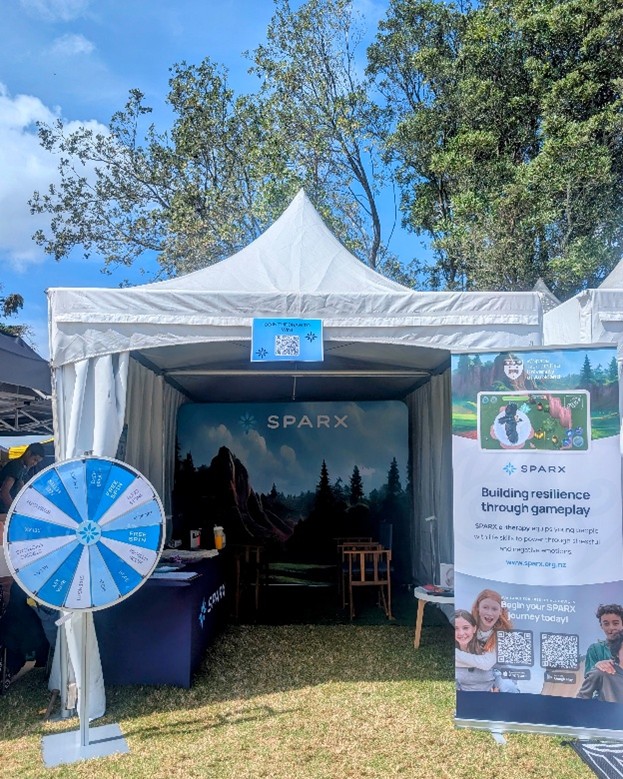
A different, but equally memorable experience was attending ASB PolyFest which is a three-day festival dedicated to celebrating Pacific culture and those from Polynesia. Alongside watching performances, I was able to see how digital mental health tools like SPARX were being shared and promoted in these spaces, bringing my research topic into a real‑world, community context.
However, there were smaller moments too. Such as seeing one of the original SPARX CDs from 2009, which puts in perspective how much technology has moved along and engaging in Waiata, the singing of traditional Māori songs during meetings, ceremonies and other occasions.

|  |
Learning through place
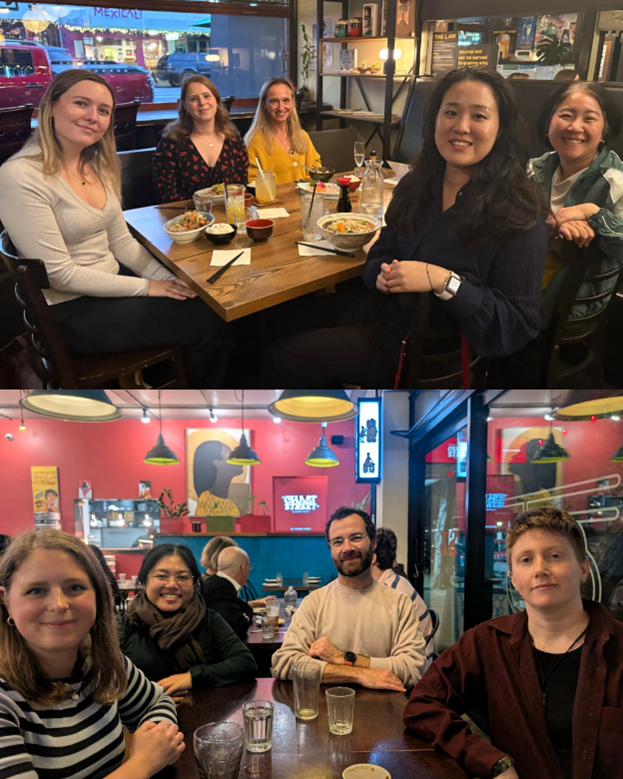
While it is difficult to fully capture a two‑month experience in a single post, one thing that stood out to me was the value of immersion through the exchange. The chance to spend two months in NZ allowed me to see patterns and connections that would not have been visible in a shorter visit. Some of the most important learning also did not happen in formal settings, but through everyday experiences like conversations over lunch or coffee, seeing how work unfolds over time, and living and travelling across the country. It allowed me to settle into the rhythm of academic life and to gradually build an understanding of how research is shaped by its environment.
Being immersed in Aotearoa New Zealand also highlighted just how strongly context shapes digital mental health. It helped me learn about the important structural differences between countries and yet how many of the challenges facing digital mental health such as engagement, accessibility, and implementation are also shared across contexts and countries. The exchange made it clear that digital mental health technologies do not exist in a vacuum, but rather how they are shaped by healthcare systems, policies, cultures, and communities. Learning about Māori perspectives on wellbeing, and how these are embedded within research, policy, and practice, added an entirely new dimension to my thinking. This is something that is easy to say, but much harder to fully understand without being there.
Other experiences grounded this understanding in everyday reality. Seeing tools like SPARX and Headstrong not just as research outputs, but as things that are actively promoted, adapted, and used brought my research topic to life in a new way.
 |  |
Life beyond research
While a lot of my learning and experience was focused on my time at the universities, I made sure to also make the most of my free time on weekends and during the Easter break. The North Island of New Zealand has so much to offer and explore from the beautiful beaches and hiking trails to visiting the Hobbiton movie set and wine tasting on Waiheke Island.
On a personal note, I have long wanted to visit New Zealand. I had acquired my Working Holiday Visa (WHV) to go and live and work in the country many years ago but the plans were blocked by the COVID-19 pandemic so it was wonderful to finally visit, albeit under very different circumstances. Throughout the visit, I kept coming back to this feeling of gratitude for the opportunity, for the people I met, and for finally experiencing a place I had long hoped to visit.
 |  |
Looking ahead
I am hugely grateful to my hosts Hiran Thabrew, Karolina Stasiak, and Terry Fleming for their generosity and guidance, and to colleagues at both universities for making me feel so welcome. I am also thankful to the Horizon CDT and my supervisors for supporting this exchange.
I have returned with new perspectives, connections and inspirations, and many new questions. The experience has helped reshaped how I think about my research, particularly in terms of context, culture, and the realities of implementation.
I hope this won’t be the end of that journey and next time, I’ll be sure to make it to the South Island!
📷All Photos: Lucy Hitcham