
post by Iris Jestin (2023 cohort
A couple months back marked the end of my brilliant seven-month optional placement with the UK’s Department for Transport (DfT). The internship ran from September 2025 to the end of March 2026, with the last two weeks based at their London office, a few streets away from Downing Street. The experience was filled with learning and building new connections, and I truly enjoyed every minute of it. I was conscious that I did not want this placement to simply be a ‘tick-box exercise’ that gave me the required credits. Being guided by placement mentor Michael Power, who himself was an expert working with automation and assisted driving technology policies, meant that I was able to have a solid plan in place from the start. Hence, I was able to make it work for the PhD so that I could use the work I did during my time with the DfT in my PhD thesis. With driver monitoring systems (DMS) being a novel technology that is of interest to be implemented by the industry to increase road safety, I was aware that being able to include policymaker’s thoughts on it in my PhD, especially those who made transport policies both nationally and internationally at the UN, would make it more impactful.
Aligning with other recent literature, as one of the primary findings that came up in my own research on public attitudes towards DMS implementation were the concerns around DMS data collection, storage, use and the wider stakeholders involved in its access, I knew this was a topic I needed to explore. Given that the regulations around DMS are in a relatively nascent stage with regards to its implementation, as the placement progressed, I soon discovered that I was referred to as the person that was able to bring in ‘expert DMS knowledge’ into the existing automated vehicles regulatory conversations. This was an intimidating position to be in and took some time getting used to. I was able to run a two-part study with DfT policymakers, the first part in late January and the second part over two weeks in March. The purpose of the study was to approach through a regulatory lens my PhD’s research question 4 – What are UK transport policymakers’ perceptions of driver monitoring systems implementation and a potential ecosystem of external data flow?
Automated vehicles exist on a spectrum of automation (“SAE Levels of Driving Automation,” 2021). The lower end of the spectrum requires the driver to be in complete control of the driving. At the middle of the spectrum, the driver is required to be in control of specific aspects of the driving. As we move towards the end of the spectrum, the driver is in the role of a passenger, with the vehicle functioning as a robotaxi. The functionality of DMS and the motivation behind their use vary across the spectrum of vehicle automation. The first 90-minutes ideation session of the two-part study, explored policymakers’ perspectives on DMS implementation, while leveraging their expertise of working in each of the different stages of the vehicle automation spectrum. This allowed the experts to share their thoughts on how they believed DMS needed to be implemented more broadly but also specifically within each stage of vehicle automation. Three out of the five policymakers had expertise in automated vehicle technology policy more broadly and the other two in assisted driving technologies specifically. Together, the expertise of the participants covered policymaking across the spectrum of vehicle automation from no automation to self-driving robo-taxis.
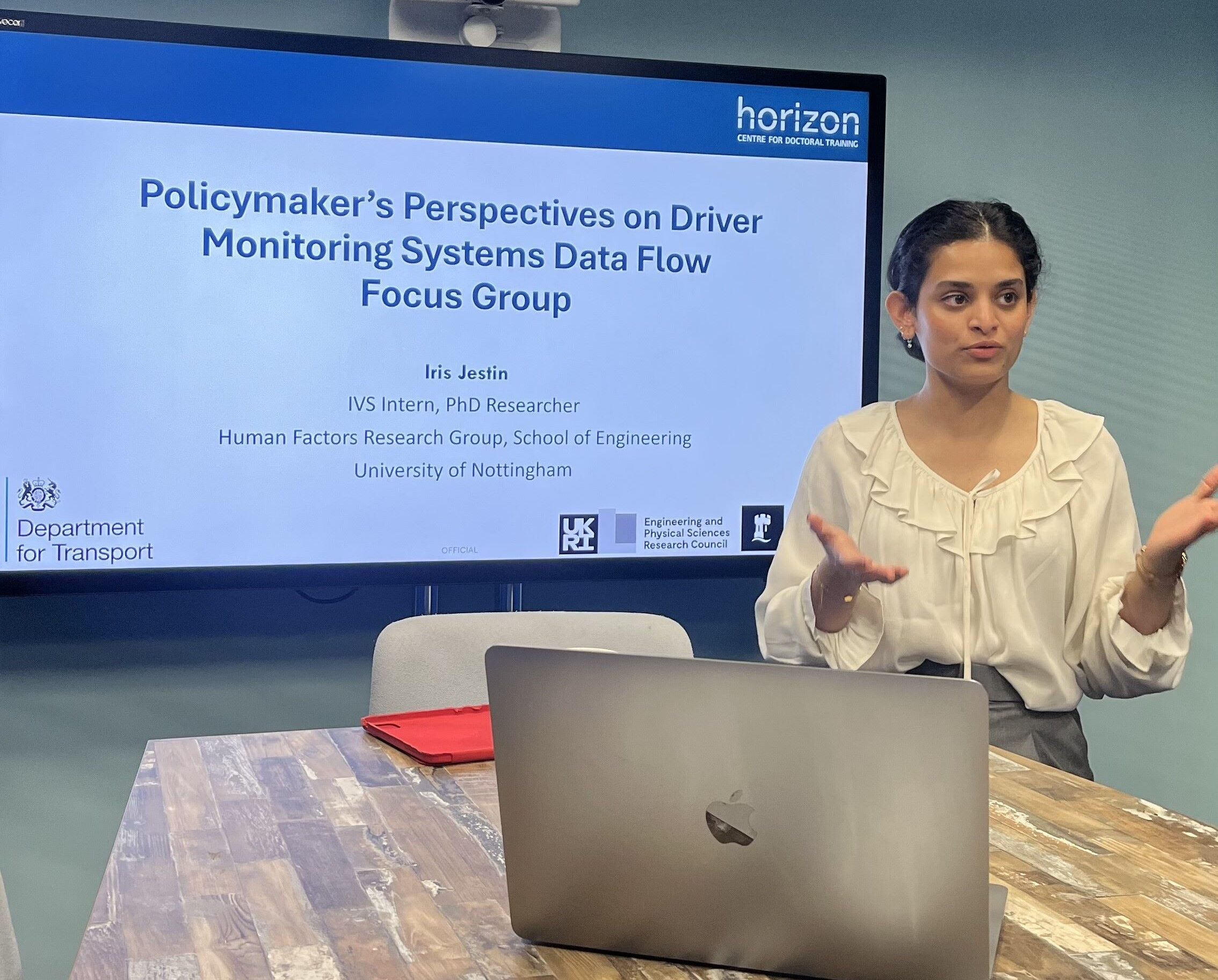
The second part of the two-part study conducted in March, was a vignette focus group study. Three focus groups were conducted in-person at the DfT London office in which four vignette scenarios were used as stimulus for the focus group discussion. They were carefully designed based on literature as well as inspired by participant quotes from PhD study 2. Each of the vignettes represented a futuristic scenario based on public concerns, where the data collected and inferences made by the DMS got passed on to other stakeholders, when the technology became commonplace. Some of the external stakeholders that above Study 2 participants from the public believed DMS data could be accessed by are: the transport authorities such as the Department for Transport including DVLA, GP and medical authorities, legal authorities including police and the court, third party companies such as car manufacturers, insurers and satnav companies such as Google (maps). The following questions were primarily of interest for the policymakers focus group discussion: i) Is such an ecosystem of DMS external data flow to other stakeholders desirable? ii) Where should this collected DMS data exist? iii) Who else should be able to access or process this data
While the formal analysis is still ongoing and definitive results have yet to be reached, one key takeaway has emerged from my perspective as a human factors and HCI researcher studying AI. It informs the broader view I hold about the social implications of such advanced technologies: policymaking is fundamentally about navigating tradeoffs. If the potential risks outweigh the anticipated benefits, compromises will need to be made. Though policymakers were able to acknowledge the wider benefits of DMS and an ecosystem of external data flow if implemented accurately specifically in safety-critical scenarios, they also stressed that these benefits must be weighed against significant privacy concerns. If such concerns prove substantial, policy decisions are likely to require careful tradeoffs between safety, functionality, and privacy.
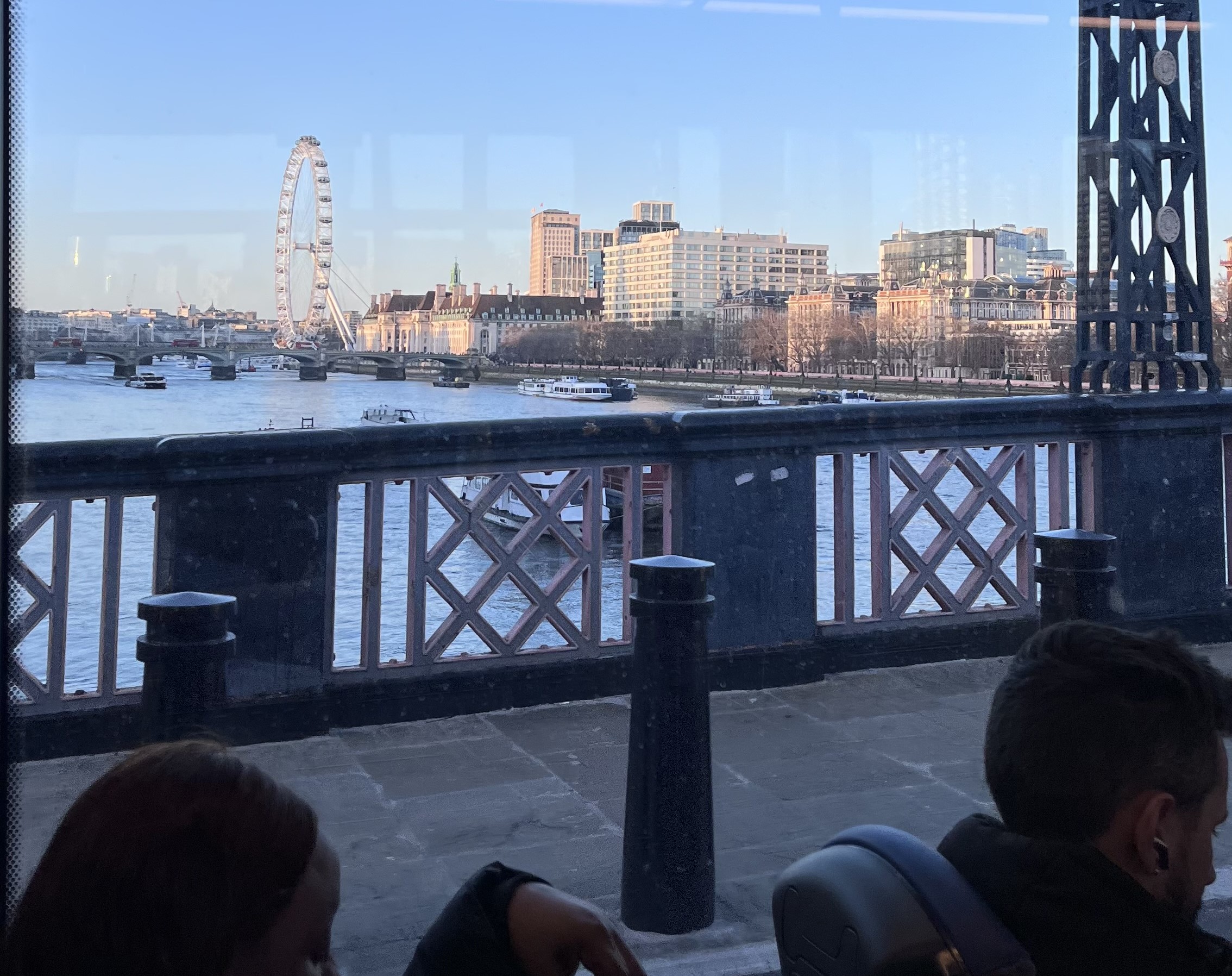
I completed the placement with a sense of accomplishment, having conducted a study, engaged in impactful discussions with policymakers, and built valuable connections. During the final two weeks of the internship, I got used to the rhythm of the daily commute, enjoying views of the Thames and taking lunches at the cute St. John’s Garden next to the office, which I will miss. I feel immensely grateful that the CDT is able to support such opportunities that build us up as well-rounded researchers. I already cherish the memories from my time there and will always look back fondly to the time I had the wonderful opportunity of working with the UK’s Department for Transport.